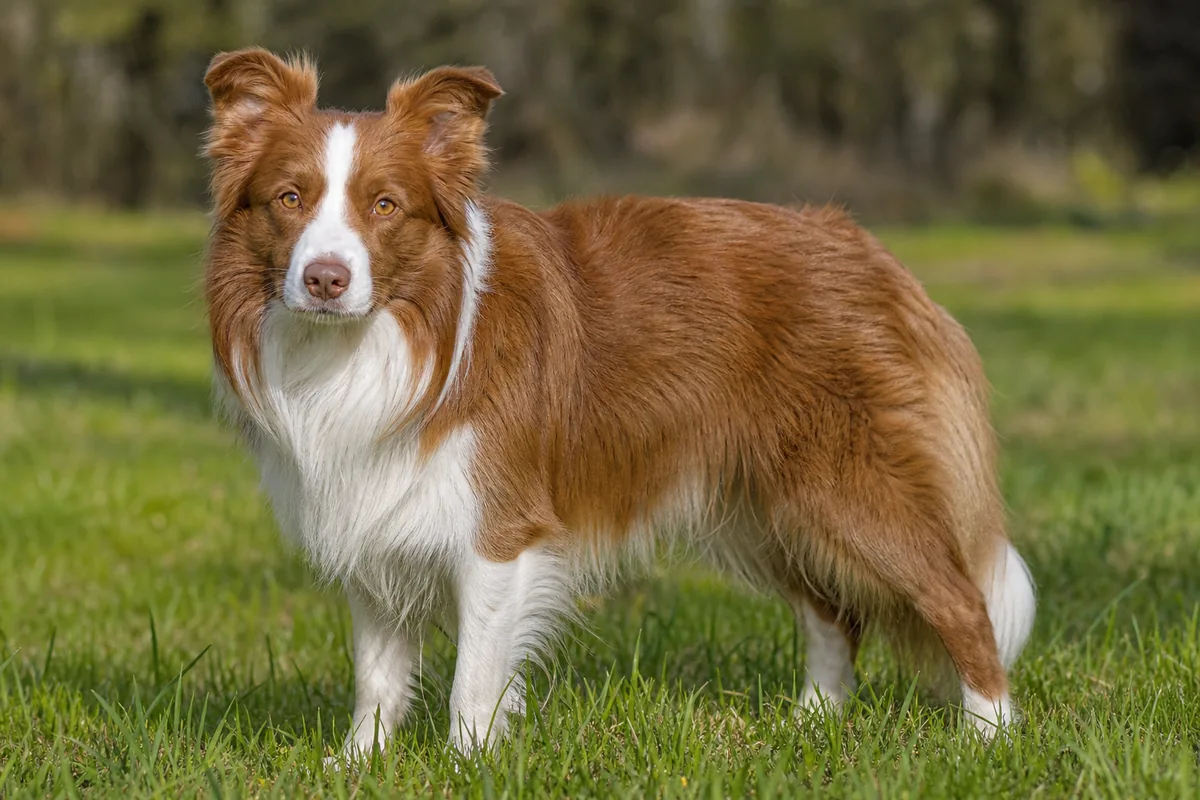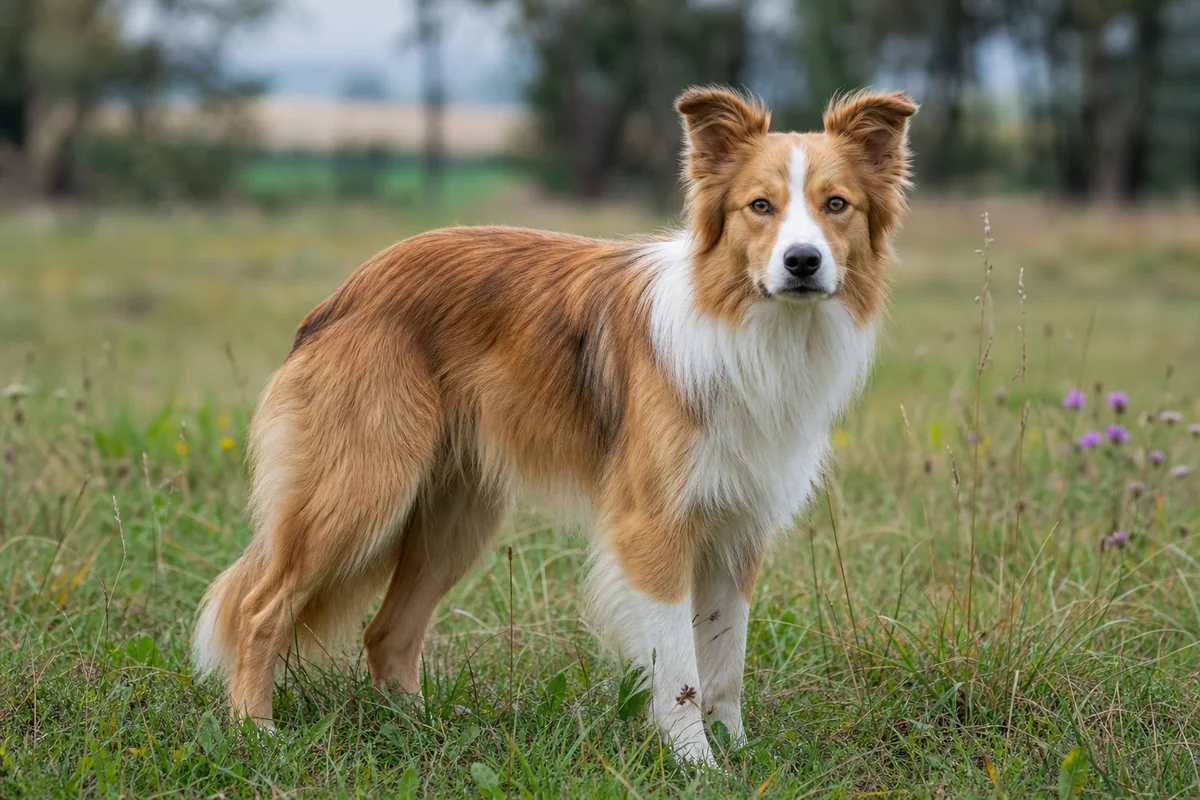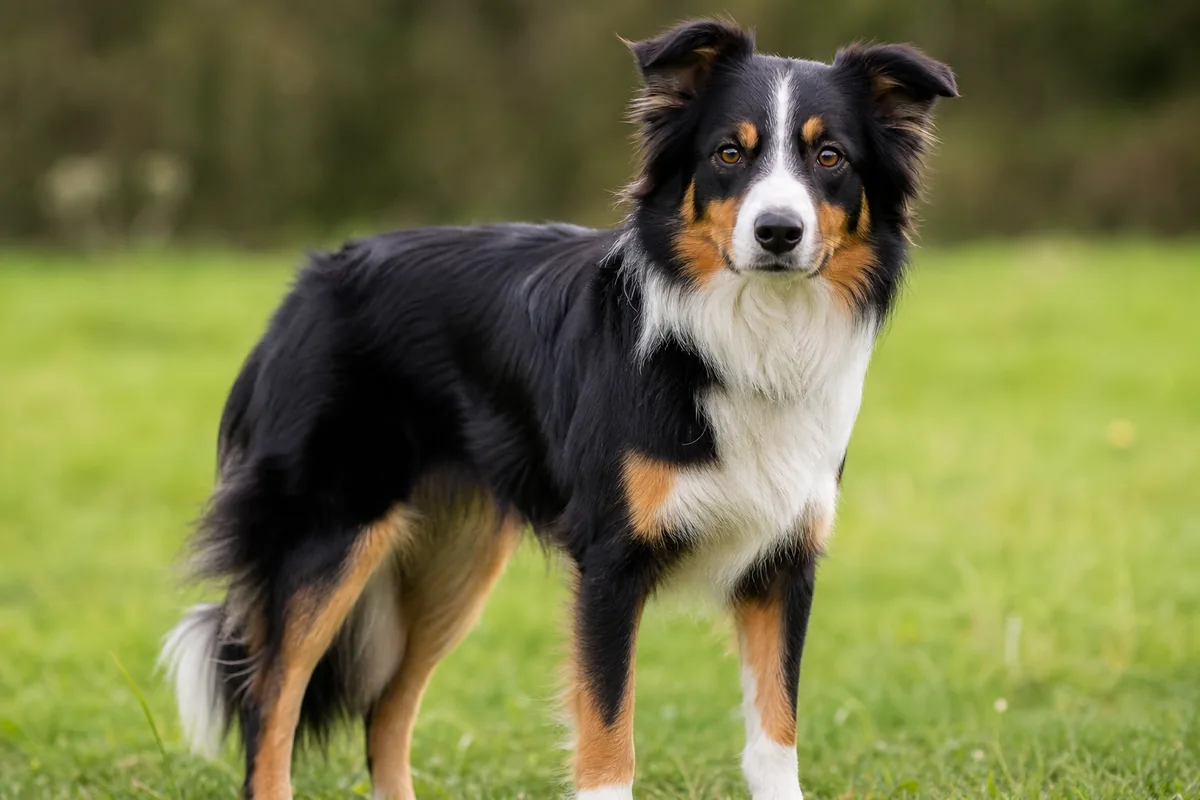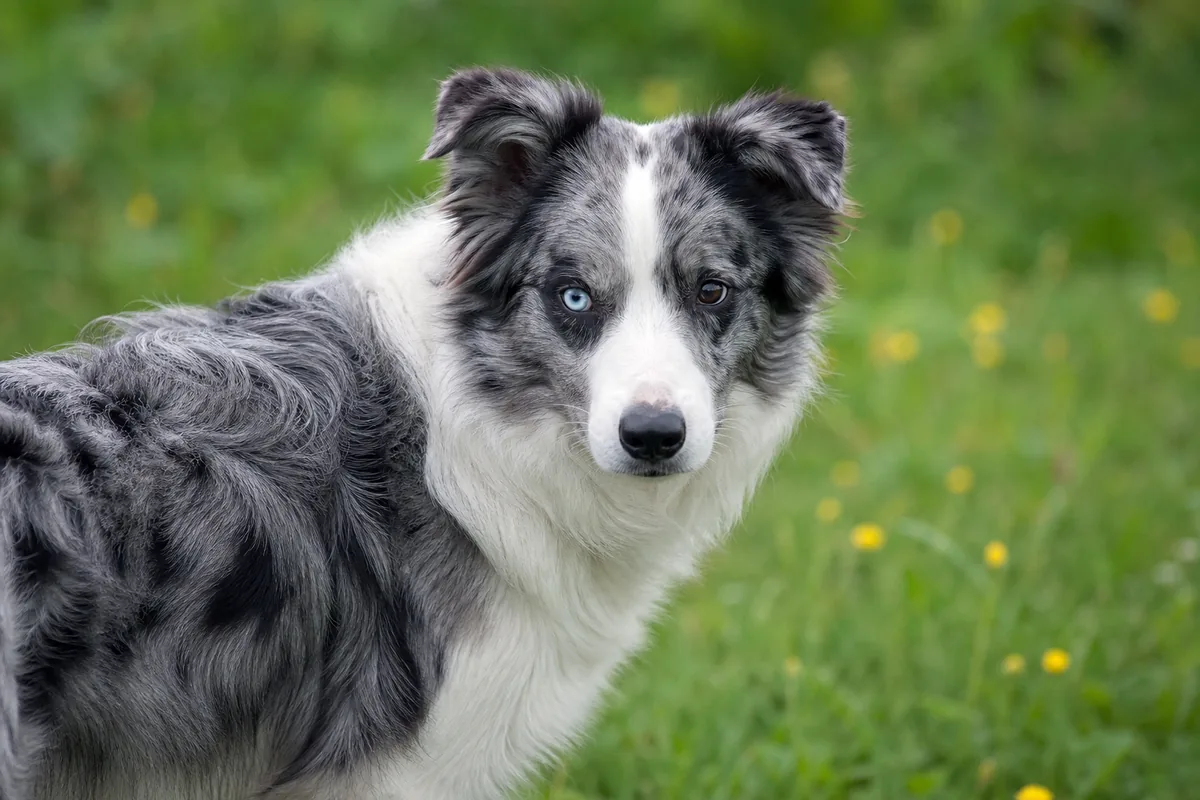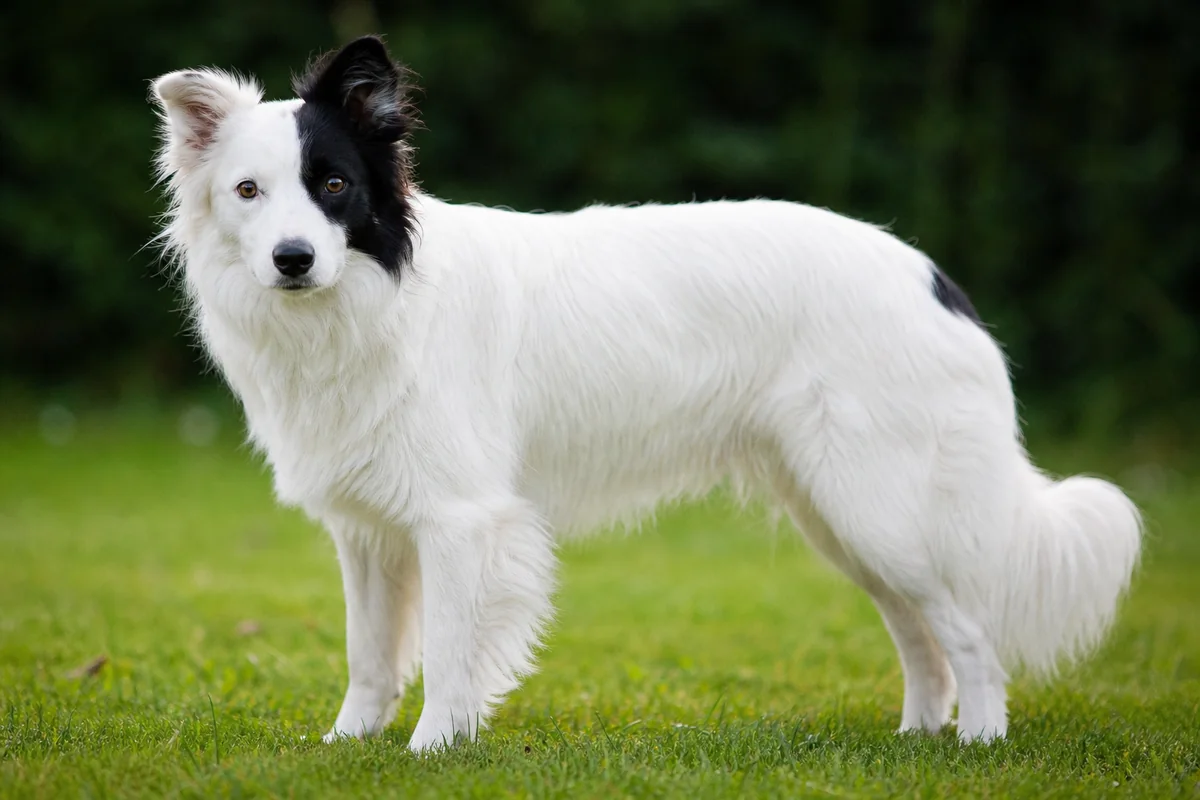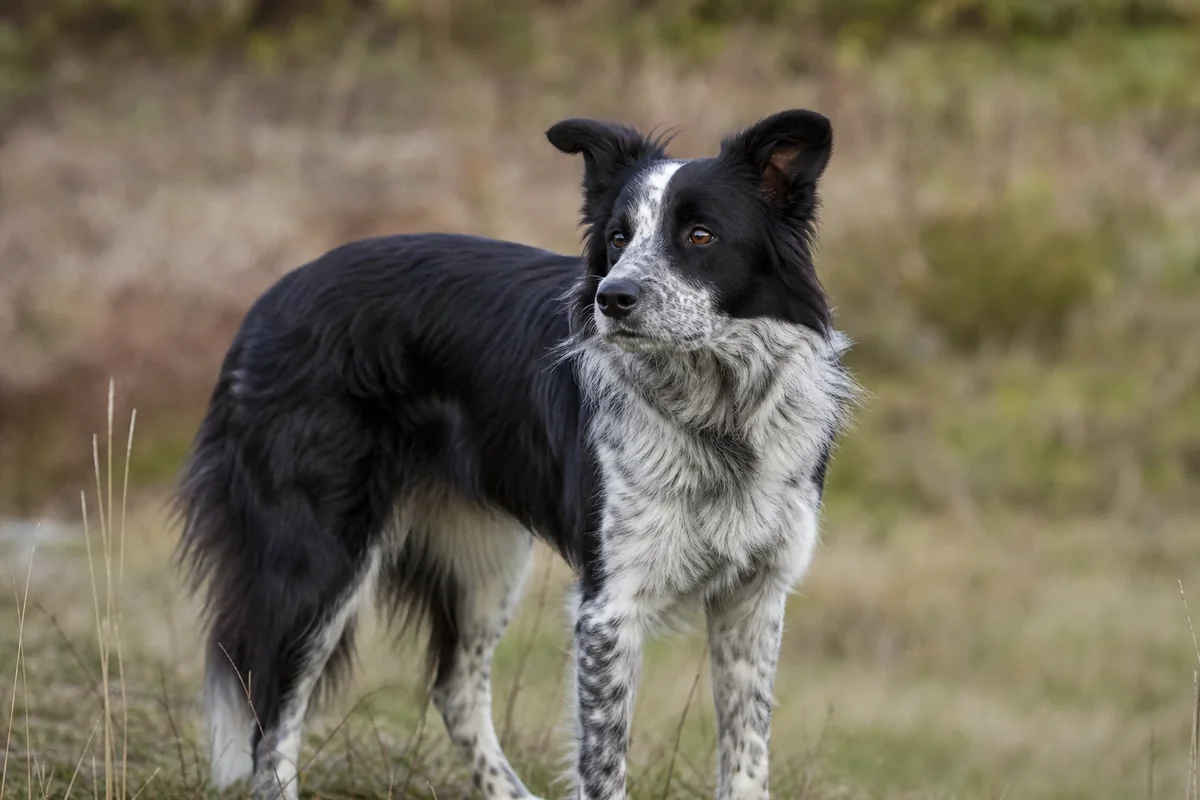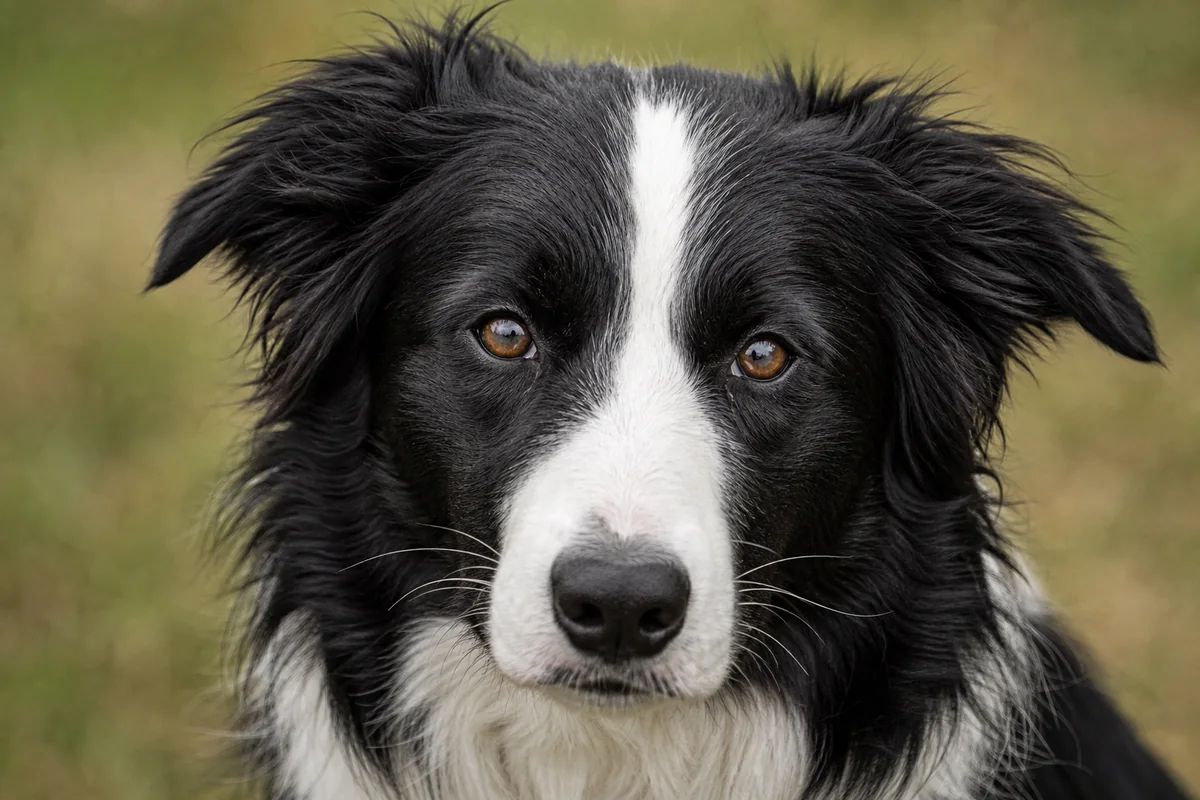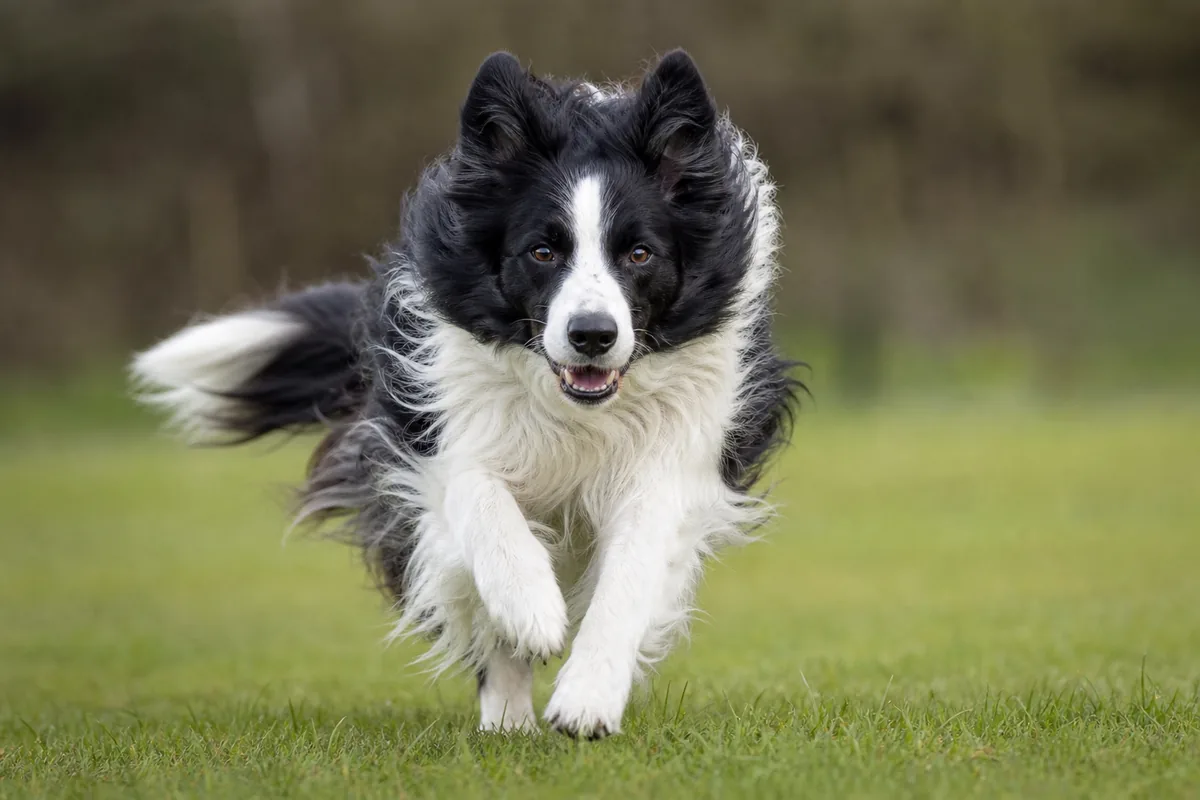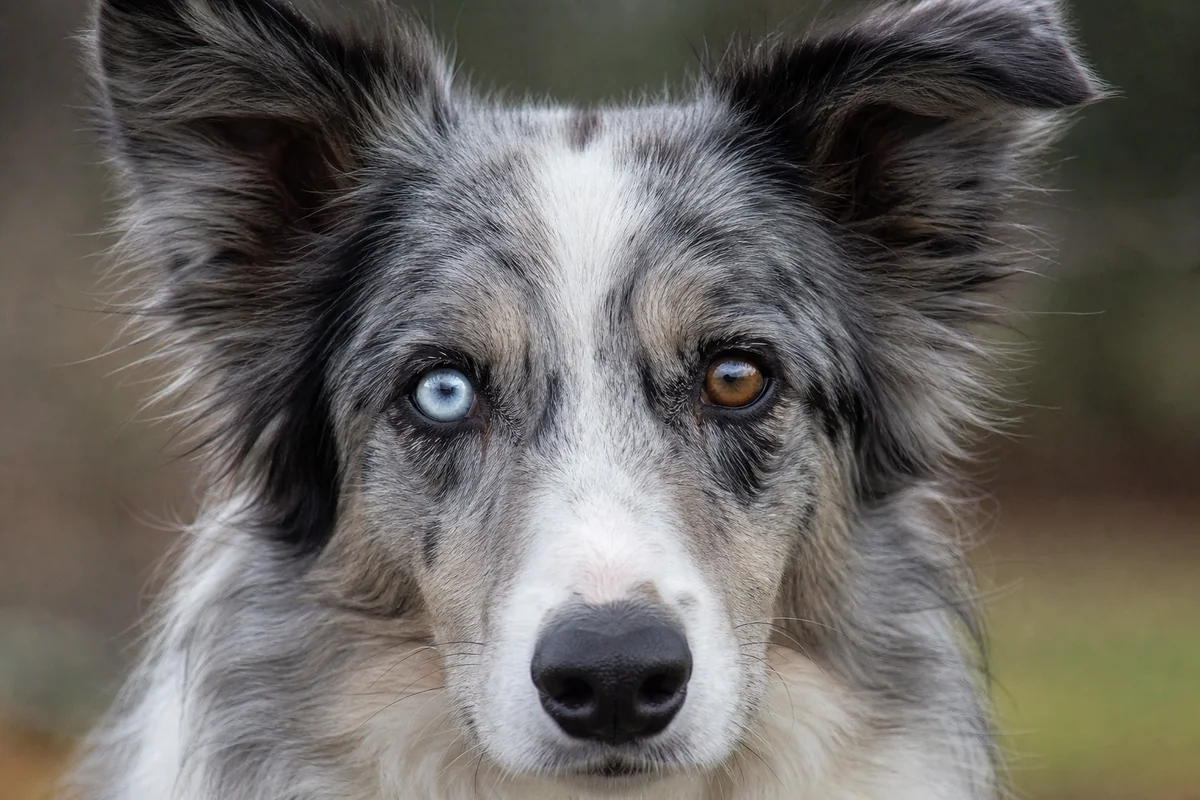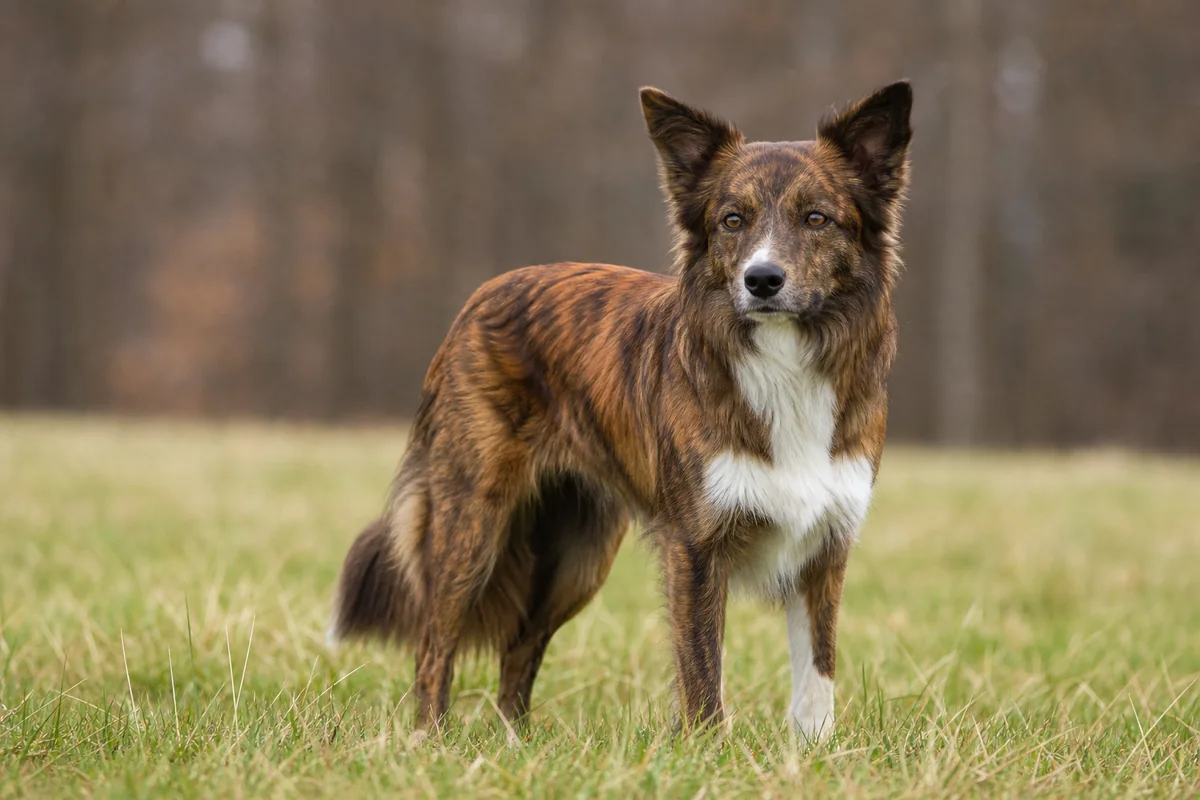
Brindle is a visible stripe pattern, not a complete genetic identity. It usually describes darker bars over a lighter red-to-yellow area, but stripe contrast, location and terminology vary. A careful description is more useful than a confident colour equation.
What brindle looks like
Brindling may appear as narrow or broad stripes, soft bars, or a dark overlay that is easiest to see on the body, legs, tail, neck or face. Some dogs show strong contrast; others show subtle striping that disappears in shadow. Begin with the visible pattern: where are the stripes, how regular are they, and what base colour surrounds them?
“Brindle” is a vocabulary label, not a measure of rarity or value. The American Kennel Club Border Collie standard is the appropriate reference for breed context and judging priorities. It does not turn an unusual-looking coat into a quality score, and the AKC breed information does not establish an individual's genotype from appearance.
Pigment and K-locus context
Canine coat discussions distinguish phaeomelanin, the red-to-yellow pigment, from eumelanin, which can appear black or brown. Brindle descriptions concern how darker eumelanin appears over areas that otherwise show red/yellow pigment. K-locus shorthand is used in explanations of pigment switching and brindle-related patterns, but it is not a universal equation for every dog.
The UC Davis Veterinary Genetics Laboratory basic panel describes the K system in interaction with MC1R and ASIP. That is a useful model, not a complete Border Collie prediction tool. Variant names, breed relevance, test coverage and interpretation must be checked in the actual laboratory or reference. Do not copy a simplified allele series from a graphic into a breeding conclusion.
Record the pattern before naming the locus
Write “dark, uneven stripes over a warm red base on the forelegs and ribs” in the observation column. Put a possible genetic explanation in a separate inference column. This prevents a photo caption from becoming an unsupported genotype.
Zones, tan points and white markings
Stripes can be easier to see on the back, shoulders, legs, tail or muzzle, but their distribution is individual. A dog may also show tan points around the eyes, cheeks, chest or legs. Compare Tan Point for placement vocabulary rather than assuming that every warm patch is part of the brindle pattern.
White spotting can interrupt a stripe pattern or make the base colour difficult to judge. Compare White / Irish Spotting and Face Markings. A brindle dog may be black-based, brown-influenced or affected by other pigment systems; Black, Brown / Chocolate and Blue, Slate & Lilac are separate questions. The UC Davis coat-colour resource explains why several systems must be considered together.
Brindle, sable, shadow and ticking
Dark-tipped hairs can make a sable look shaded, while narrow stripes can be hard to distinguish from a strong overlay. Ticking produces flecks or roaning in white areas and may become more obvious with age; see Sable and Ticking before deciding what a photograph shows. Look at the pattern across the whole dog, not one dark patch, and avoid making a genetic claim when two visual explanations remain possible.
Light and coat condition are frequent sources of error. Warm indoor light can turn a red base orange; backlighting hides bars; wet hair clumps; sun fades the ends; and phone processing deepens shadow. Note date, age, season, light, grooming and whether the coat is dry. The VCA coat-care guide explains why hair condition affects appearance, and the AAHA shedding guidance distinguishes ordinary shedding from sudden hair loss.
Puppy-to-adult change
A puppy's head and body change proportion, while adult guard hairs may show different contrast from puppy hair. Seasonal shedding can reveal an underlayer; grooming can make the stripes look cleaner; and sun can soften the apparent boundary between bars. These changes may alter what you see without rewriting the inherited pattern. Keep comparable, dated photographs when documenting a coat.
Pedigrees, panels and laboratory reports
A pedigree can preserve family descriptions, but “brindle” written beside a dog is not automatically a molecular result. A panel answers only the variants it includes, under its definitions and coverage. Before testing, write the question: are you checking a named variant, clarifying parentage, understanding a record or investigating something clinical? Read the sample instructions, panel version, breed coverage, variant list and limitations.
Keep the complete report with the dog's identification and sample date. Do not translate “clear,” “carrier” or “affected” between laboratories without checking definitions. The OMIA merle record illustrates how a database documents one specific trait; it is not a brindle calculator. If a new skin or hair change is the concern, consult a veterinarian; Merck Veterinary Manual guidance explains why similar signs can have different causes.
Brindle is not a shortcut to character or health
No stripe pattern, contrast level or unusual label establishes health, hearing, vision, intelligence, temperament, trainability or working ability. Evaluate the individual dog through veterinary care, behaviour, structure, movement, environment and history. Coat appearance is one physical observation, not a welfare verdict.
Frequently asked questions
What does brindle look like?
Brindle is a visible pattern of darker stripes or bars over a lighter red-to-yellow base in some areas. Stripe width, contrast and distribution vary, and a photo cannot identify every underlying variant.
What is the K locus?
K-locus shorthand is used in canine pigment discussions that include dominant black and brindle-related patterns. It is a teaching framework, not a universal equation; variant names and test coverage must be checked.
Can brindle stripes be brown, blue or dilute-looking?
Other pigment systems can affect the appearance of eumelanin-based stripes. Treat labels such as brown or blue brindle as descriptions until relevant variants are documented.
How can brindle be confused with sable or ticking?
Shading, dark-tipped hairs, narrow stripes and flecks can overlap visually. Compare the whole coat in consistent light and keep the observation separate from a genetic inference.
Can a puppy's brindle pattern change as it grows?
The inherited pattern is not rewritten, but its contrast and apparent distribution can change with growth, coat development, shedding, sun, grooming and lighting.
Does brindle predict health, temperament or working ability?
No. A stripe pattern cannot establish health, temperament, intelligence, working ability or quality. Evaluate the individual dog through veterinary, behavioural and breed-standard information.
Sources and further reading
References for this guide include the AKC Border Collie standard, AKC breed information, UC Davis VGL basic panel, UC Davis coat-colour resource, OMIA, VCA coat care, AAHA shedding guidance and Merck dermatology guidance.