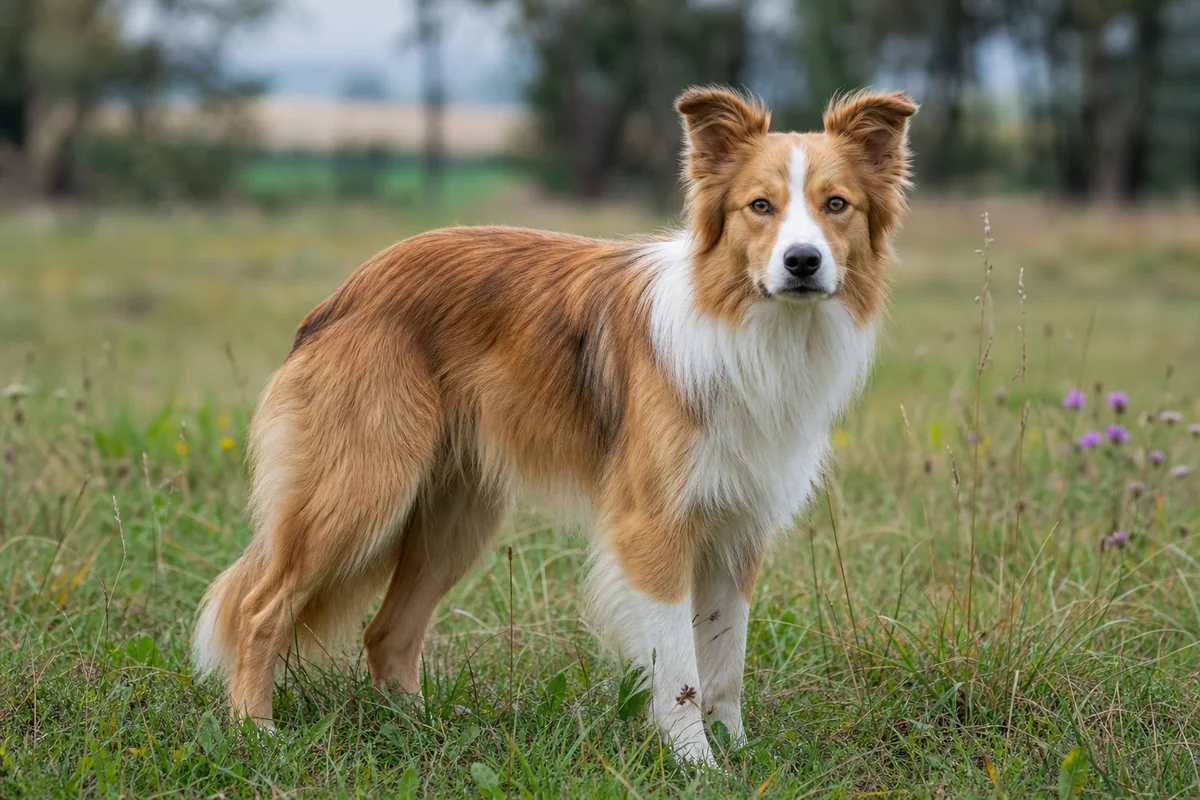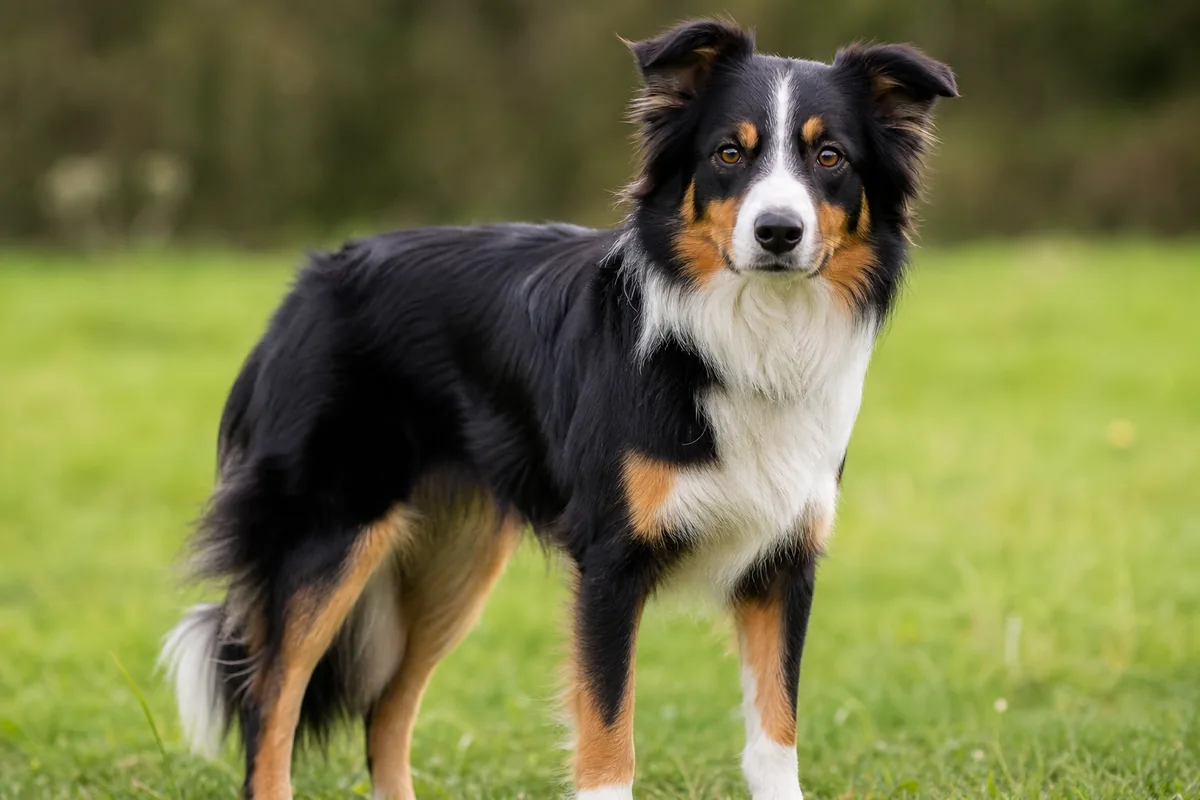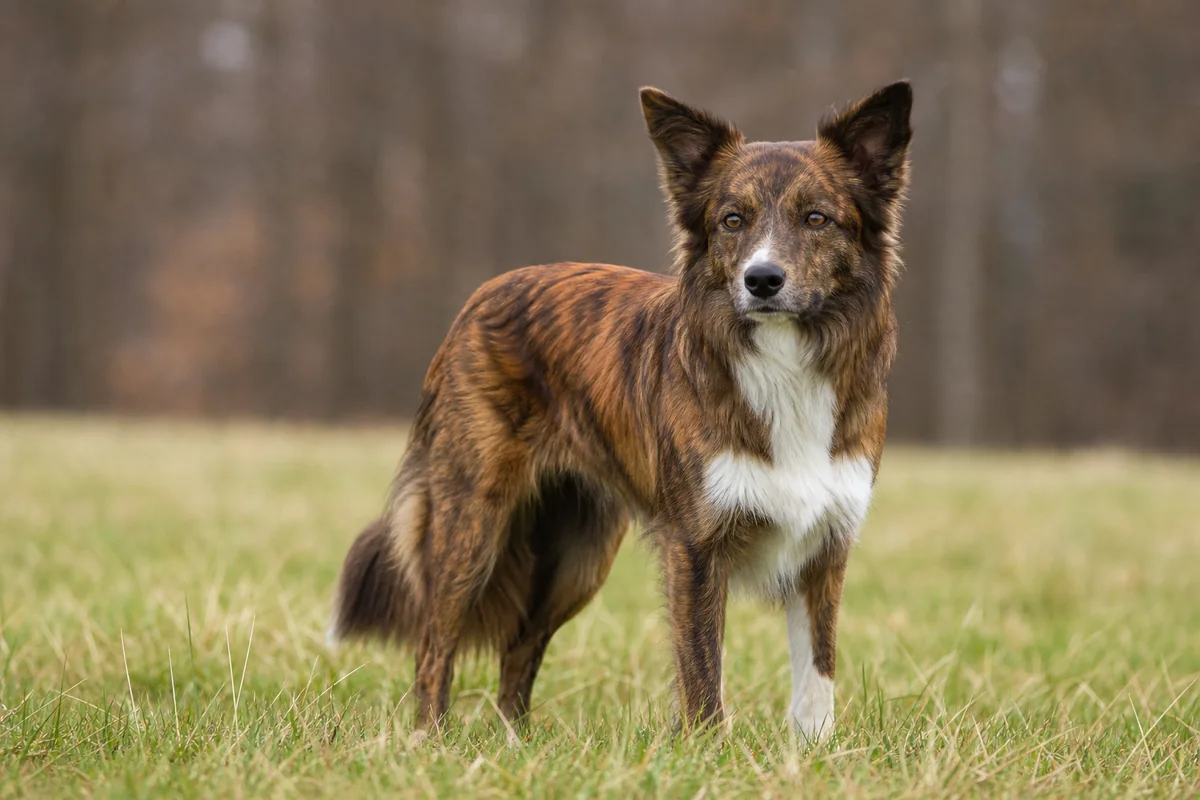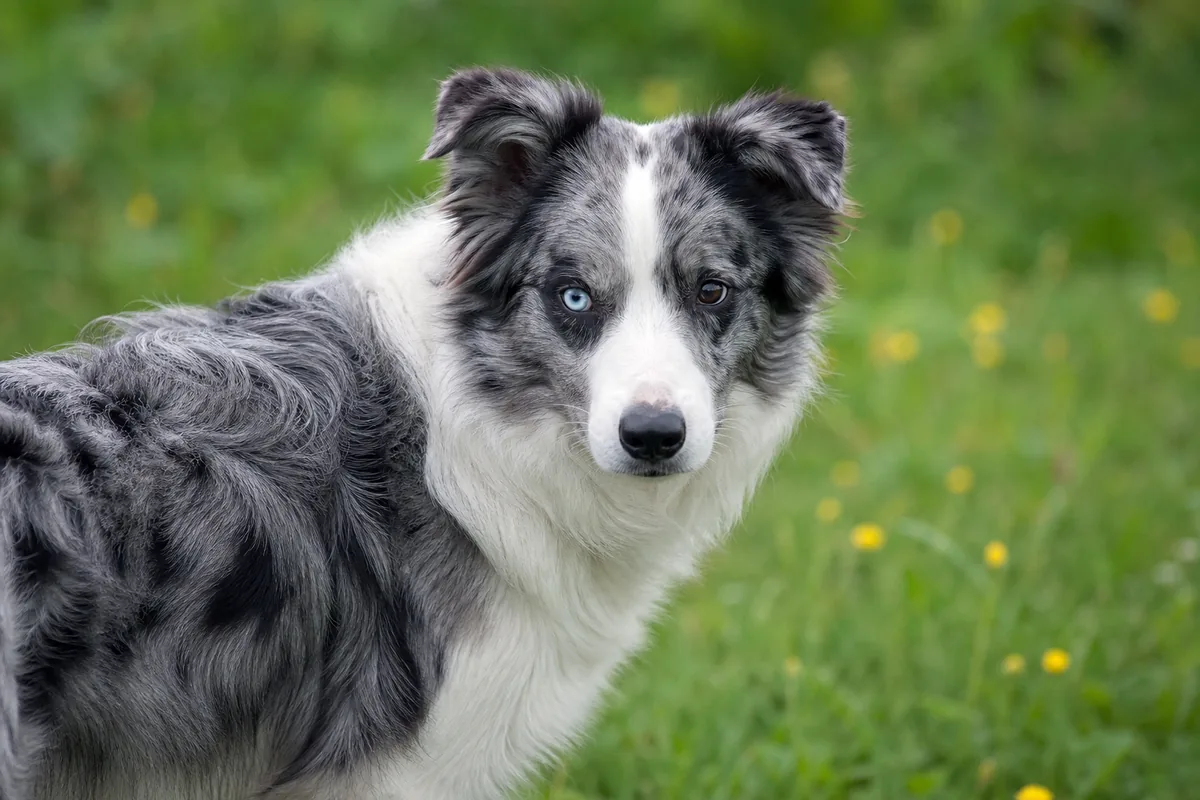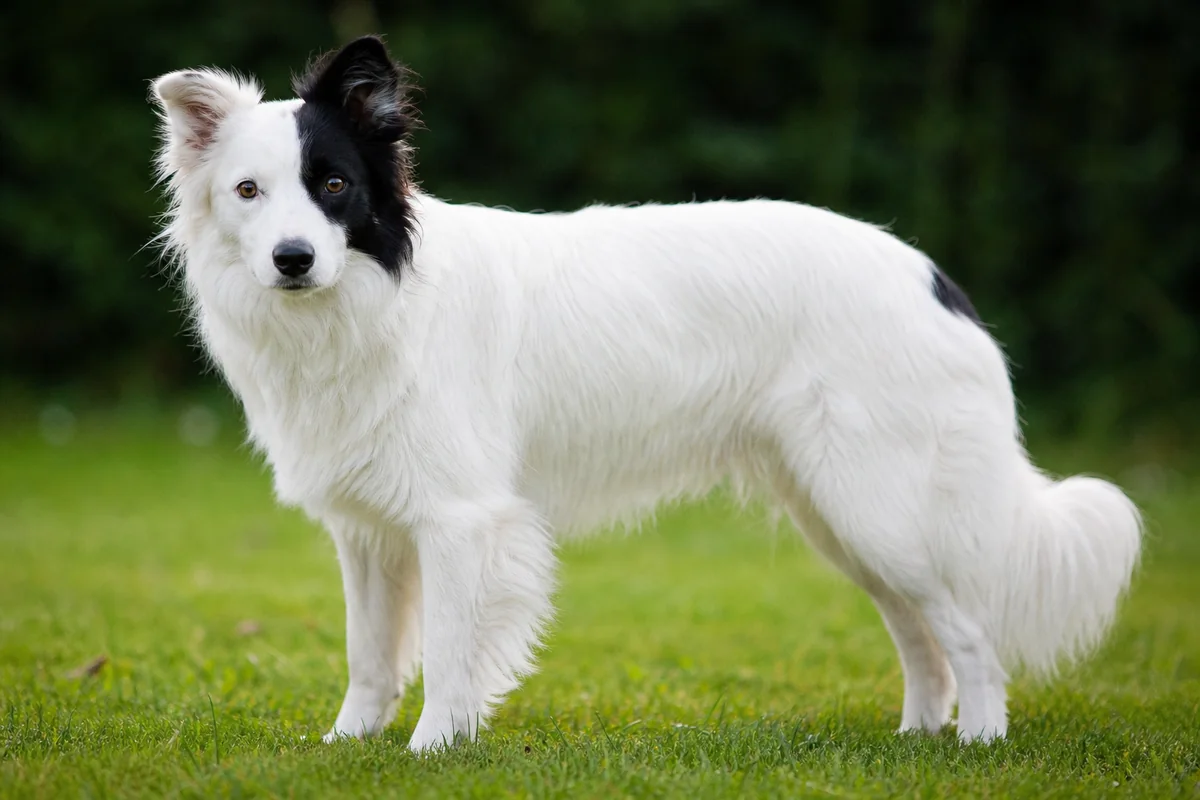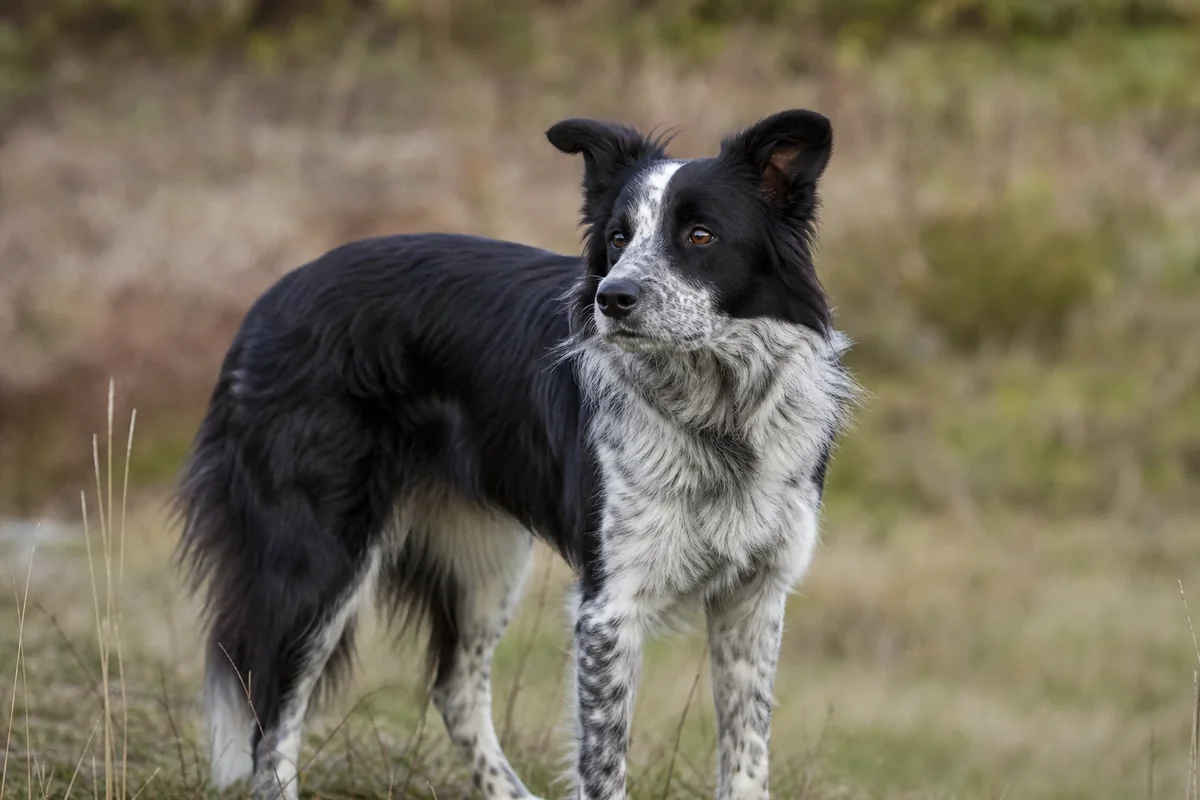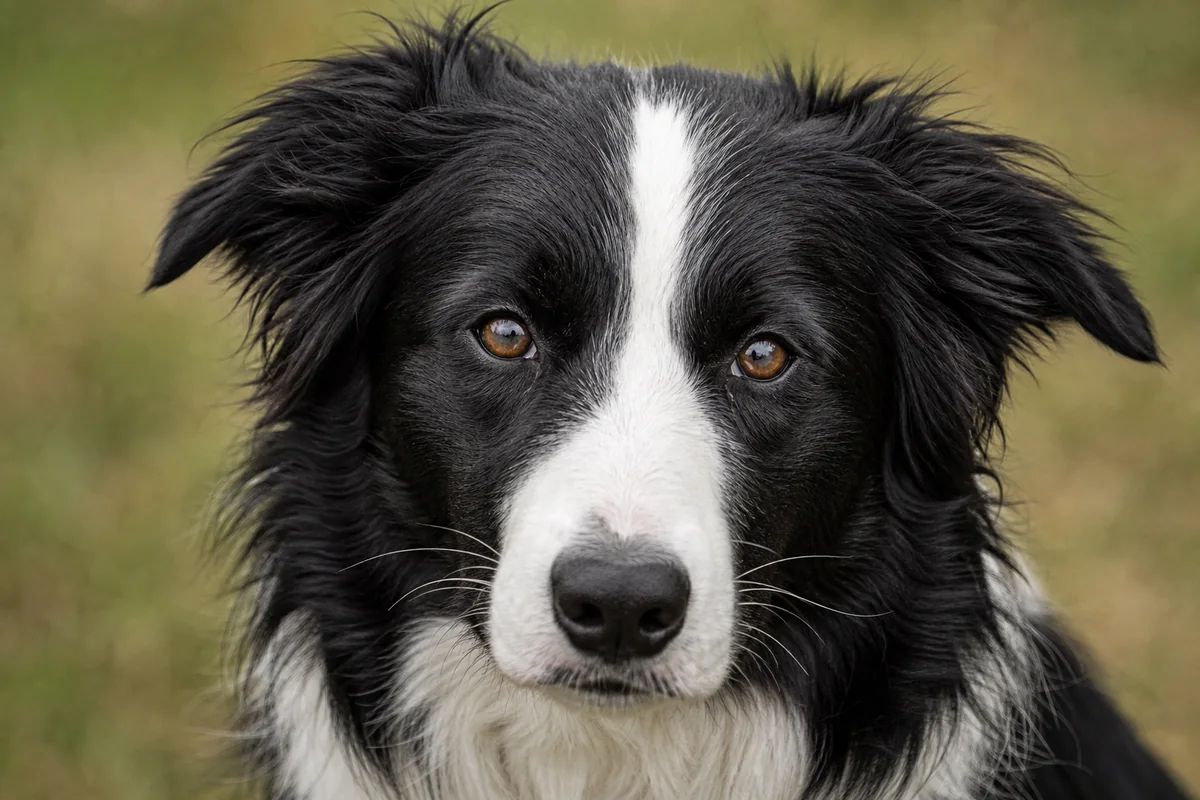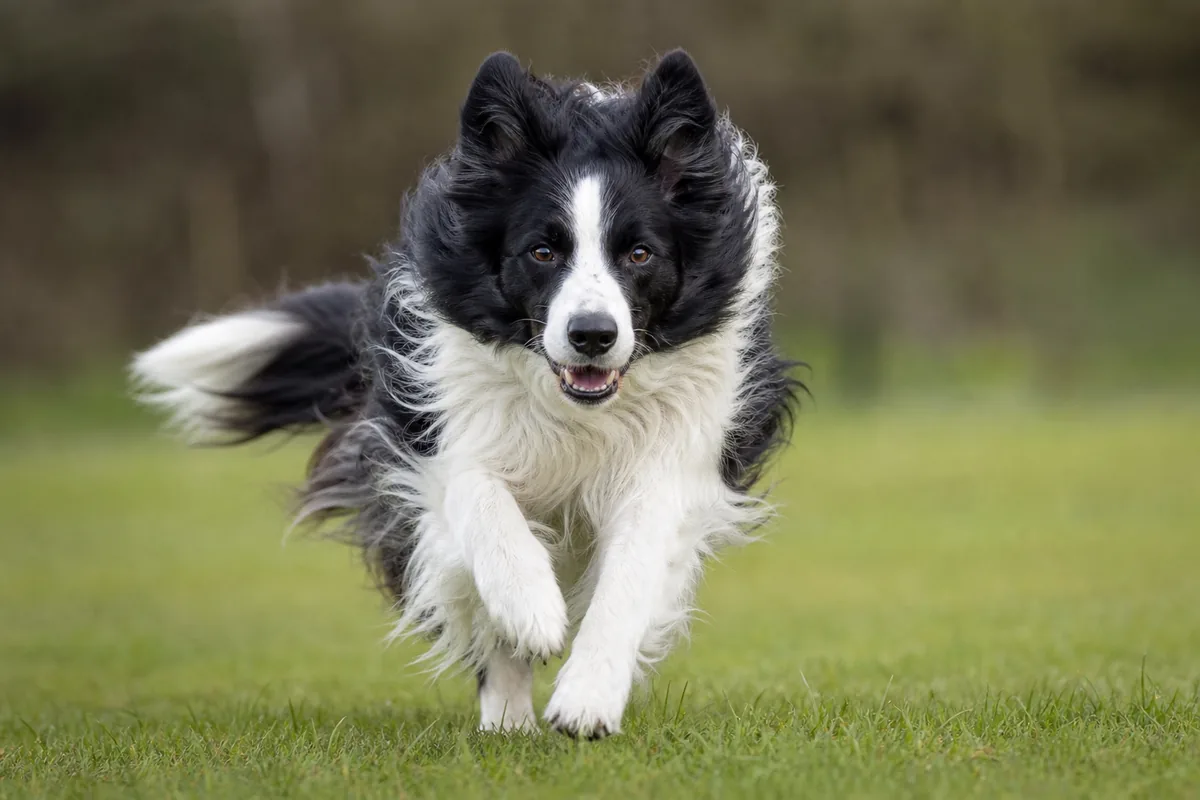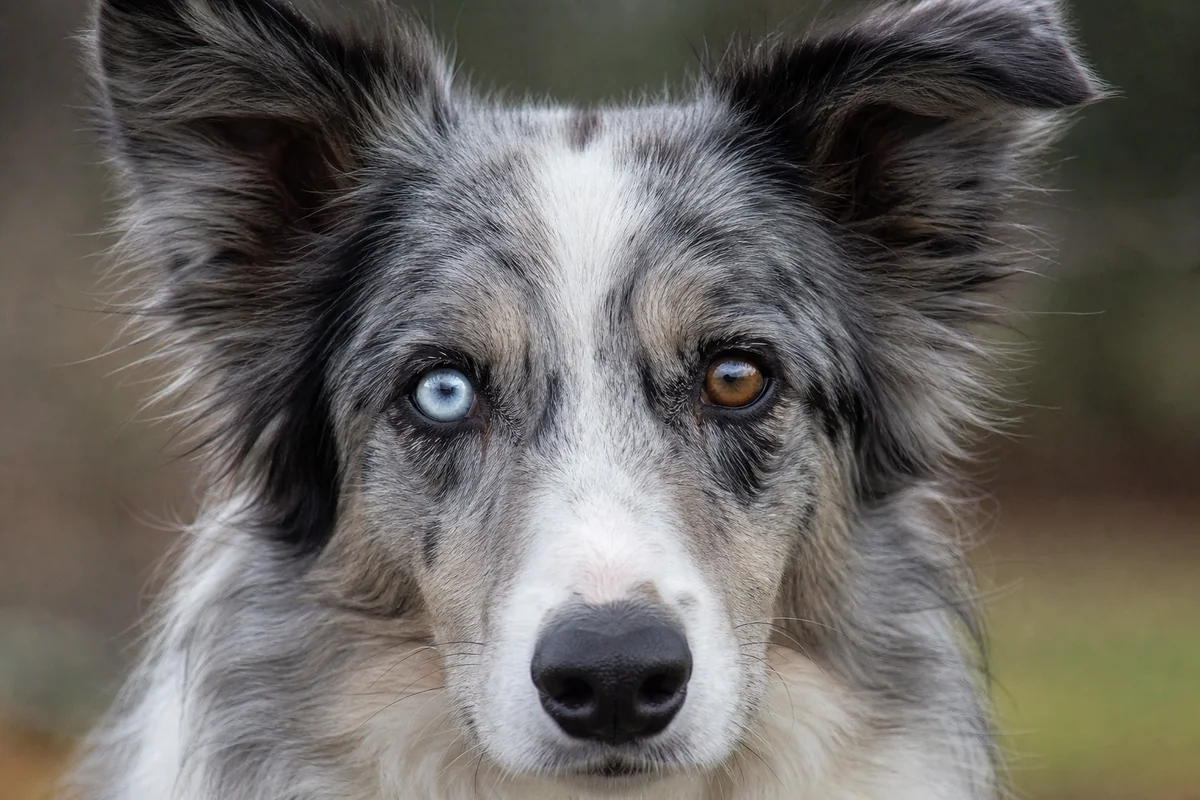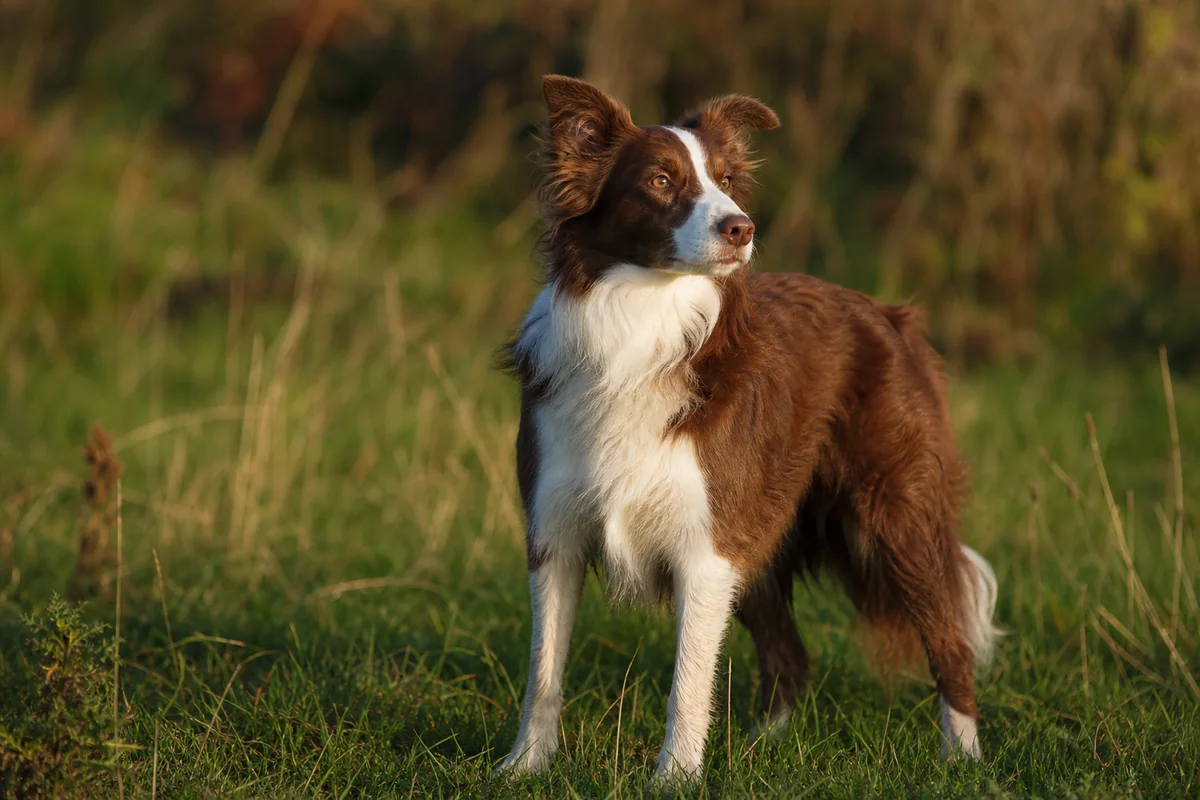
Brown, chocolate and liver are visual descriptions first. They tell you that some visible eumelanin appears brown rather than black. They do not, on their own, reveal every inherited variant, predict a puppy, or say anything reliable about health, temperament or working ability.
What brown pigment means
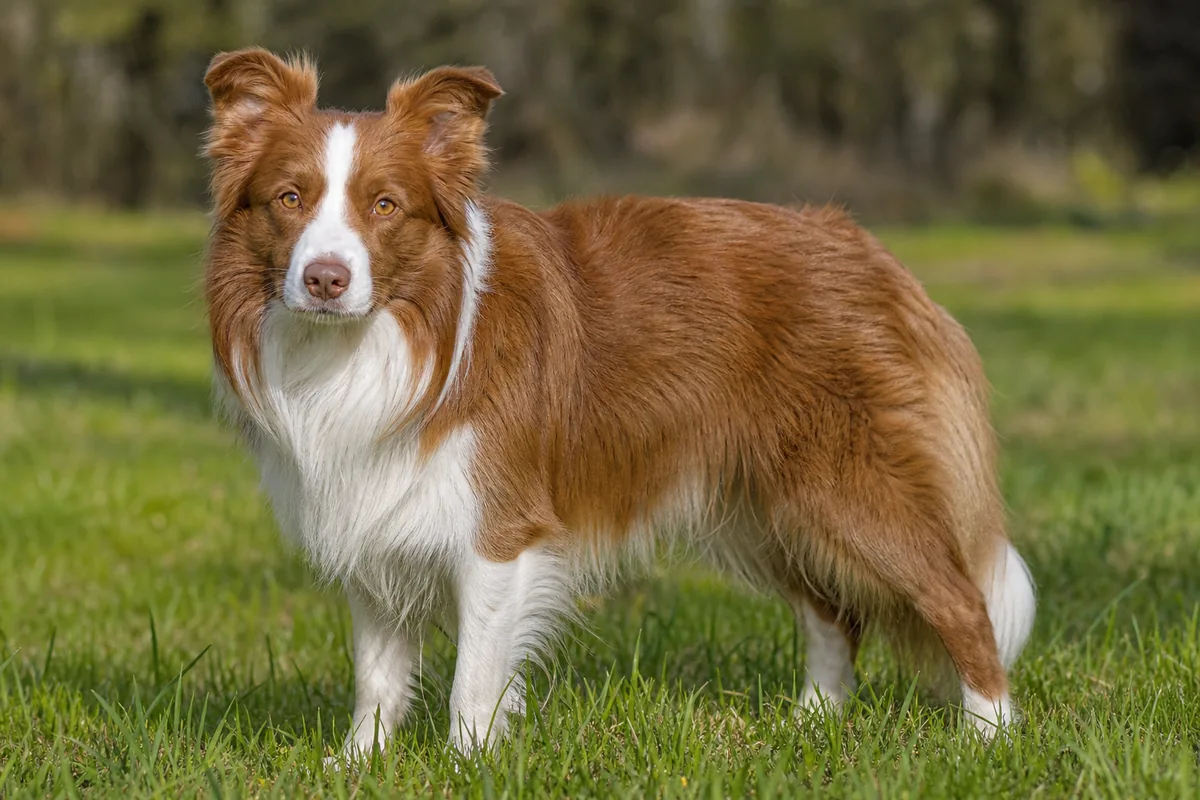
Canine coats use two broad pigment families: eumelanin, which can appear black or brown, and phaeomelanin, which produces red-to-yellow shades. Brown Border Collies show brown eumelanin in coloured hairs and commonly in the nose leather, eye rims and lips. The shade may look dark chocolate, warm liver, cocoa or paler brown. These are useful observations, not separate diagnoses.
The UC Davis Veterinary Genetics Laboratory basic panel describes the B system as the Brown locus and explains that brown variants affect eumelanin rather than phaeomelanin. That is a helpful biological model, but it should not be stretched into a single universal equation. The number of variants tested, the naming convention and the breed relevance of a panel all matter.
TYRP1 and the B locus: a careful vocabulary
TYRP1 is a gene discussed in relation to brown eumelanin production, and “B locus” is common shorthand for the colour system. In many canine genetics references, brown is described as recessive to black at that system, so two relevant inherited copies may be needed for the visible brown phenotype. That is a general explanatory framework, not permission to infer a complete genotype from a photograph.
Laboratories may report variants, alleles or test categories differently. A result labelled “clear,” “carrier” or “affected” is meaningful only alongside the laboratory's definition, the variant tested, the dog's identification and the breed or species coverage. The UC Davis dog coat-colour resource is useful because it presents colour as interaction among systems, rather than as one letter that explains the whole coat.
Recessive does not mean a universal breeding equation
A recessive description helps explain why a visible brown dog may require inherited copies from both sides of a family. It does not tell you which untested variants a dog carries, what another locus may mask, or what a future litter will look like. For any breeding question, use complete health and pedigree information and qualified professional advice.
Brown hair, nose and contours
When brown eumelanin is expressed, the nose leather often looks liver-brown rather than black. Eye rims and lips may also be brown, and the iris can appear lighter, but the exact shade varies between individuals. A nose is a useful clue when a coat is dark, sun-faded or photographed under warm light; it is not a substitute for a laboratory result. Inspect the dog in natural, even light and describe what is actually visible.
Brown can coexist with many patterns. A brown-and-white dog may have white spotting or facial markings; a brown merle has a separate pattern question; a brown dog can also show tan-point or sable-related distribution depending on other systems. Compare the site's White / Irish Spotting, Face Markings, Merle, Sable and Tan Point guides without assuming that one visible label supplies the rest of the genotype.
Why a chocolate coat changes on camera
Photographs compress a complex surface into a few pixels. Golden-hour light can make dark brown look red; blue shade can make it look nearly black; a wet coat reflects highlights; and phone processing can deepen shadows or smooth detail. Sun exposure may fade the ends of guard hairs. Puppies and adults can differ as the coat grows, sheds and changes texture. A seasonal shed can reveal a darker or lighter underlayer without changing inherited colour.
For a useful comparison, note the date, light source, whether the coat is dry, grooming condition and which body area you saw. Check several areas, including pigment-bearing hair and nose leather, but keep the note in three columns: observed, documented and inferred. The VCA coat-care guide explains how grooming and coat condition influence appearance, while the AAHA shedding guidance helps distinguish normal seasonal shedding from sudden hair loss.
Pedigrees, photos and laboratory reports
A pedigree can provide family context, but a written colour name is not necessarily a molecular result. A photograph can support identification, but it cannot show hidden alleles. A DNA report answers only the variants and question covered by that test. Before testing, ask whether you need a named variant, parentage information, clarification of a conflicting record or a health-related consultation. Then check the laboratory's sample instructions, panel version, breed coverage, variant list and limitations.
Keep the original report with the dog's identification and sample date. Do not copy a result from one laboratory's terminology into another laboratory's system without checking definitions. The OMIA merle entry demonstrates how a research database documents a specific inherited trait; it is not a general colour calculator. For breed context, compare the AKC Border Collie information and AKC standard. A standard describes an ideal and judging priorities, not an individual dog's genotype.
Brown colour is not a health or character shortcut
There is no responsible route from chocolate pigment to a claim about health, intelligence, trainability, temperament, athletic ability or family suitability. Evaluate the individual dog through veterinary care, behaviour, structure, movement, environment and history. If the concern is a new coat change, scaling, itch, hair loss or irritated skin rather than inherited colour, ask a veterinarian; Merck Veterinary Manual guidance explains that similar skin signs can have different causes and need examination and appropriate tests.
Frequently asked questions
What does brown mean in a Border Collie's coat?
Brown describes visible eumelanin that appears brown or chocolate rather than black. It is a phenotype, not proof of a complete TYRP1 or B-locus genotype.
What is TYRP1 and why is it called the B locus?
TYRP1 is a gene discussed in relation to brown eumelanin, and B locus is common shorthand for that colour system. Variant names and test coverage should be checked in the relevant laboratory or reference.
Can a black dog carry a brown variant?
A black appearance can coexist with hidden variants, but carrier status cannot be established from colour alone. Use documented parentage or an appropriate laboratory test and read its limitations.
Does a brown nose prove a b/b genotype?
A liver-brown nose is useful visual evidence of brown pigment, but casual inspection does not establish every allele or rule out interactions. It is a clue, not a complete report.
Why does chocolate look different in different photographs?
Lighting, camera processing, wet hair, sun exposure, age, seasonal shedding and coat condition can shift perceived shade. A warm or pale cast in one image is not a genetic result.
Does brown colour predict health, temperament or working ability?
No. Coat colour cannot establish health, temperament, intelligence, working ability or quality. Evaluate the individual dog with appropriate veterinary, behavioural and breed-standard information.
Sources and further reading
References for this guide include the UC Davis VGL basic panel, UC Davis coat-colour resource, AKC Border Collie information, AKC Border Collie standard, OMIA, VCA coat care, AAHA shedding guidance and Merck dermatology guidance.