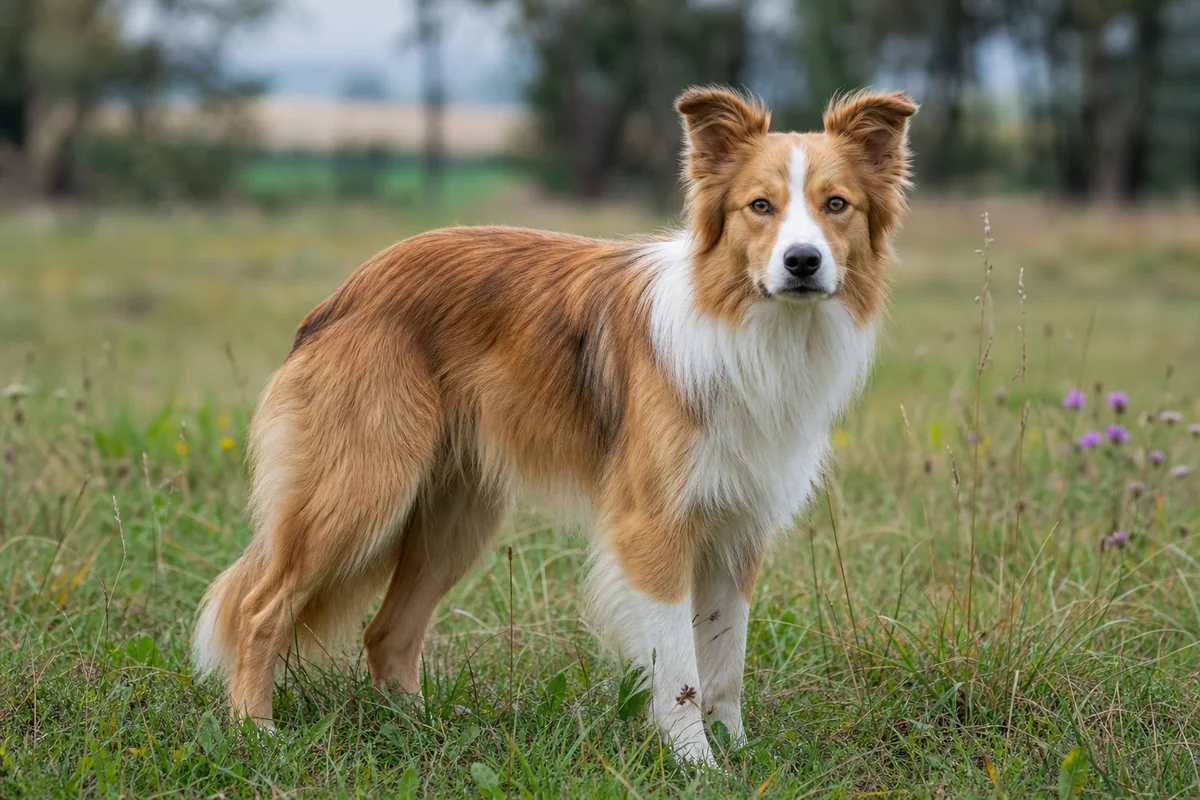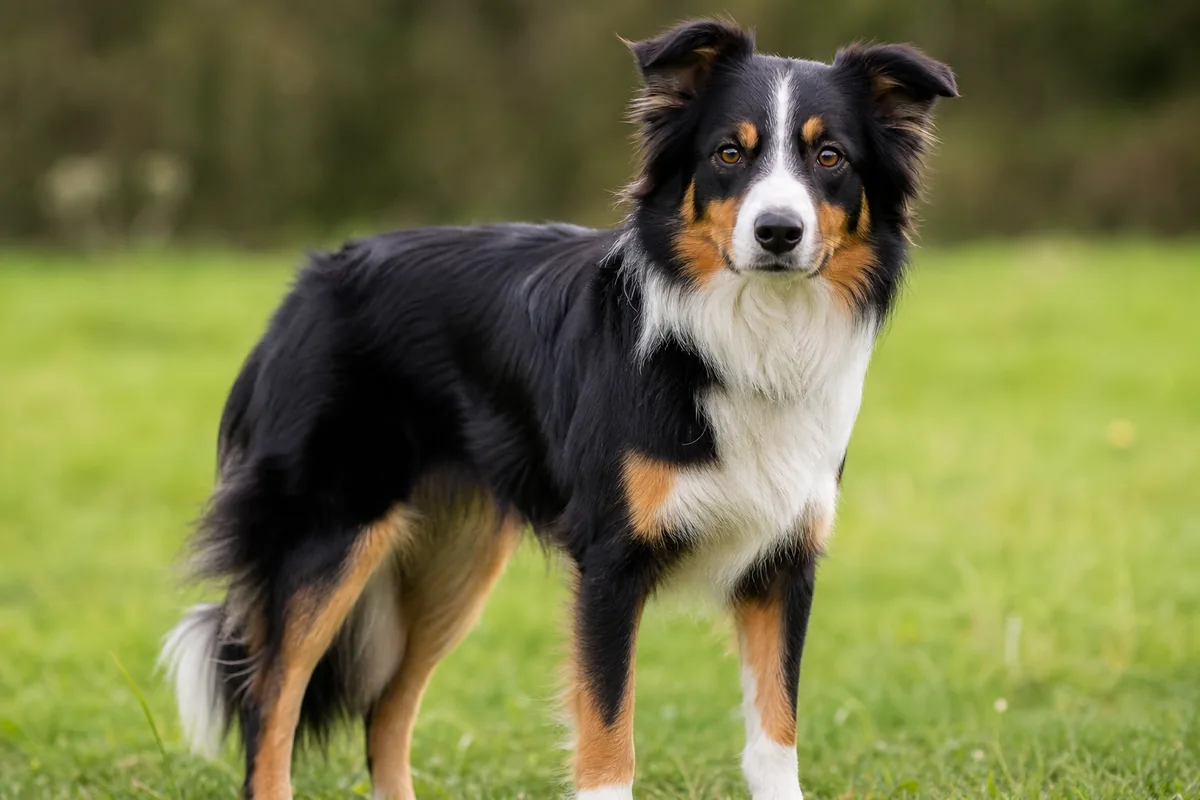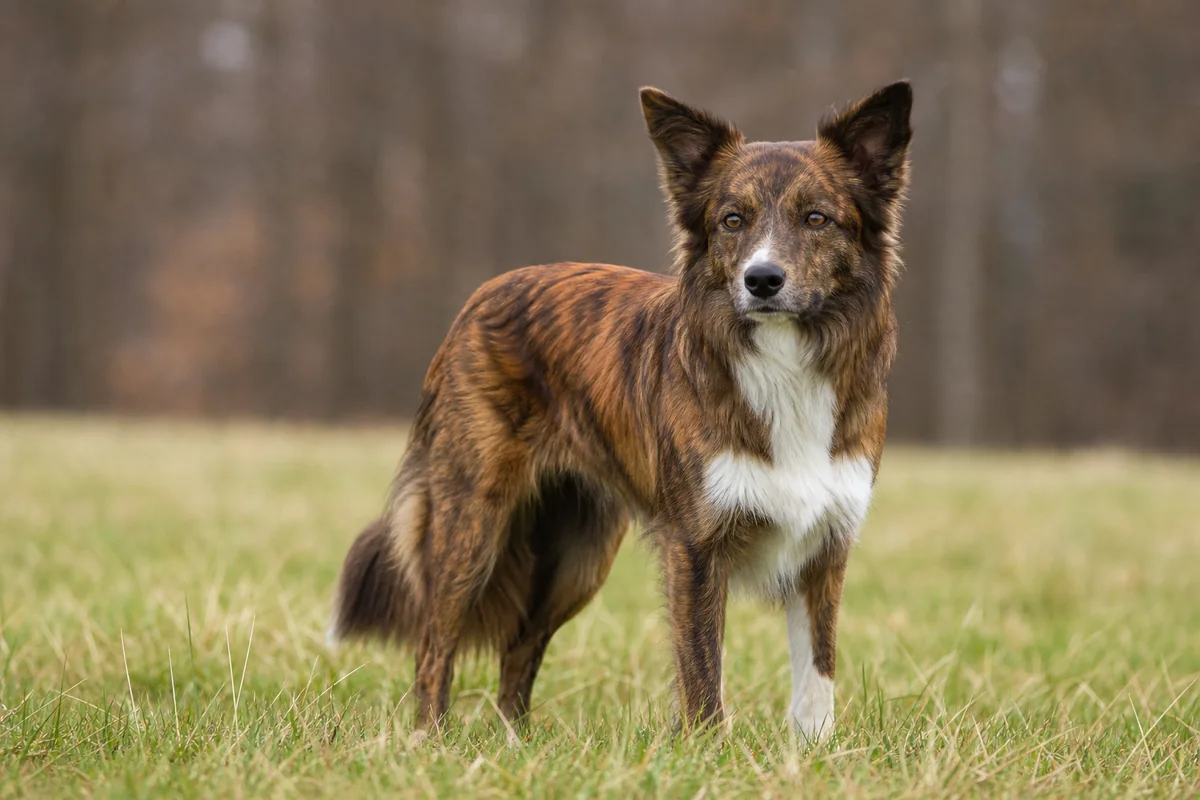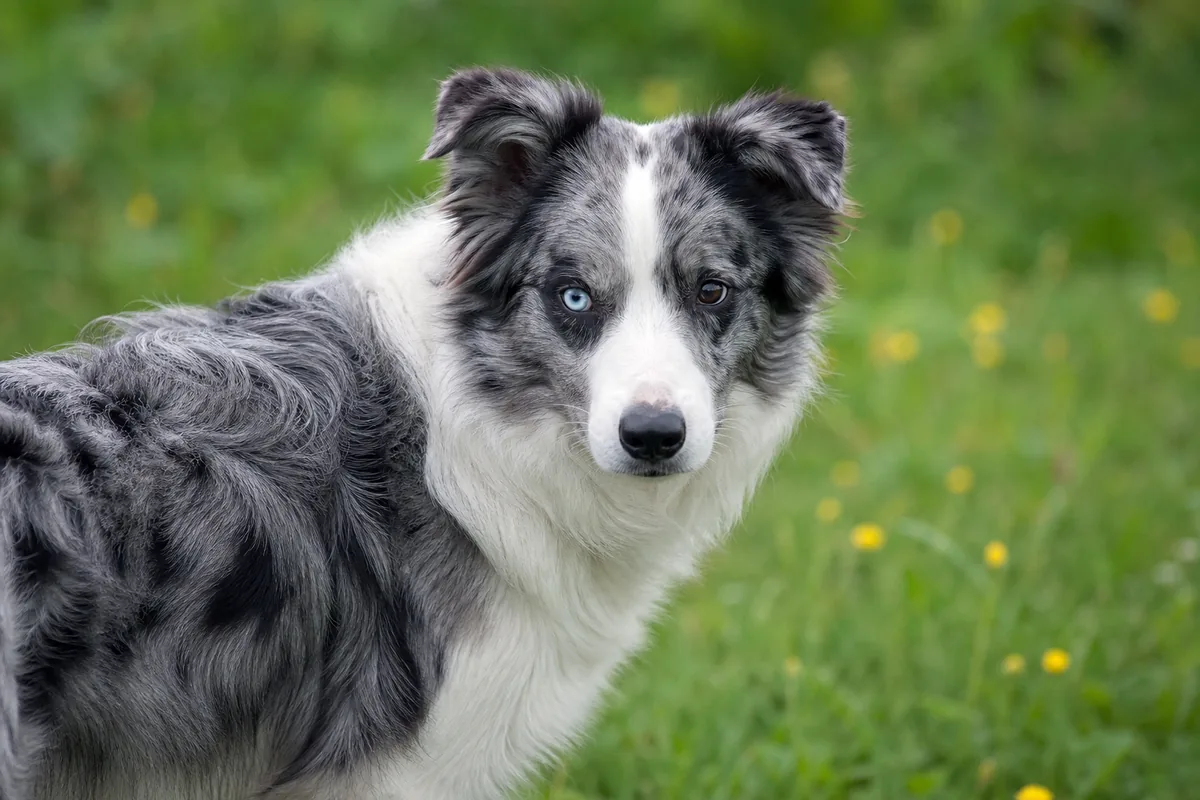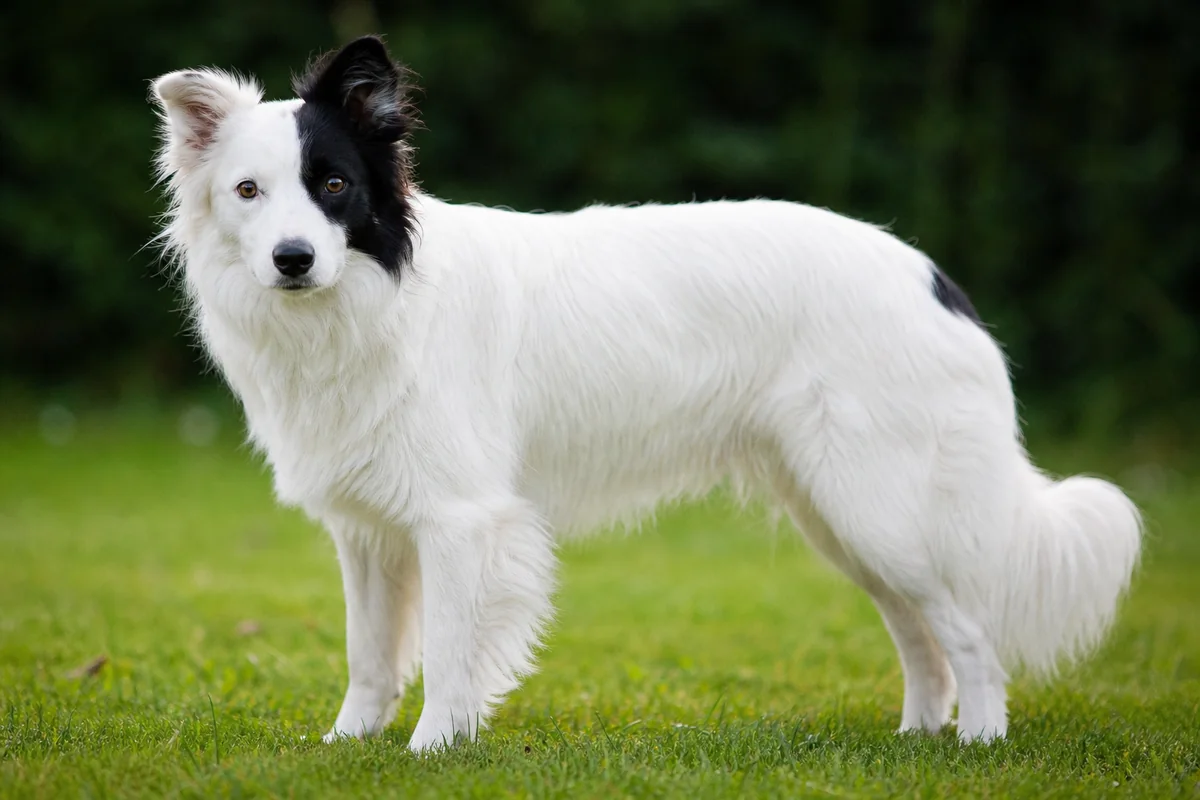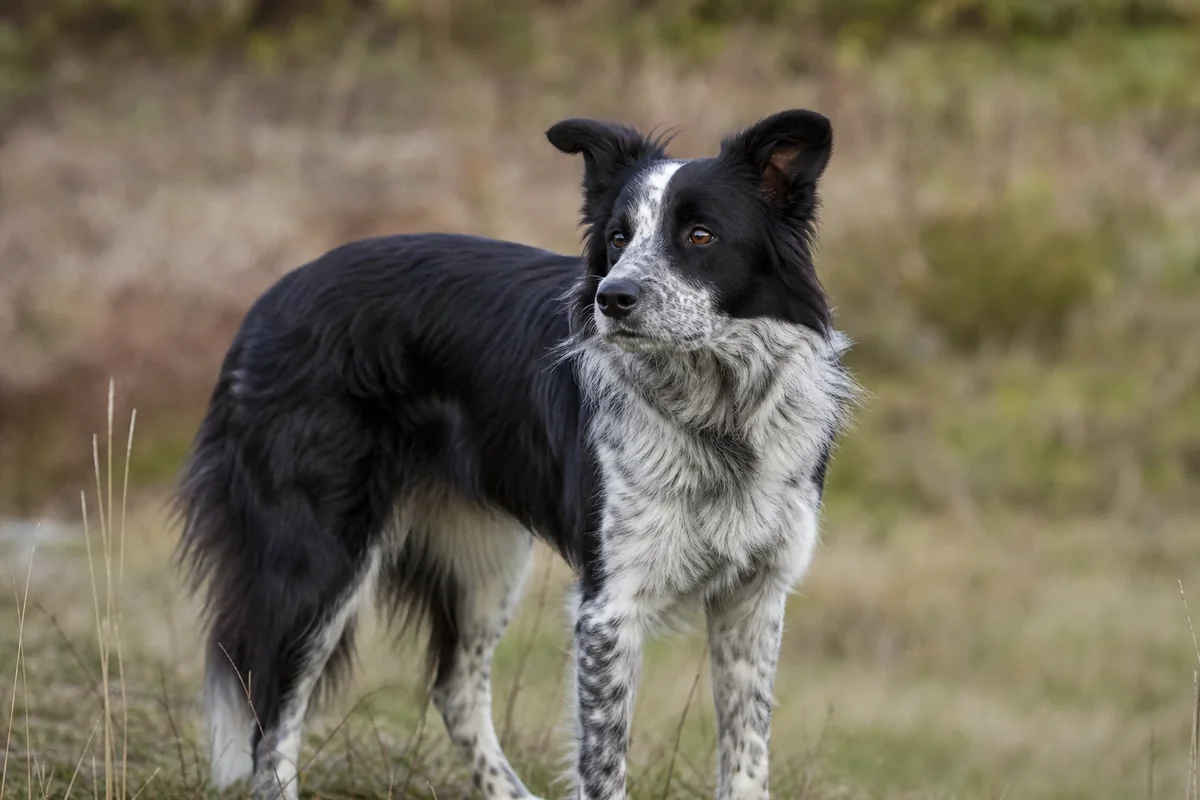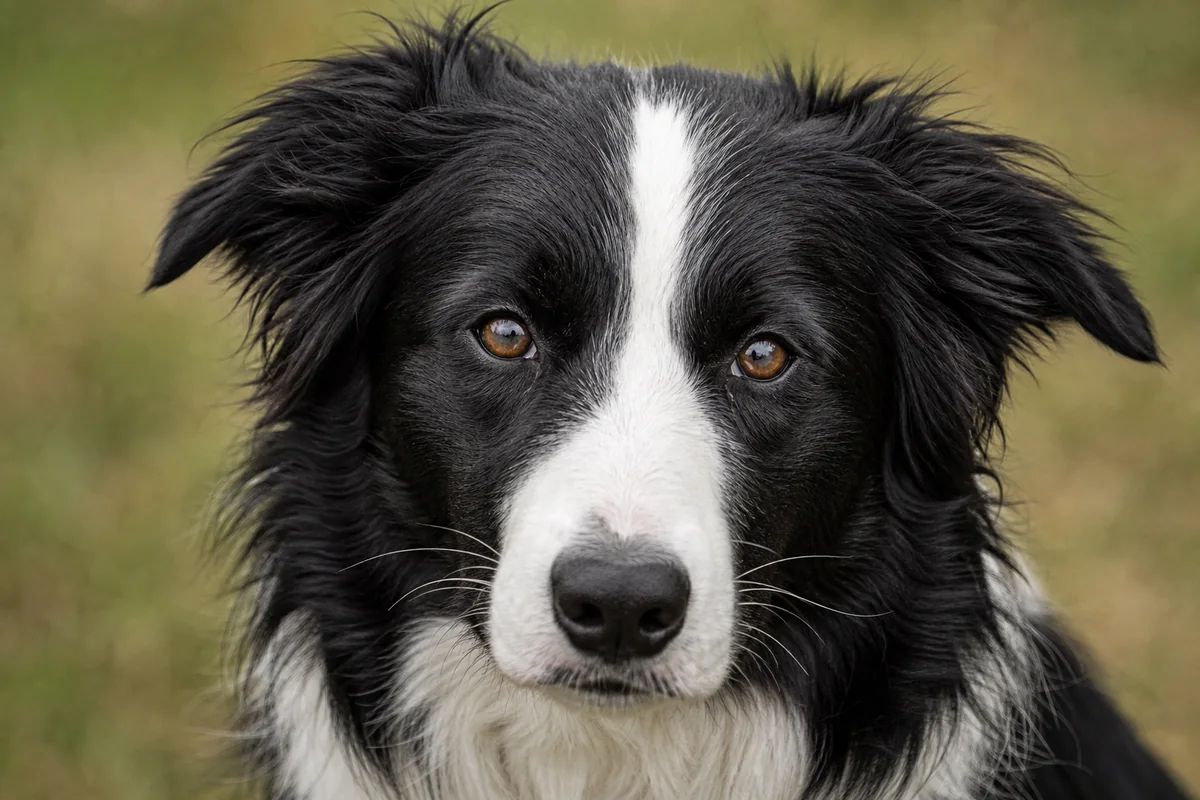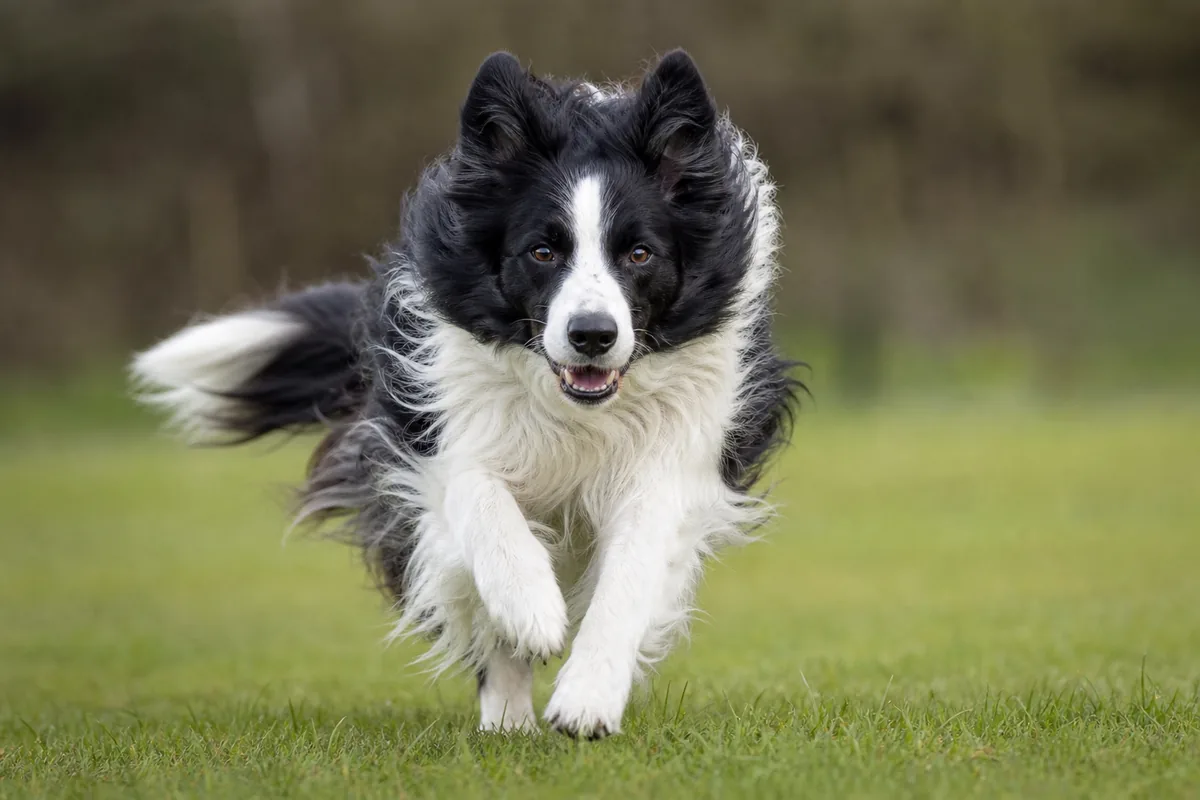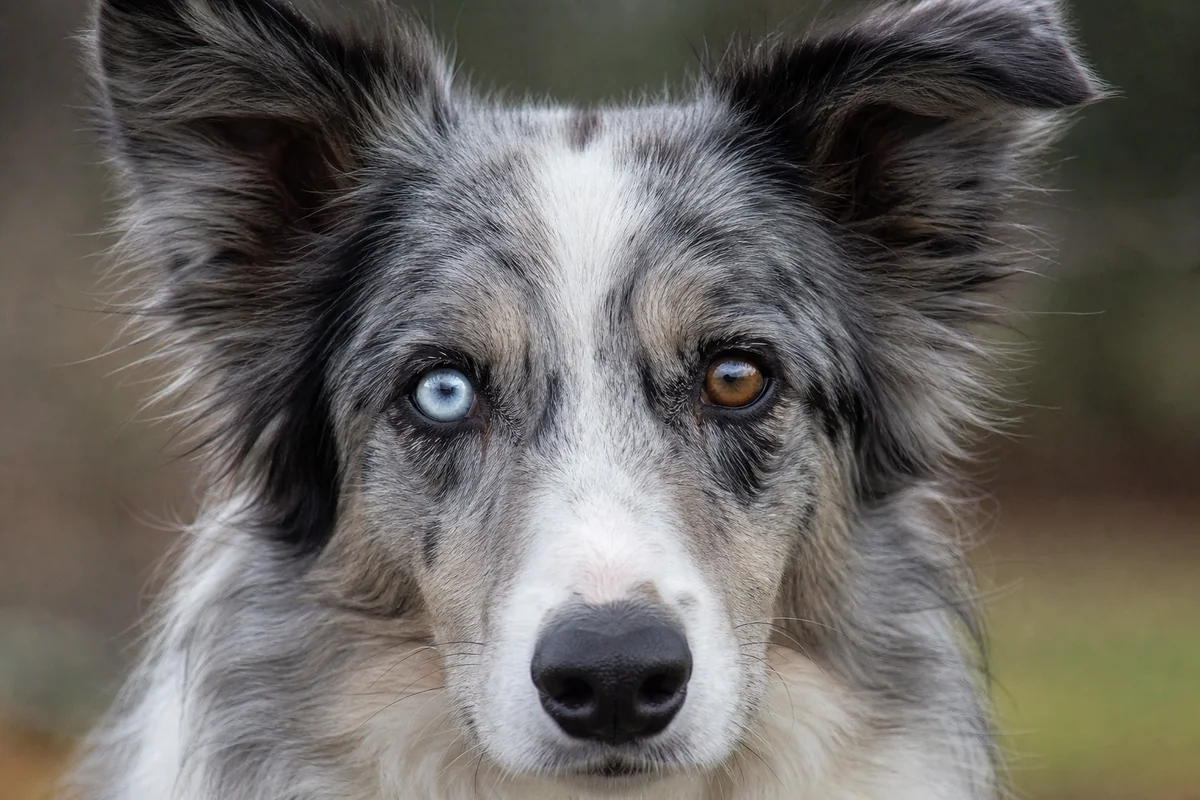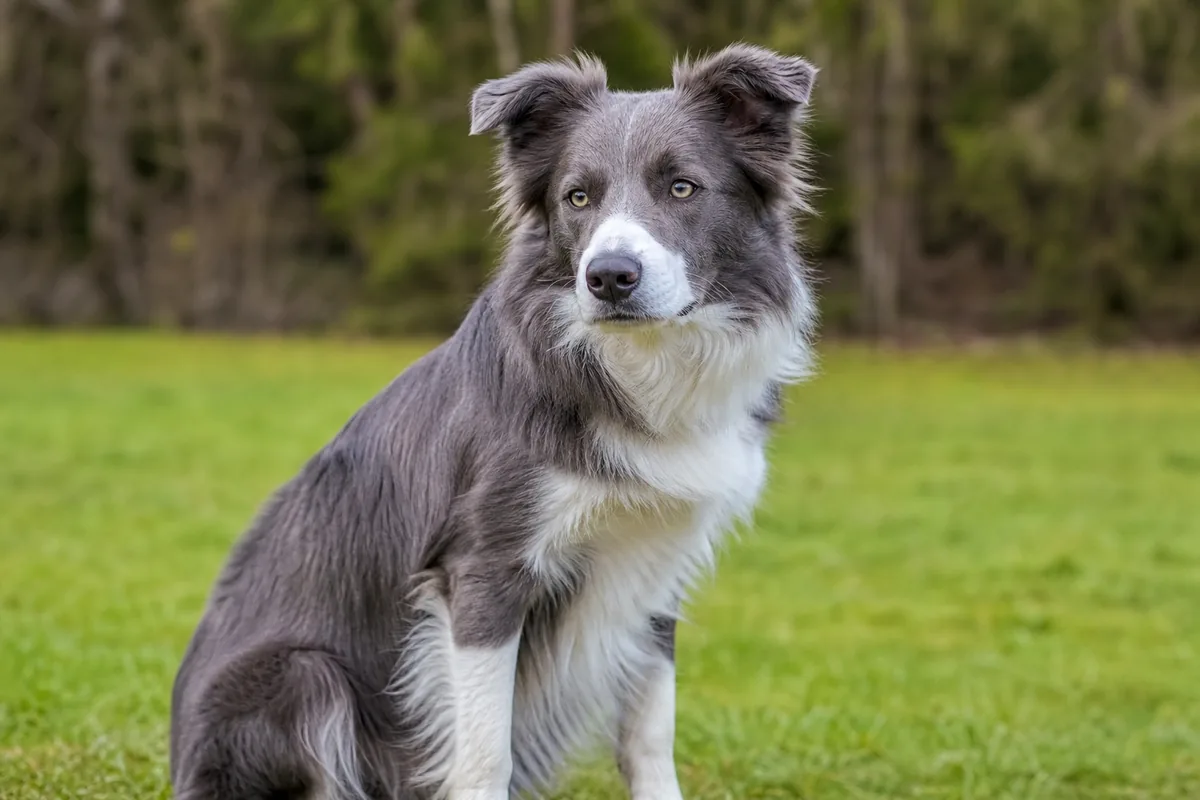
“Blue,” “slate,” “lilac” and “isabella” are useful coat descriptions, but they are not interchangeable laboratory results. A careful record keeps four questions separate: what the coat looks like, which naming system is being used, which variants a test actually examined, and whether a veterinarian has diagnosed a skin disorder.
Four levels that should not be collapsed
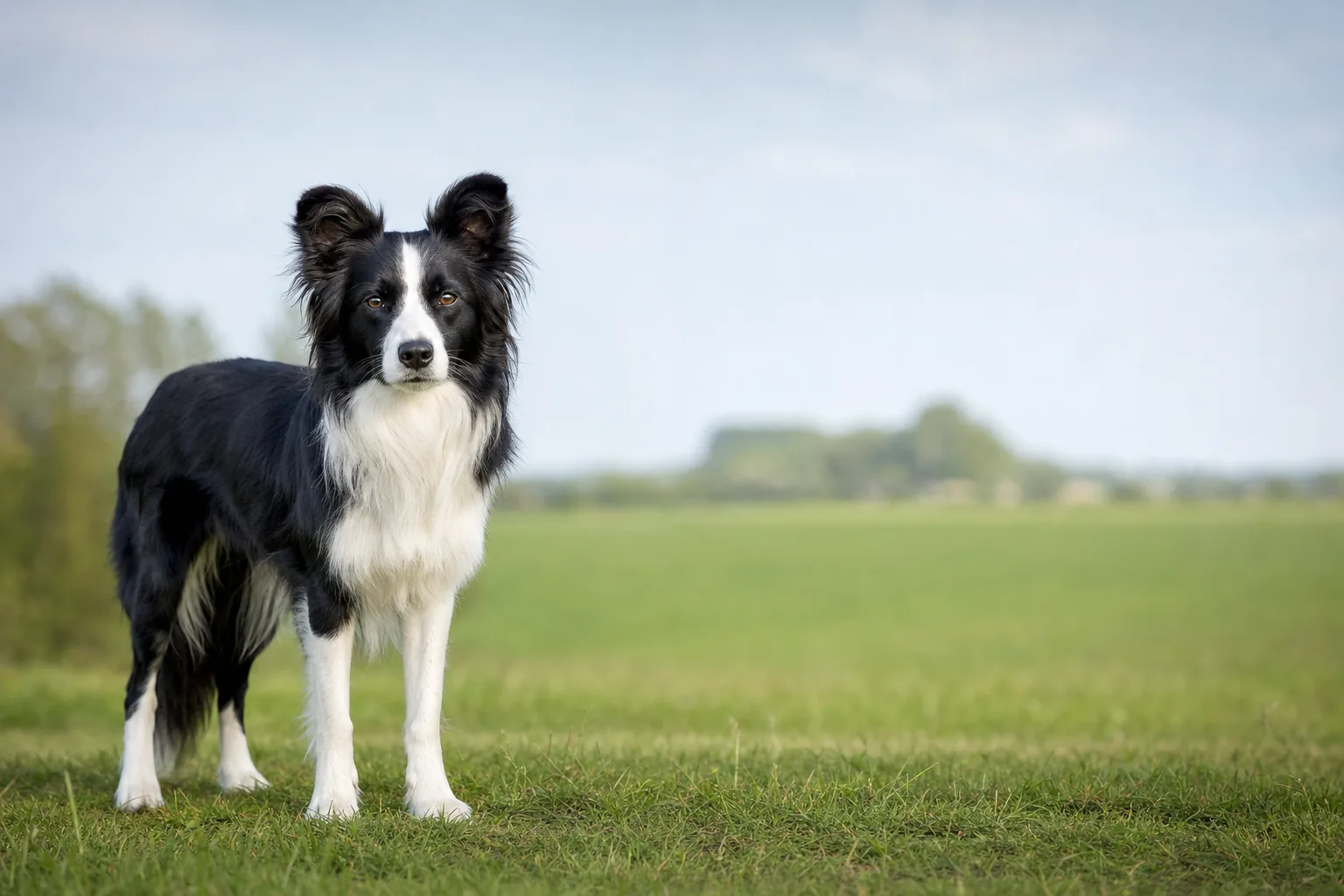
The FCI Border Collie standard permits a variety of colours and says white should not predominate; it also describes the nose in blues as slate. That is breed-standard language, not a molecular definition. The site's genetics basics provide the same essential caution: a visible coat is the combined outcome of several colour systems.
What MLPH-related dilution means
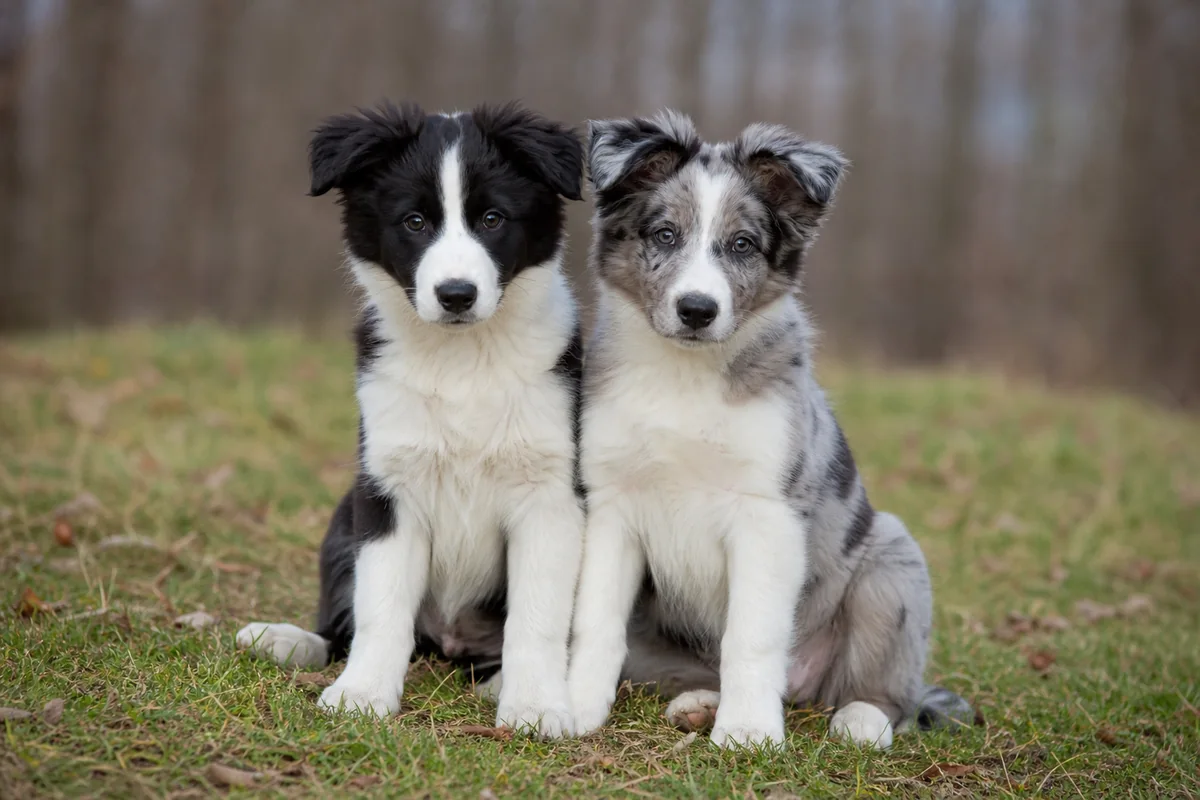
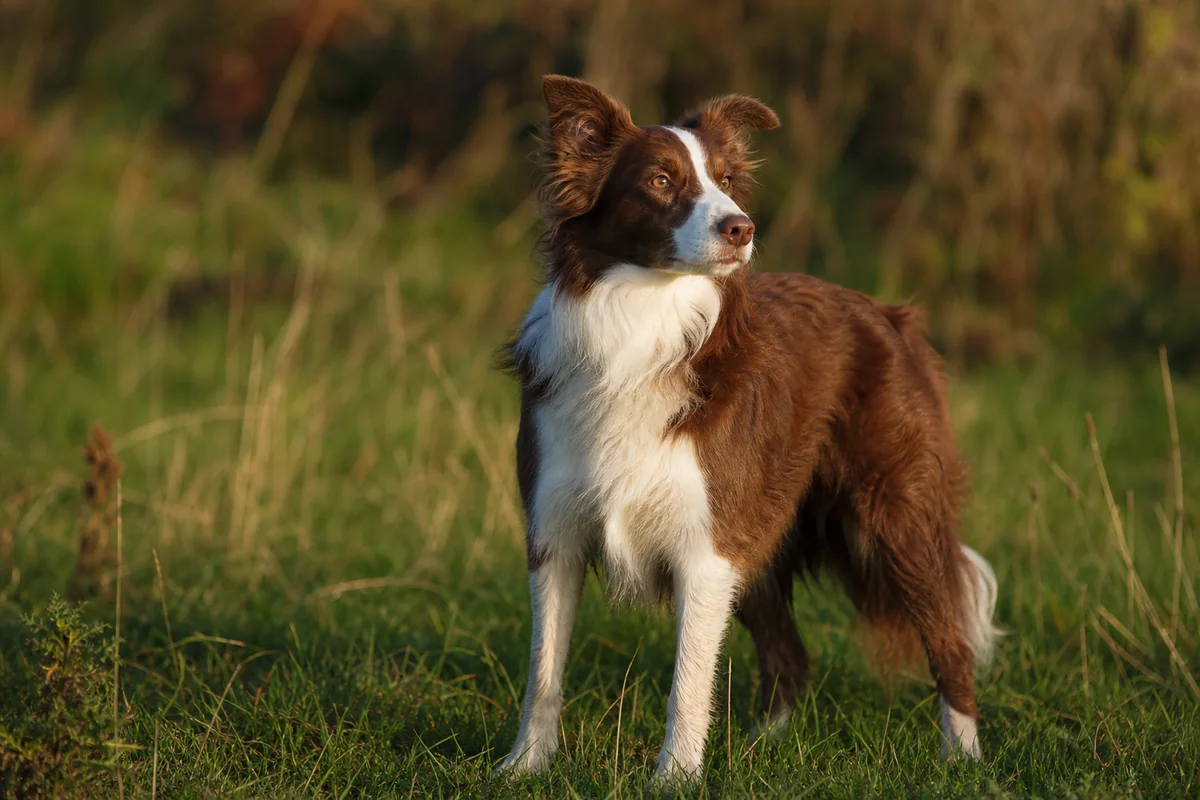
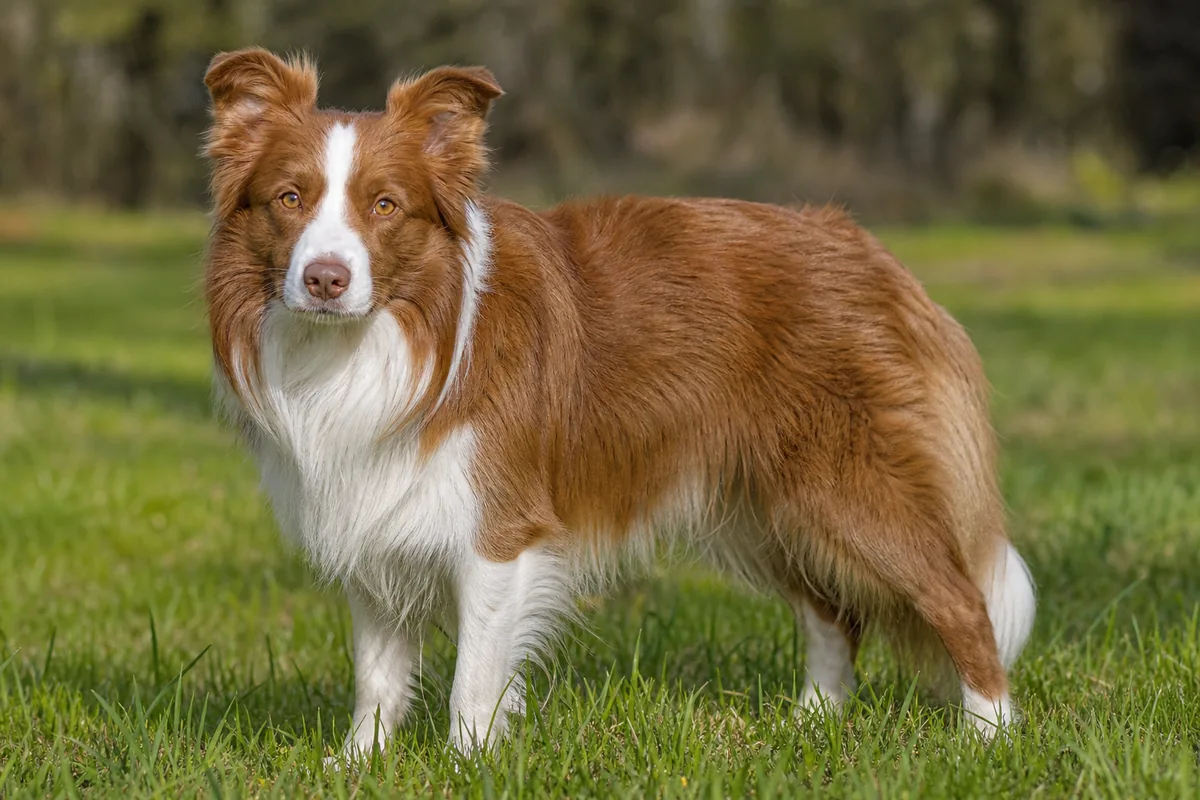
Dog hair contains eumelanin, which can appear black or brown, and phaeomelanin, which ranges through red and yellow. MLPH encodes melanophilin, part of the machinery that moves pigment-containing melanosomes within pigment cells. Research associates variants in or near MLPH with a diluted appearance in several breeds. In common visual terminology, black eumelanin may appear grey-blue or slate, while brown eumelanin may appear paler and may be called lilac or isabella.
This is a model of one colour mechanism, not a universal translation table for the whole dog. White areas lack deposited hair pigment to “turn blue”; patterns such as white spotting, tan points and merle arise through other systems and can overlay the base colour. It is therefore misleading to say that one D-locus result explains every shade, marking or pigment feature.
Why the shorthand d/d is incomplete
Traditional notation uses D for non-dilute and d for recessive dilution. It remains convenient, but modern testing is more specific. The UC Davis Veterinary Genetics Laboratory currently reports three known MLPH variants—d1, d2 and d3—and describes dilute combinations involving two copies of one known variant or two different known variants. The primary study that characterized d3 began with dilute dogs whose appearance was not explained by earlier variants.
Crucially, UC Davis states that the known variants do not account for all colour dilution in some breeds and likely others. Earlier MLPH research likewise found association and heterogeneity rather than one coding change that explained every dog examined. The curated OMIA entry now explicitly labels the trait “MLPH-related,” a helpful reminder that the gene-specific category is narrower than every possible dilute-looking coat.
Read the laboratory's scope, not just the headline
Check the dog's sample identifier, the panel version, each variant assayed, the laboratory's allele definitions and any breed-validation note. “No variant detected” means no listed variant was found in that sample; it does not prove that no unknown or untested cause exists. A colour-panel result also does not predict coat quality, temperament, working ability or general health.
Naming blue, slate and lilac responsibly
Describe first, interpret second. Observe a dry coat in even daylight and note whether pigmented hair looks cool grey, warm taupe, brown-grey or something else. Compare nose leather, lips and eye rims, but call them supporting observations rather than genotype proof. Age, seasonal coat, sun exposure, wet hair, indoor lighting and camera processing can all change the apparent shade.
“Blue” and “slate” often refer to black-based eumelanin that appears grey, while “lilac” or “isabella” may be used when brown eumelanin is also diluted. Those conventions are not perfectly standardized across breeds or registries. If distinguishing brown-based from black-based pigment matters, a relevant panel may test both MLPH variants and TYRP1-related brown; its conclusion remains limited to the variants reported. Pale eyes are not a dilution test. Iris colour has multiple influences, and eye pigmentation should be recorded separately, especially where merle is present.
Color dilution alopecia: a possible disorder, not a colour verdict
Color dilution alopecia (CDA) is a follicular disorder reported in dilute dogs of several breeds. It can involve progressive thinning or loss of hair, brittle or broken hairs, scale, follicular plugging or comedones, and recurrent superficial folliculitis. Changes often affect dilute-pigmented regions, but timing and severity vary. The evidence does not justify diagnosing CDA from coat colour, a photograph or an MLPH report.
A 2023 veterinary pathology review is particularly important: not all dilute dogs develop CDA, and pigment aggregates may also be present in normally haired dilute dogs. Clinical information must be combined with pathology. The Merck Veterinary Manual describes CDA among hereditary follicular disorders, while noting that evaluation is needed. No robust Border Collie-specific incidence figure was identified in these sources, so a precise risk percentage would be speculation.
Hair loss needs a differential diagnosis
Many conditions can resemble one another. Depending on the history and distribution, a veterinarian may consider parasites such as demodectic mites, bacterial or yeast infection, dermatophytosis, allergic itch and self-trauma, endocrine disease, nutritional or drug-related effects, and other follicular dysplasias. Merck's diagnostic guidance emphasizes a full history, physical examination and targeted tests. These can include coat and hair examination, skin scrapings, cytology, fungal testing, blood work or a carefully selected biopsy; not every dog needs every test.
Arrange a veterinary examination for new, progressive or recurring thinning, scale or breakage. Seek prompt care when skin is painful, very red, odorous, discharging or pustular; when itching is intense or changes spread rapidly; or when appetite, energy or general health changes. Do not start medicated shampoos, supplements or infection treatment simply because a coat is dilute. Management depends on the confirmed problem and may focus on secondary infection, scaling, comfort and monitoring rather than changing inherited colour.
Using colour information without overreaching
A colour guide can support accurate records; it cannot select a mating or certify welfare. Reproductive decisions require a wider view of breed-relevant health, behaviour, structure, diversity and the individual dogs, with advice from qualified veterinary and genetics professionals where appropriate. A colour result should never displace clinical screening or become a promise about puppies. For visual comparisons, continue with black pigment, brown pigment, merle and coat types.
Frequently asked questions
Is every blue or slate Border Collie genetically d/d?
Not necessarily. d/d is useful shorthand, but several known MLPH variants can combine, and known variants do not explain every dilute phenotype. Appearance alone is not a complete genotype.
Can a photograph reliably distinguish blue from lilac?
No. Lighting, camera processing, coat condition and inconsistent colour names can mislead. Pigment on the nose and eye rims may provide context, but a photograph cannot replace a relevant genetic report.
Does a dilute coat mean a dog has color dilution alopecia?
No. Not every dilute dog develops color dilution alopecia, and a dilute genetic result does not diagnose it. Hair loss requires clinical assessment and exclusion of other causes.
Can a negative commercial DNA result rule out dilution?
Not always. A negative result means the variants listed by that laboratory were not detected in that sample. It cannot exclude unknown variants, variants outside the panel or a sample-identification problem.
Are pale eyes proof of dilute colour?
No. Iris colour varies for several reasons, and merle can also affect eye pigmentation. Eye colour should be recorded separately rather than used as proof of an MLPH genotype.
When should a veterinarian examine hair or skin changes?
Arrange an examination for new, progressive or recurring hair loss, scaling or broken hairs. Seek prompt care when there is pain, marked redness, discharge, odour, pustules, intense itching, rapid spread or any change in general health.
Sources and further reading
- Fédération Cynologique Internationale — Border Collie standard No. 297.
- UC Davis Veterinary Genetics Laboratory — Dilute (D locus/blue).
- UC Davis Veterinary Genetics Laboratory — Dog coat colour and type.
- Philipp et al. (2005) — polymorphisms within canine MLPH and dilute coat colour.
- Drögemüller et al. (2007) — a candidate noncoding MLPH variant.
- Van Buren et al. (2020) — a third MLPH variant causing coat colour dilution.
- Online Mendelian Inheritance in Animals — MLPH-related coat-colour dilution.
- Welle (2023) — canine noninflammatory alopecia and diagnostic interpretation.
- Merck Veterinary Manual — hereditary alopecia and hypotrichosis.
- Merck Veterinary Manual — diagnosis of skin diseases in small animals.
- University of Minnesota — canine follicular dysplasias.
Editorial scope: this reference explains terminology and evidence. It cannot diagnose a dog, interpret an individual laboratory report without its full context, or replace veterinary or genetics advice.
The same check-the-record approach applies to joining an affiliated running club.