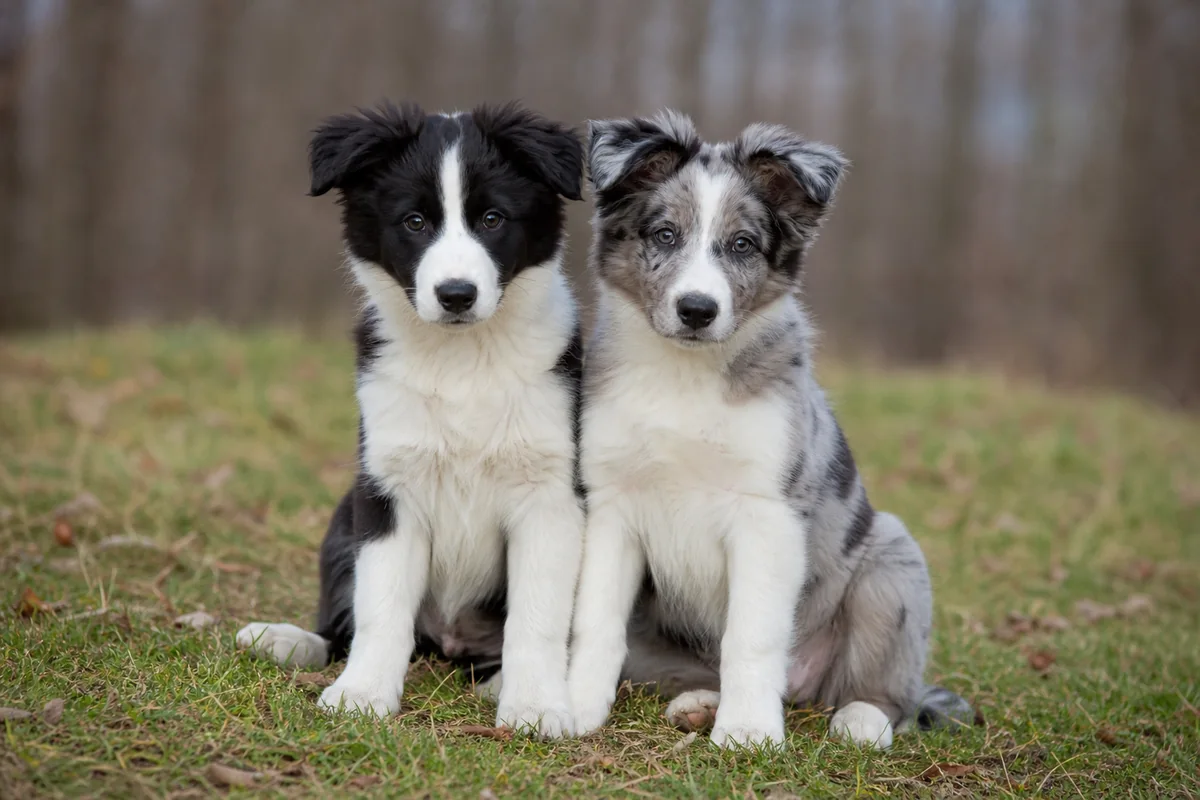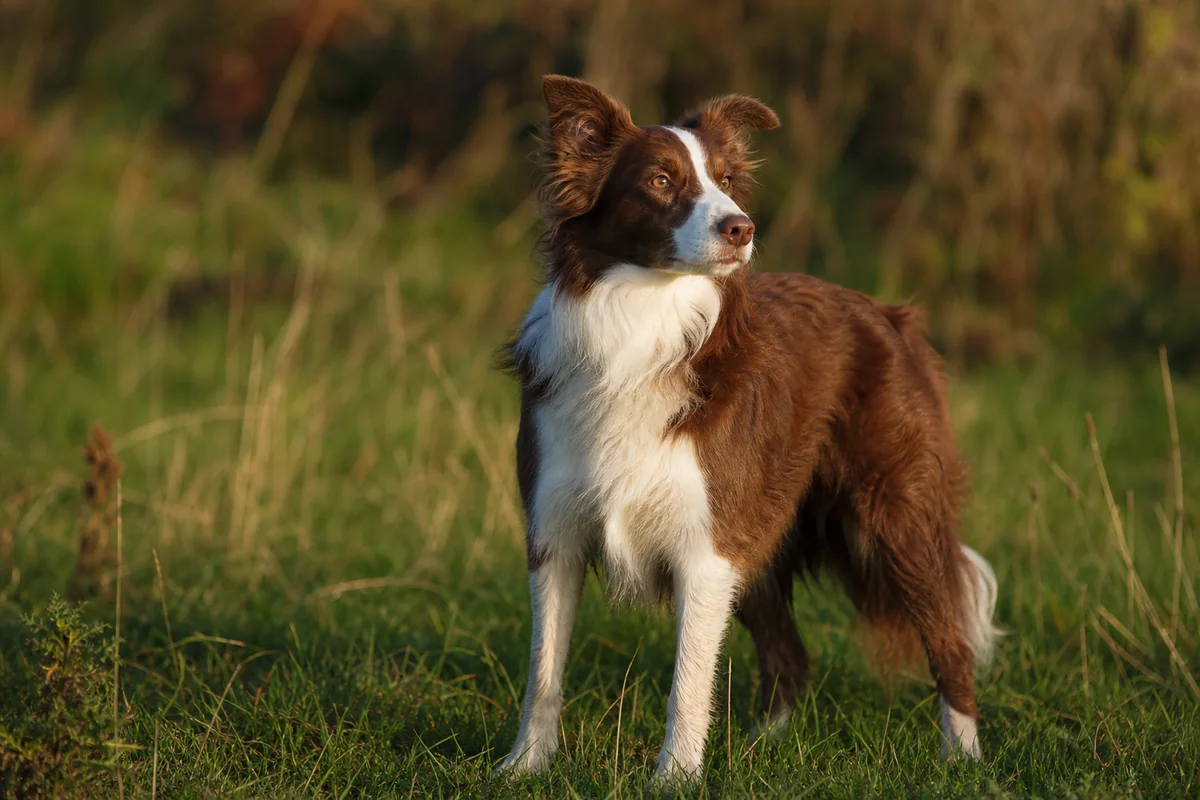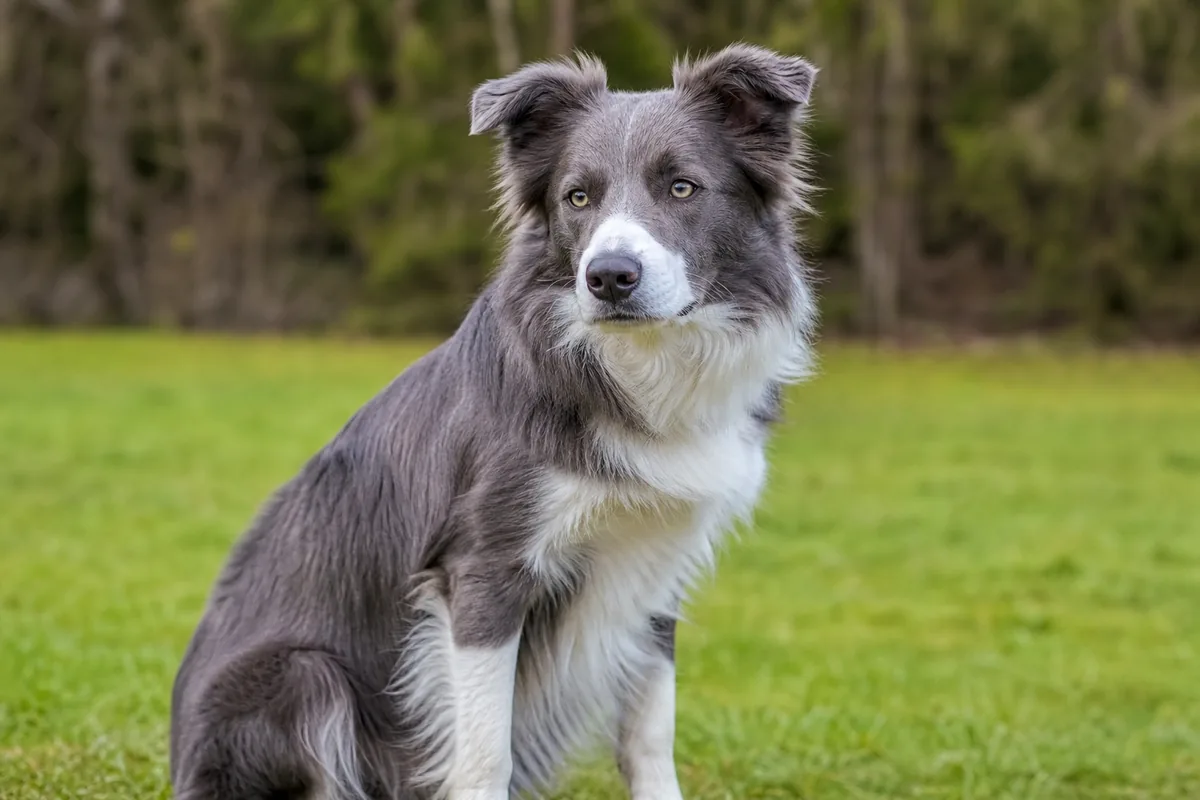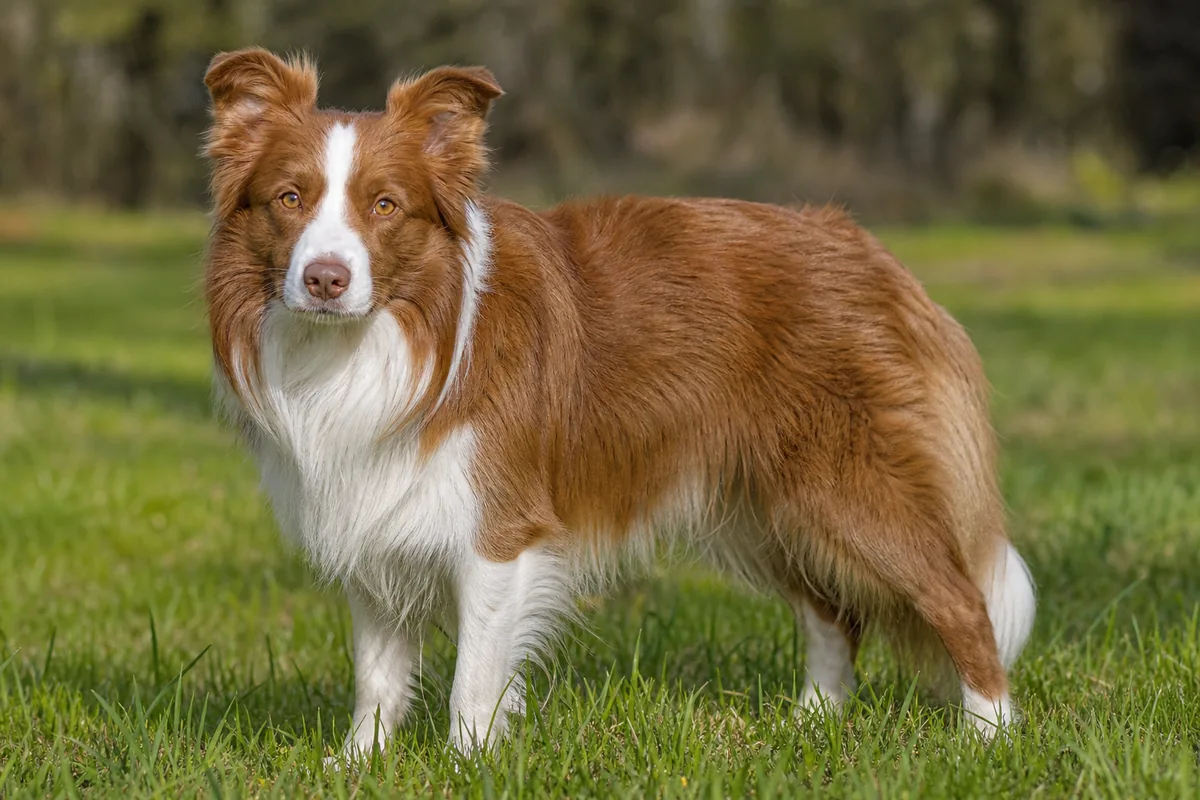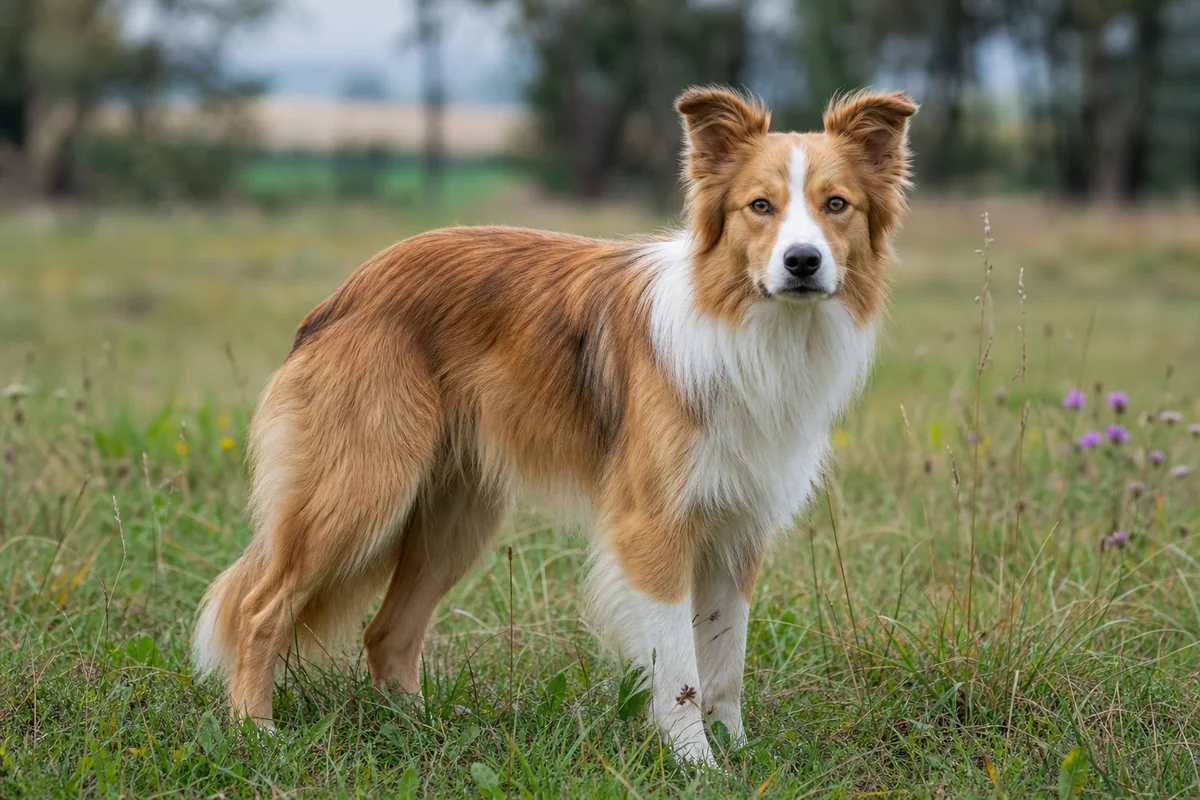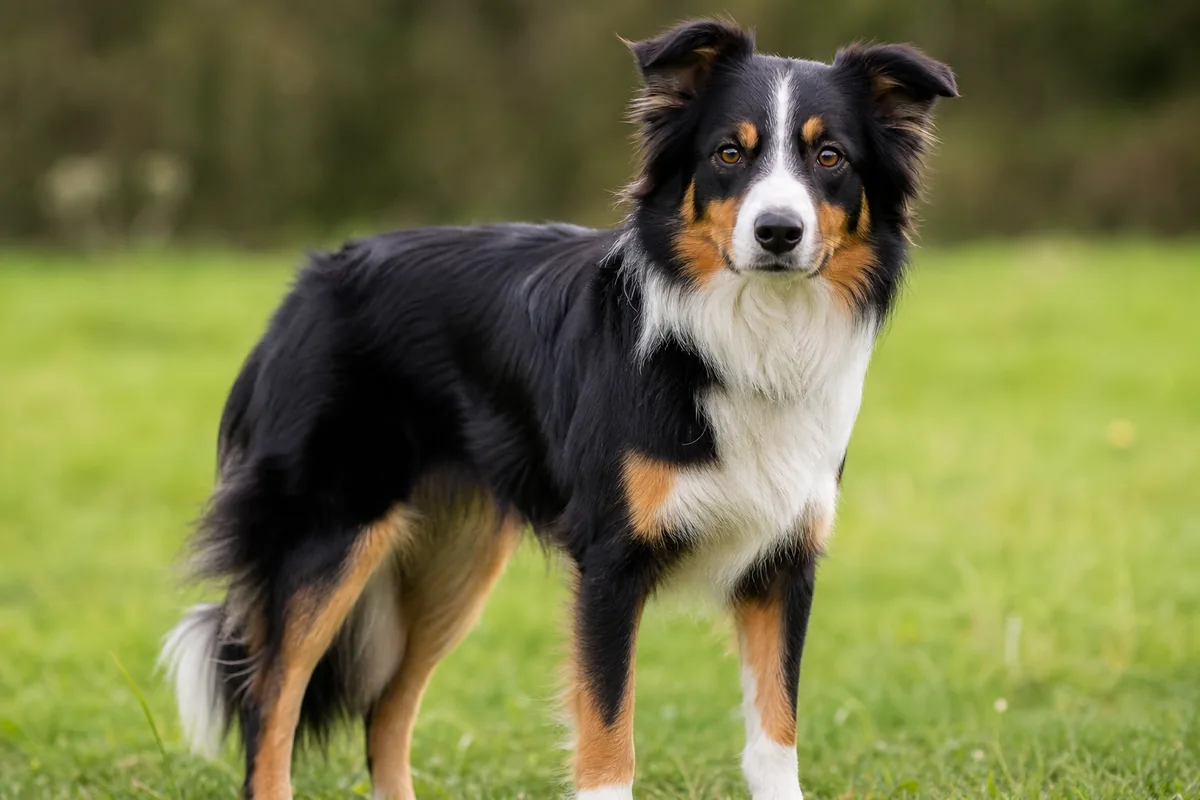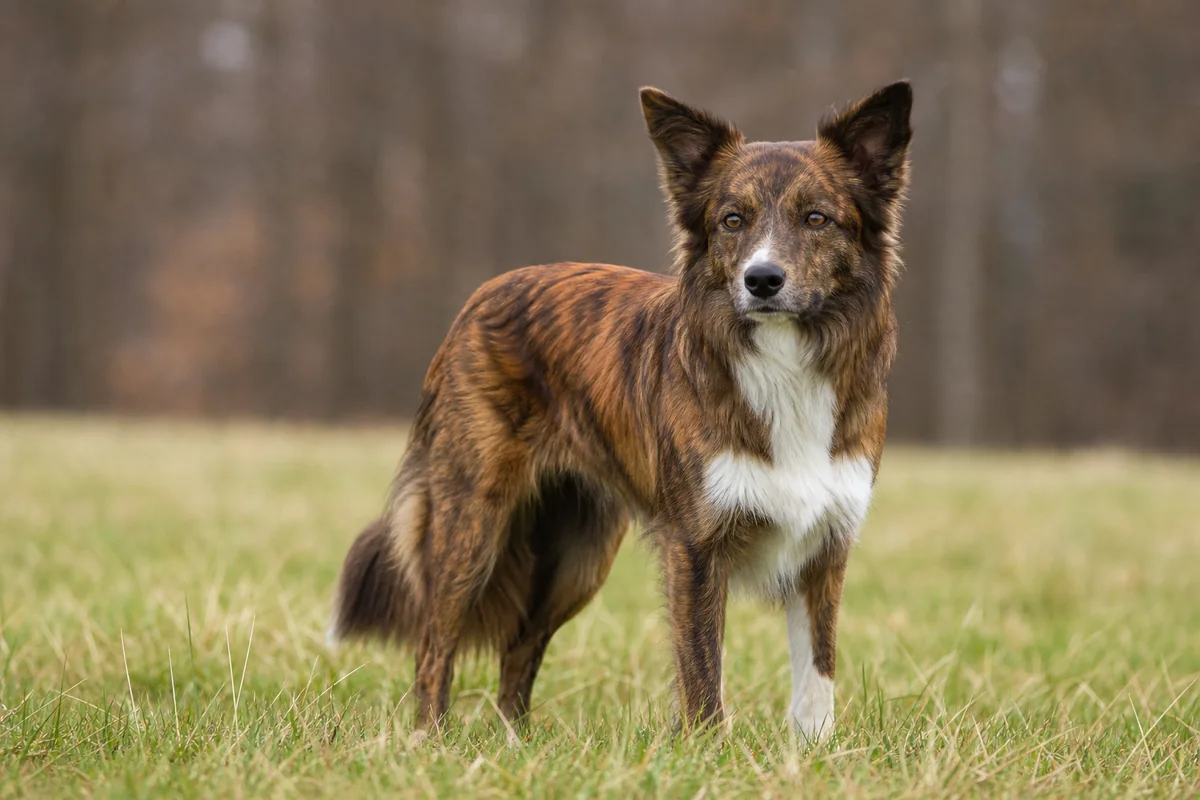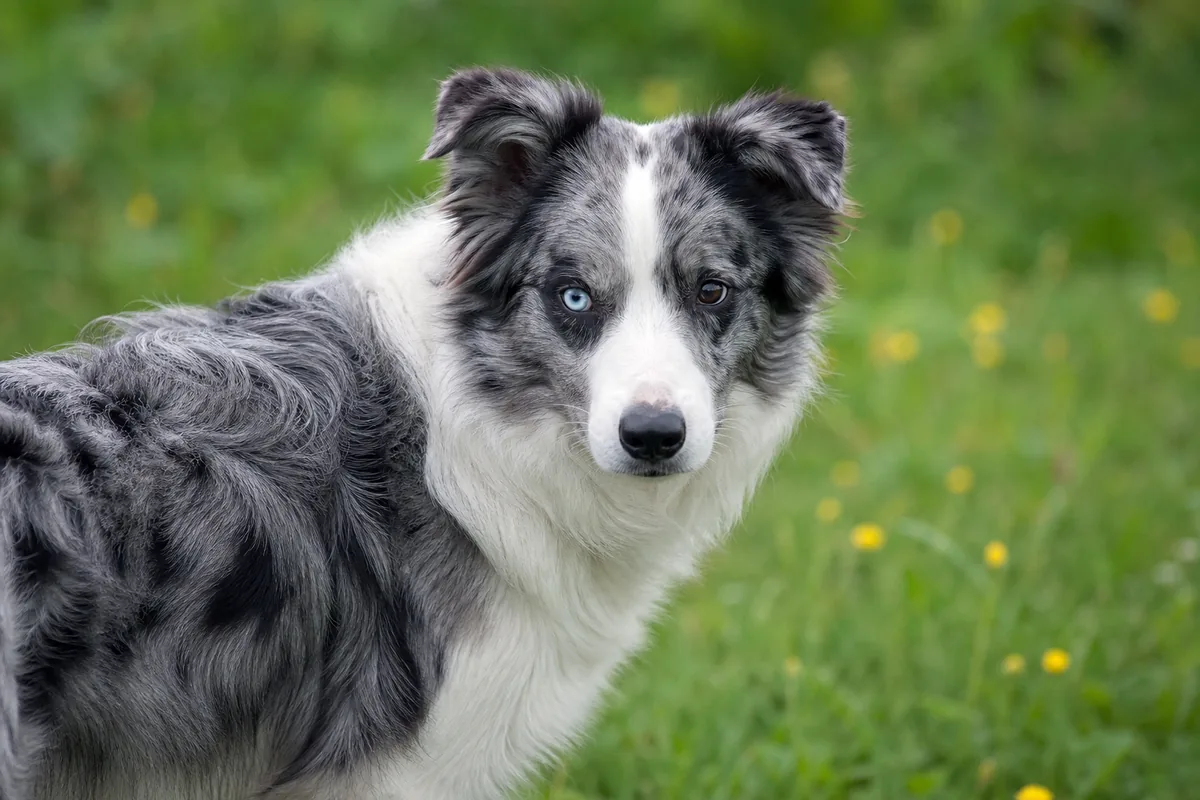
Black is a description of visible pigment, not a complete genetic identity. On a Border Collie, a black coat is usually the first thing people notice, but a careful reading separates what the eye sees from what a pedigree, DNA report or breed standard can actually establish.
What “black” means to the eye
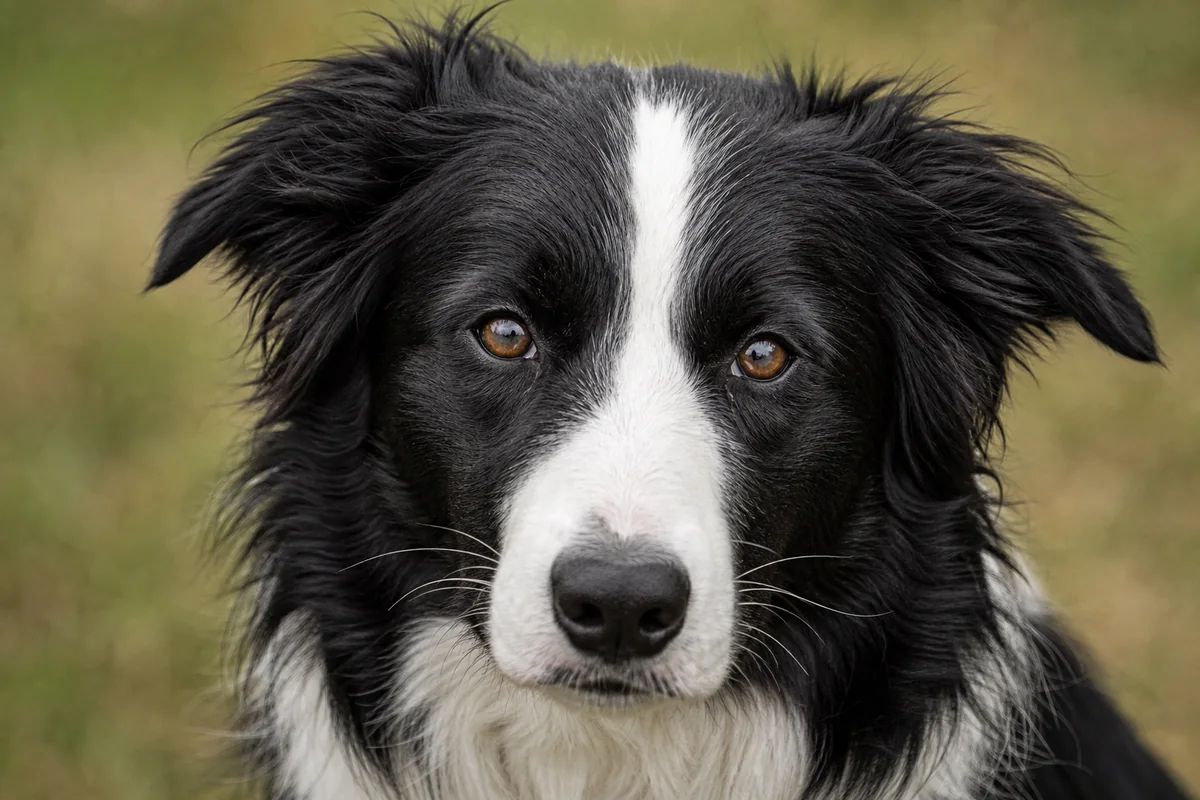
Black hair contains visible eumelanin, the black-to-brown pigment family used in canine coat biology. In a healthy-looking coat, the coloured hairs can read as deep black, charcoal or black with a warm cast depending on light, moisture, age and hair condition. The nose leather, eye rims and lips may also appear dark, but their appearance is still an observation, not a laboratory result.
The UC Davis Veterinary Genetics Laboratory basic panel explains that several systems influence pigment production and distribution. It discusses MC1R/E, ASIP/A, B, D, K and S systems as interacting parts of canine coat colour. That is more useful than treating “black” as one switch. A photograph can document a phenotype; it cannot reveal every inherited variant behind it.
How B, K, A and E fit — cautiously
People often write B for the brown system, K for dominant-black or brindle-related interactions, A for agouti-pattern information and E or MC1R for pigment switching and masking. These letters are convenient signposts, but they are not a universal equation for every Border Collie. Variant names, allele coverage, breed relevance and laboratory interpretation must be checked in the actual source.
At the B system, variants can shift eumelanin toward brown; the Brown / Chocolate guide explores that question. D-related variants can lighten pigment, which is why a black-based dog may be compared with blue, slate or lilac phenotypes. An E-related interaction may change where black or red/yellow pigment is expressed; see ee Red for the masking concept. A and K discussions concern pattern distribution and switching, so compare Sable, Tan Point and Brindle without turning a shorthand label into a breeding prediction.
Do not read “BB” as a complete answer
A card or caption may use a compact genotype label to make a concept memorable. That label should not be treated as proof that a photographed dog has a particular pair of alleles, carries or does not carry every recessive variant, or will produce a particular result. Ask which variant was tested, by which laboratory, for which breed and for what purpose.
Black and white: pigment versus pattern
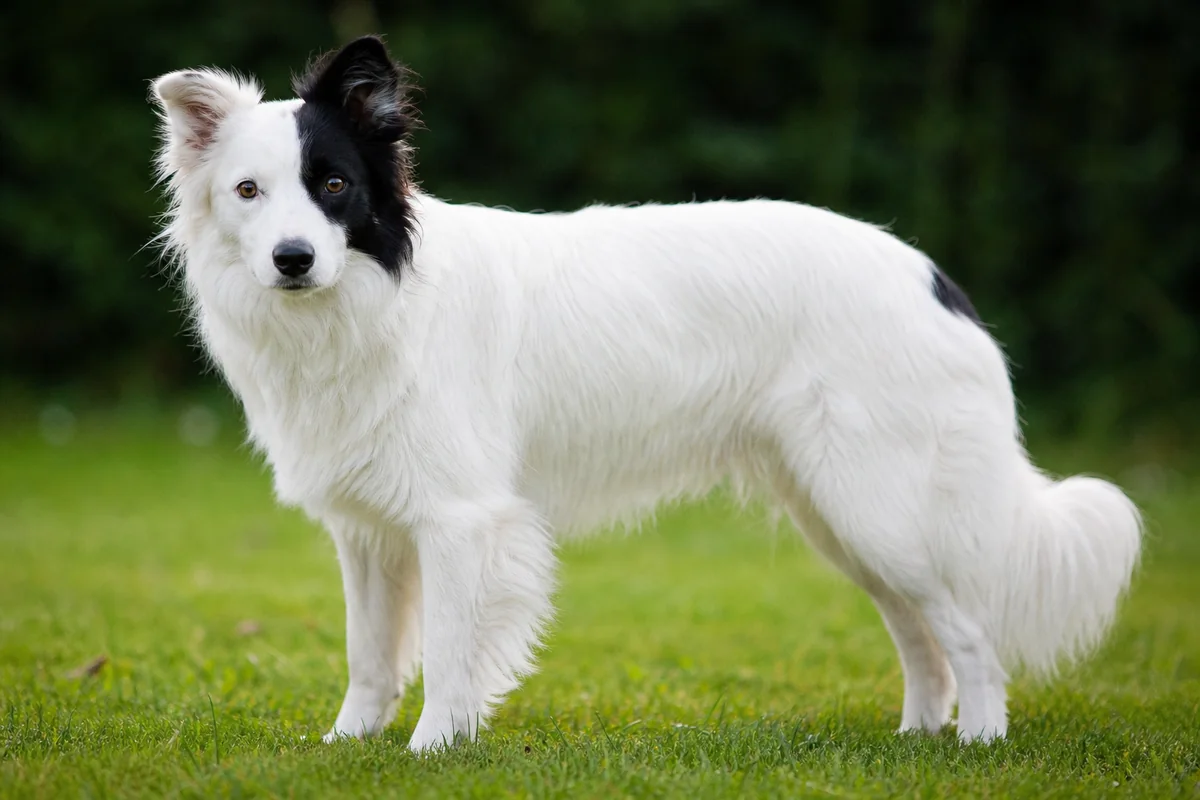
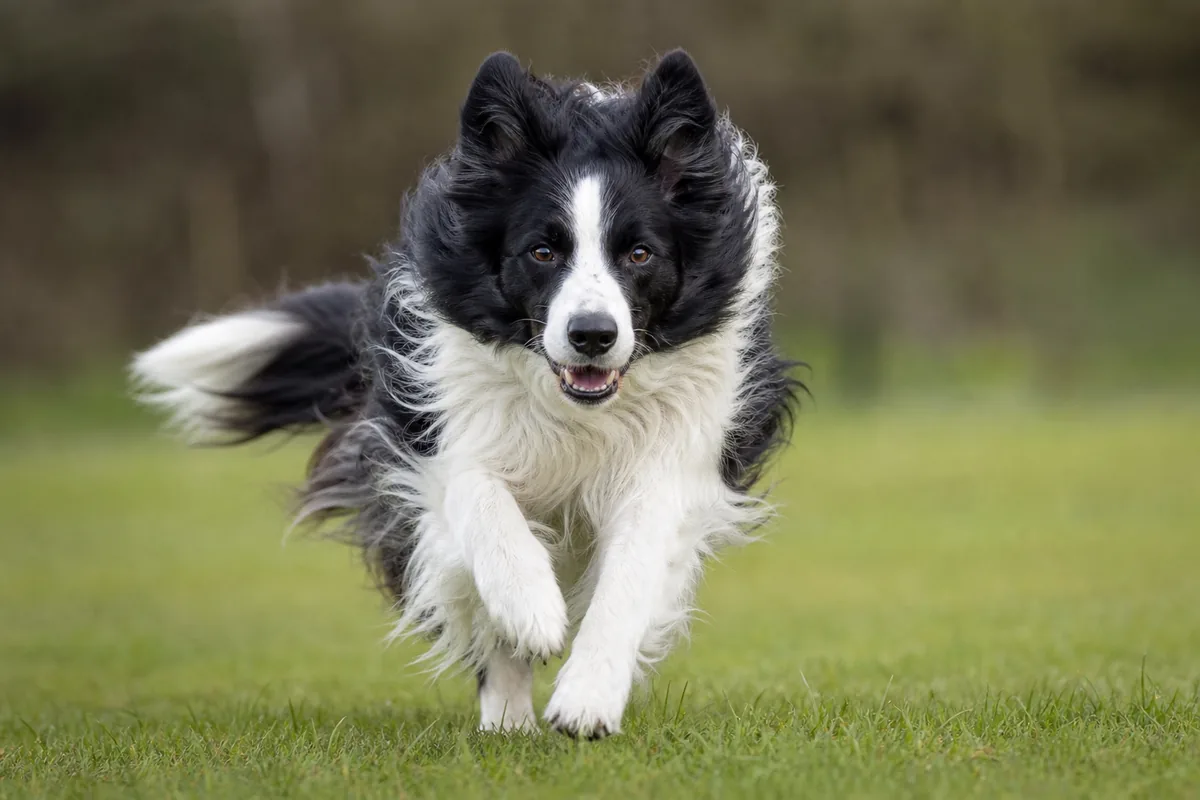
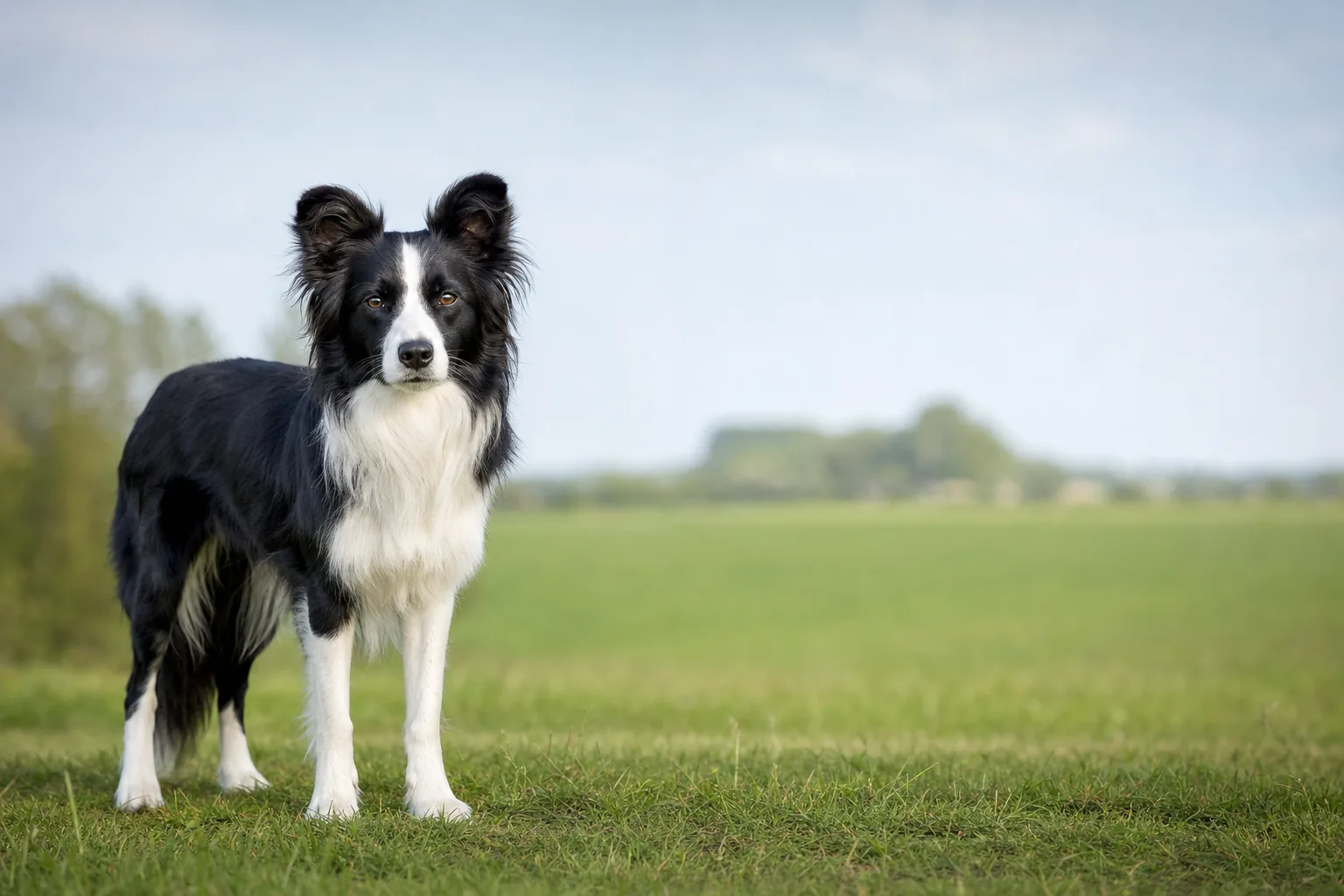
“Black and white” combines two different observations. Black describes eumelanin in coloured hairs; white describes areas where visible pigment is absent or greatly reduced. The AKC Border Collie standard allows white markings and treats colour as secondary to physical evaluation and gait. White collars, blazes, socks and body patches can therefore vary while the black base remains visually familiar.
Irish spotting is a useful descriptive phrase for a distribution of white, not a diagnosis and not proof of one simple allele. The UC Davis dog coat colour resource notes that white spotting has a complex, non-uniform genetic basis across dogs. For comparisons, use the site's White / Irish Spotting, Ticking and Face Markings pages as vocabulary guides.
Why the same black coat photographs differently
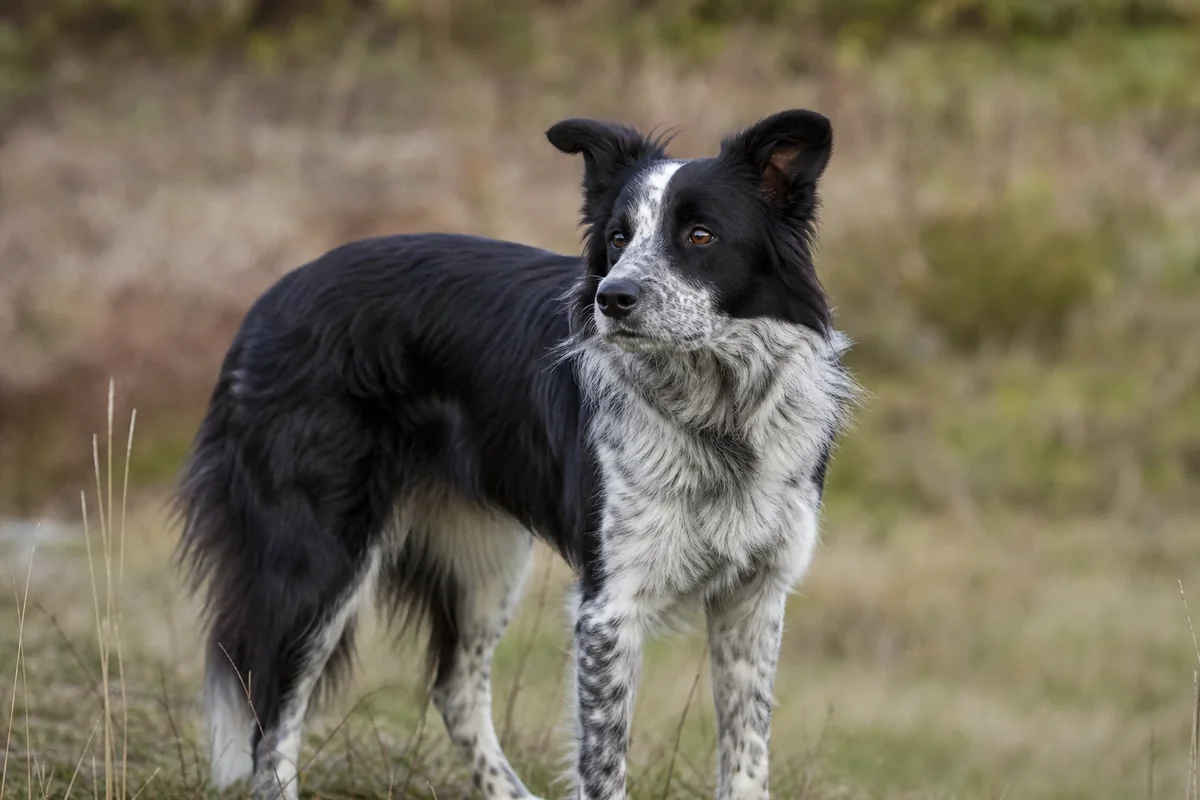
Light can make black hair look blue, brown, silver or flat grey. Backlighting reduces detail; warm indoor bulbs add red; a wet coat clumps and reflects; phone processing can deepen shadows or lift highlights. Sun exposure and weathered hair may make the ends look faded. Puppies and adults can also have different apparent density as the coat changes with age, season and hormonal status. A single image is particularly weak evidence for a hidden genotype.
When comparing a dog, note the light source, whether the coat is dry, the date, grooming condition and which body area you observed. Look at pigment-bearing hair, nose and eye rims together, but keep “observed” separate from “inferred.” The VCA coat-care guide explains why coat condition and grooming affect what owners see, while the AAHA shedding guidance distinguishes normal seasonal shedding from changes that deserve attention.
What a test can — and cannot — do
Choose testing only after writing the question. Are you investigating a named colour variant, checking parentage, clarifying a confusing result or responding to a health concern? Read the laboratory's sample instructions, breed coverage, variant list and limitations. A test may answer one variant while leaving other loci, modifiers or newly described variants unaddressed. A result can be accurate and still not answer the question you meant to ask.
Keep the report with the dog's identification, sample date, panel name and version. For a decision involving welfare or health, discuss the exact report with a veterinarian, veterinary geneticist or qualified genetic counsellor. The OMIA merle record illustrates how a research database frames a specific trait; it is not a general-purpose colour calculator. The AKC Border Collie information and its judges' guides provide breed context, not individual genetic diagnoses.
Black does not predict the dog
There is no responsible shortcut from a black coat to health, hearing, vision, temperament, trainability, working ability or family suitability. Colour is one physical trait. Evaluate the individual dog through veterinary care, behaviour, structure, movement, environment and history. If the question concerns skin or coat change rather than inherited colour, a veterinary examination matters: Merck Veterinary Manual guidance explains that similar skin signs can have different causes and require history, examination and appropriate tests.
Frequently asked questions
Does a black coat prove BB or a specific genotype?
No. A black appearance shows visible eumelanin in the examined hair and skin, but it cannot reveal every hidden variant or how another locus may mask it. Records or a relevant laboratory test are needed for genotype questions.
What is eumelanin?
Eumelanin is the black-to-brown pigment family discussed in canine coat biology. Its visible shade and distribution are influenced by multiple gene systems, hair condition and patterning, so the word is not a complete genotype.
What do B, K, A and E mean on a black Border Collie page?
They are shorthand for locus or gene systems used in colour discussions. The symbols are a teaching map, not a universal equation; variant names, interactions and test coverage must be checked in the relevant source.
Why can a black coat look brown or blue in photographs?
Sun, camera processing, wet hair, age, seasonal coat change and reflections can shift perceived colour. A cast in one photograph is not evidence that the dog's genotype has changed.
Is black-and-white the same as Irish spotting?
Black describes pigment in coloured hairs; Irish spotting is a description of white distribution. White spotting has a complex genetic basis, and the pattern should not be reduced to a single visual rule.
Does black colour predict health, temperament or working ability?
No. Coat colour cannot establish health, temperament, intelligence, working ability or quality. Evaluate the individual dog using appropriate veterinary, behavioural and breed-standard information.
Sources and further reading
Useful references for this guide include the UC Davis VGL basic panel, UC Davis coat-colour resource, AKC Border Collie standard, AKC breed information, AKC judges' guides, OMIA, VCA coat care, AAHA shedding guidance and Merck dermatology guidance.
Published figures doing the work of safety also drive a note on fermentation versus vinegar.