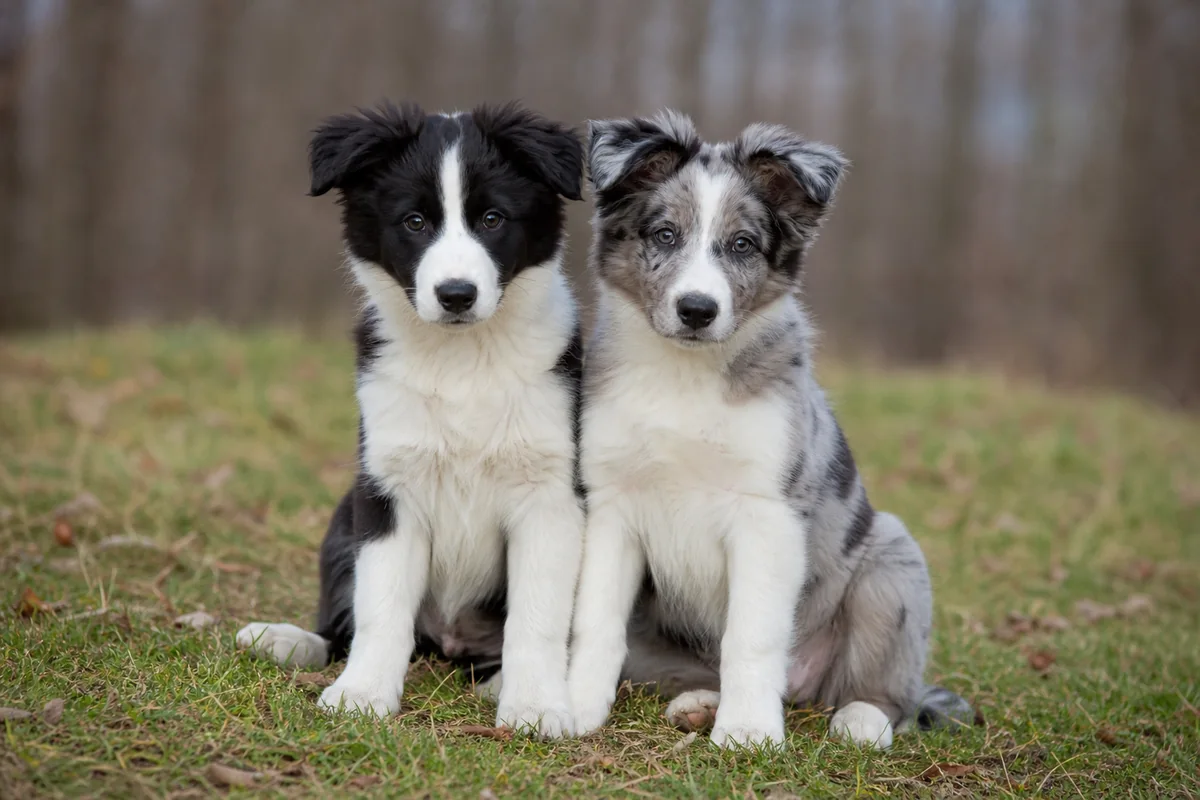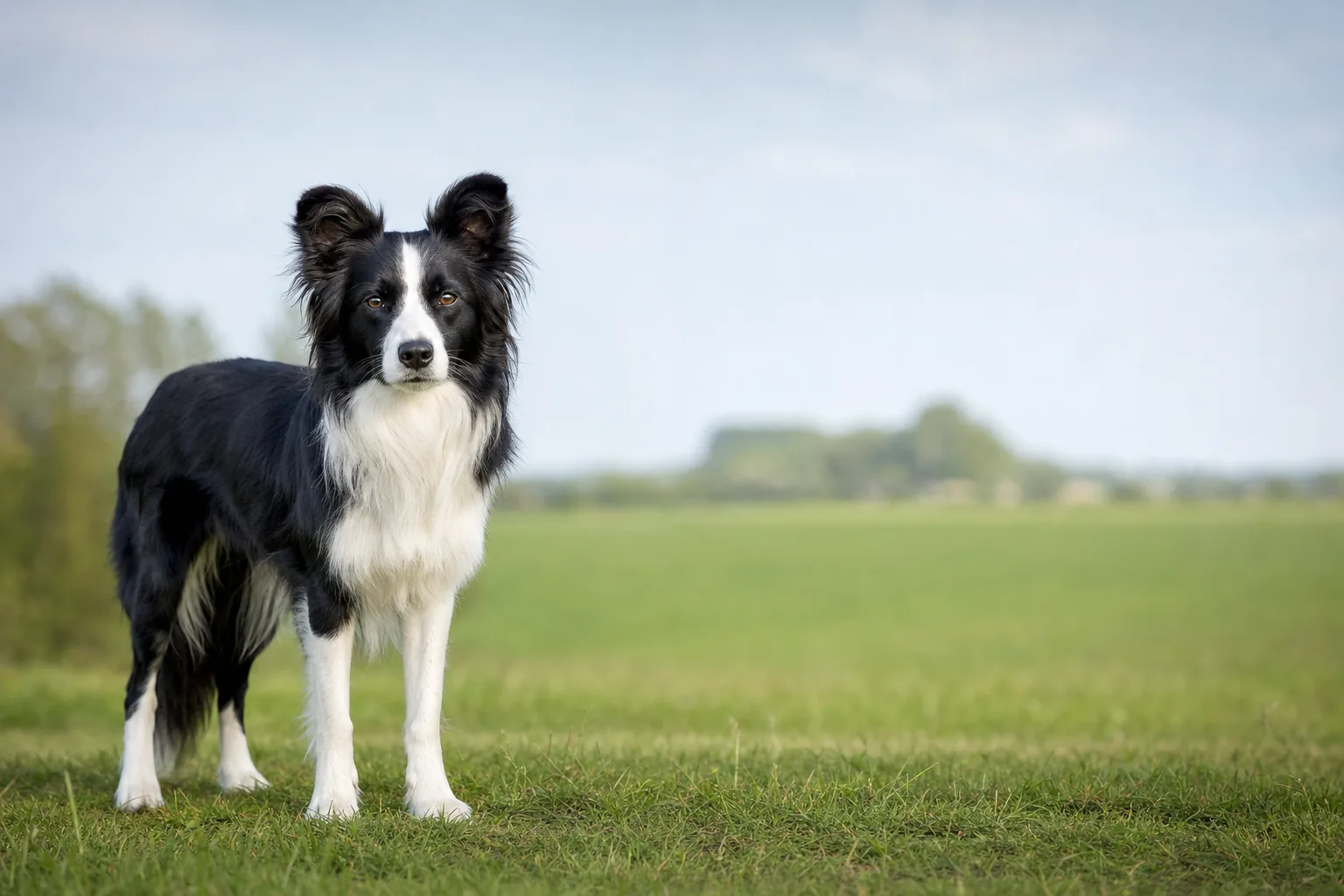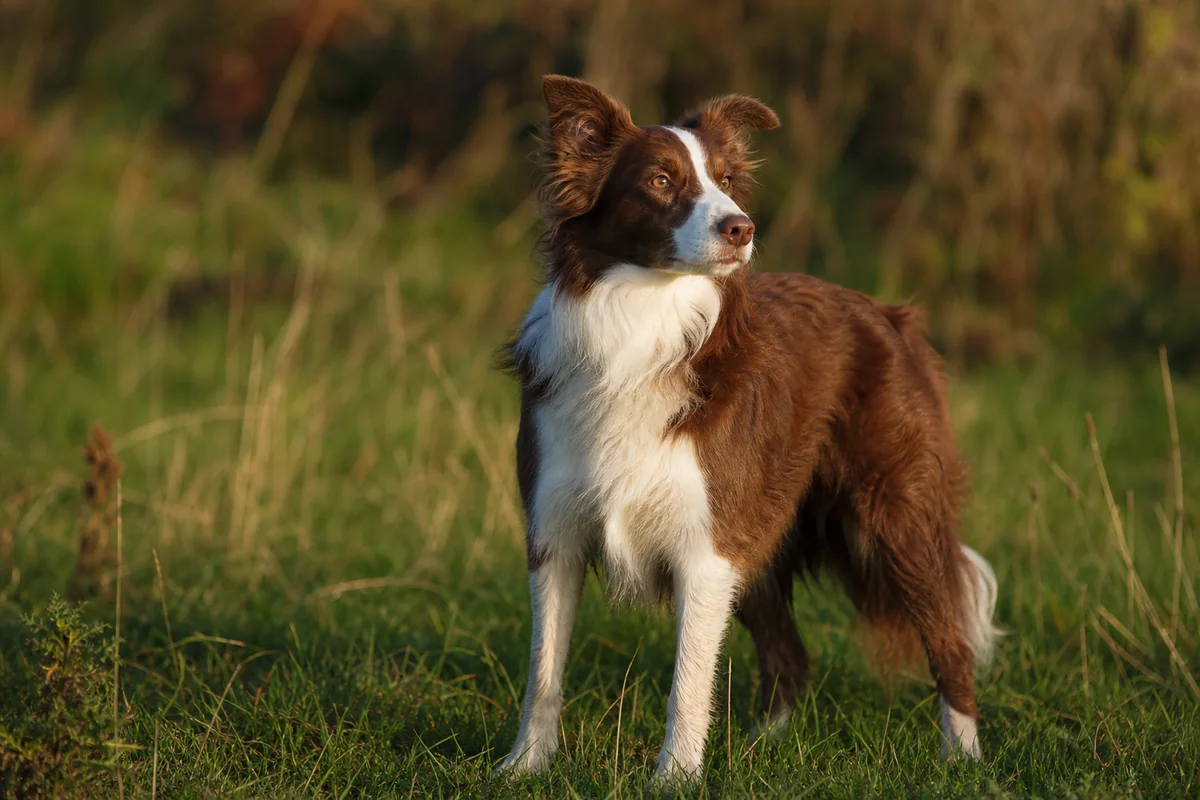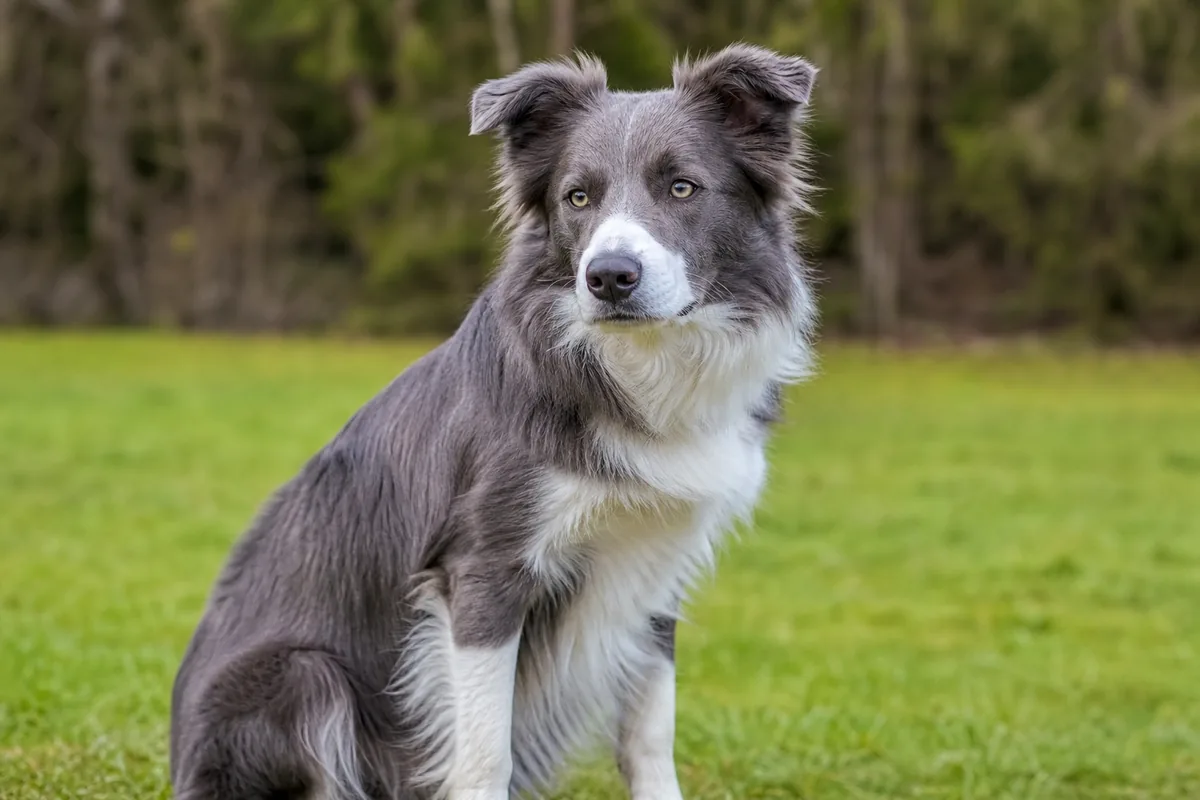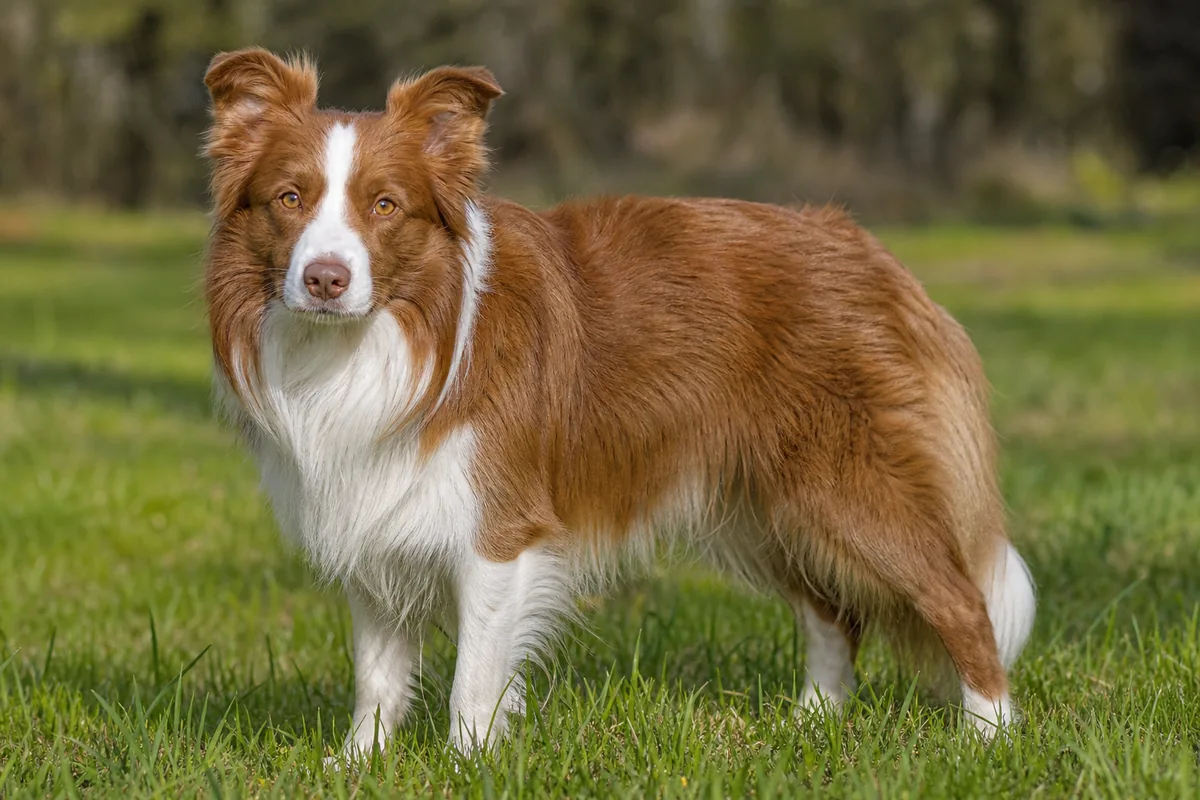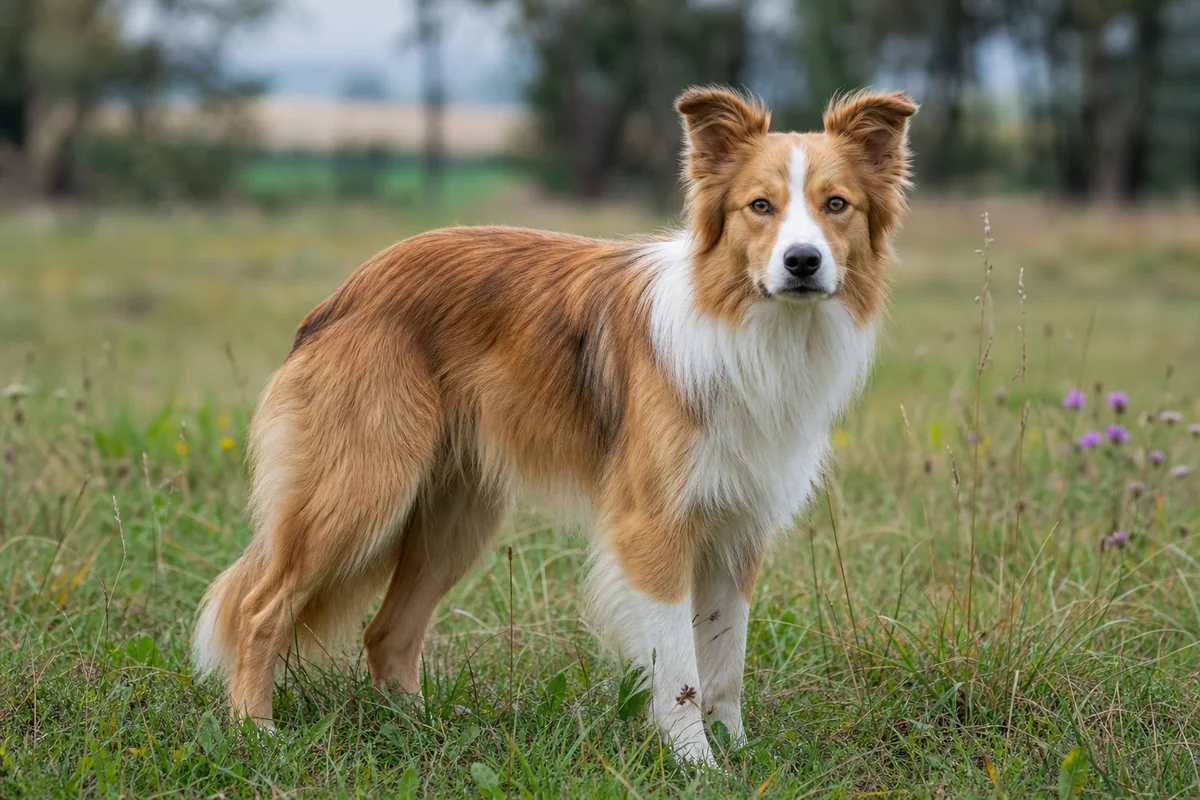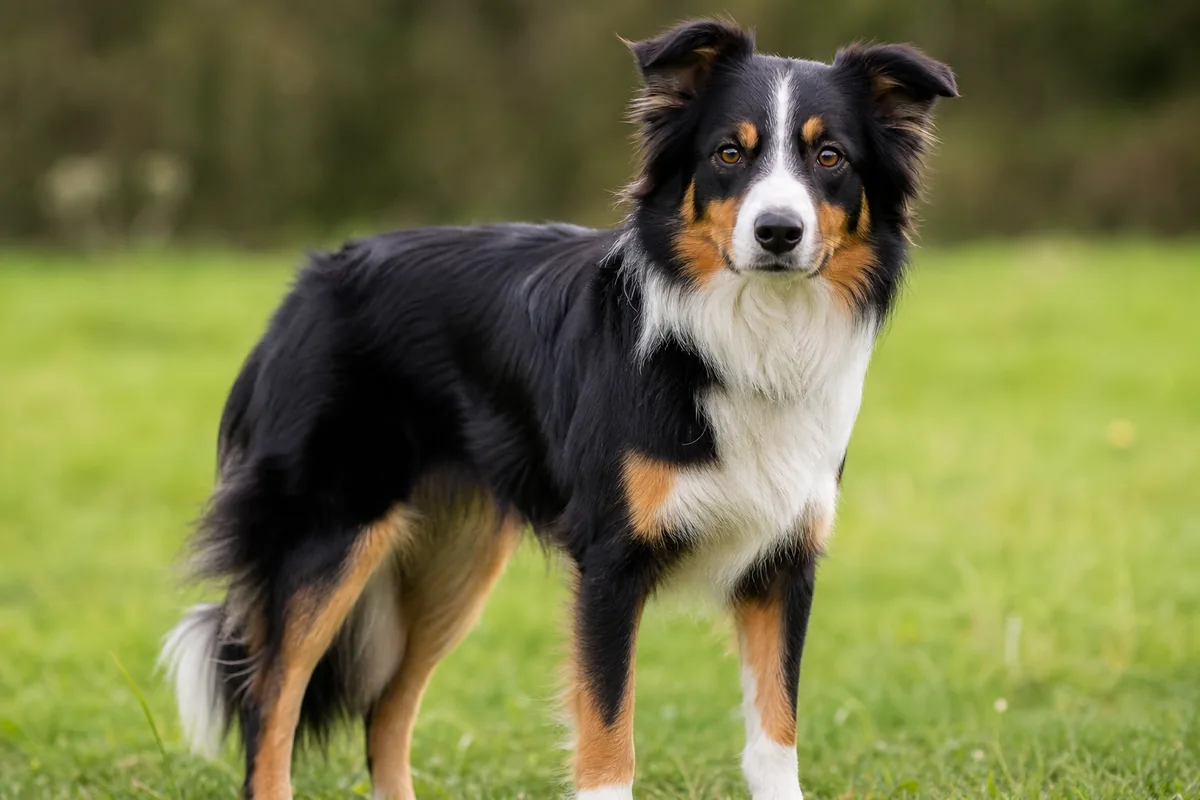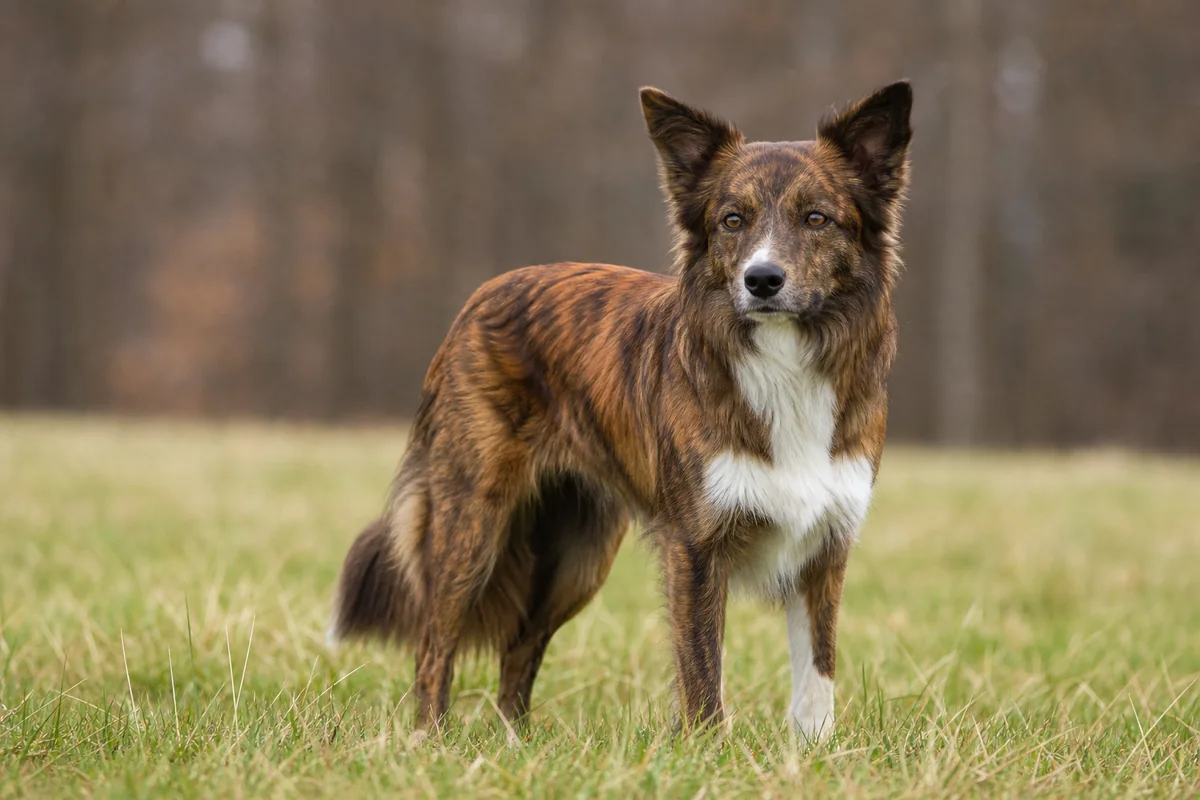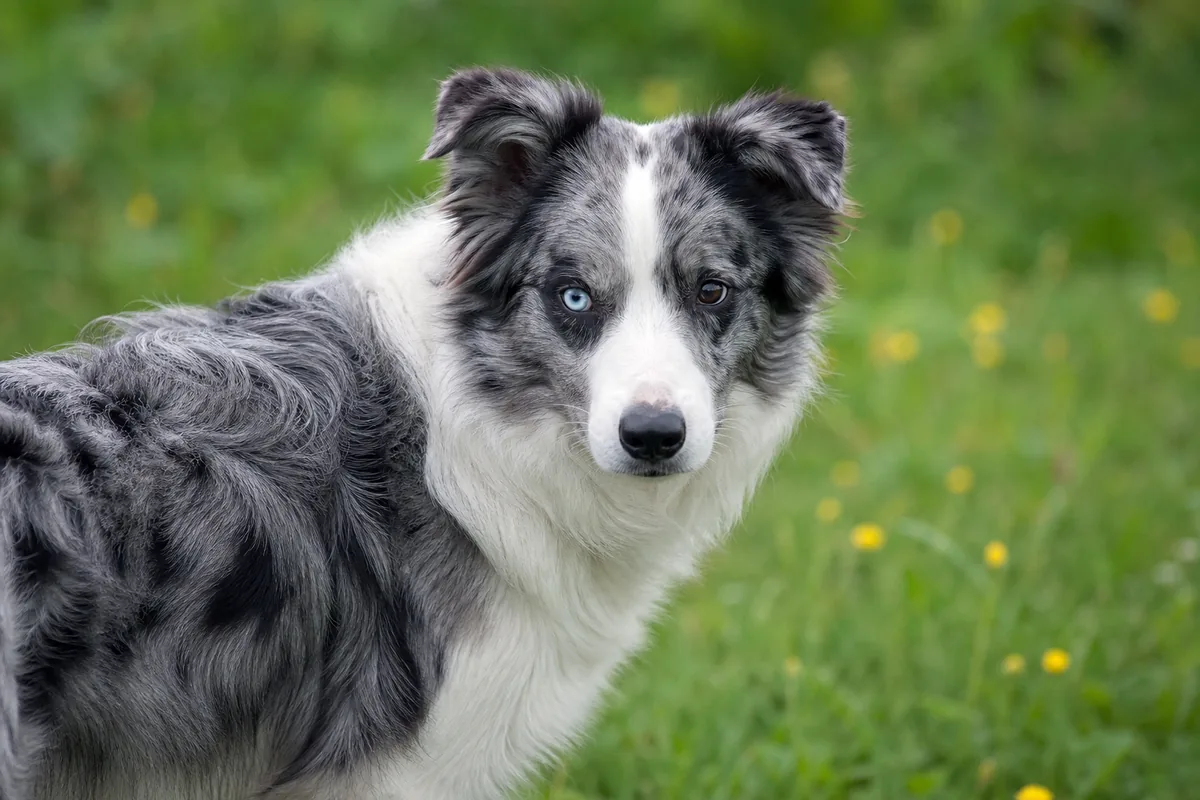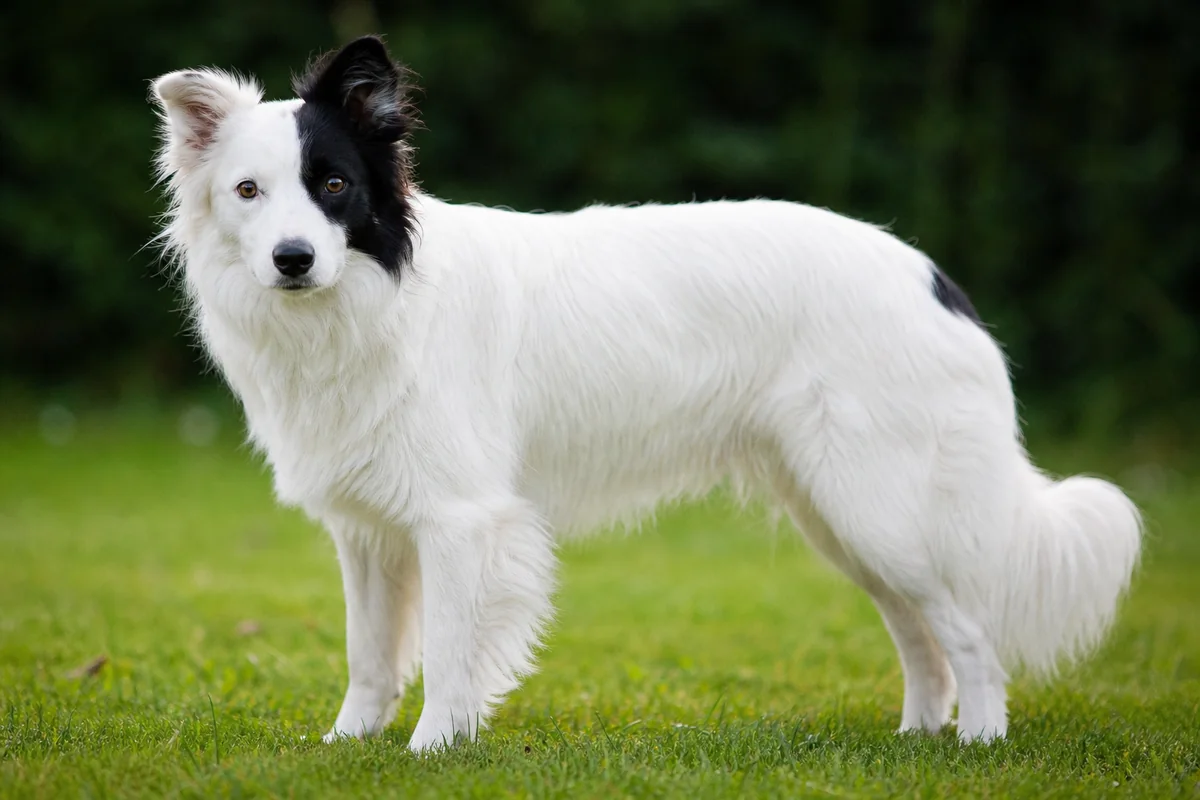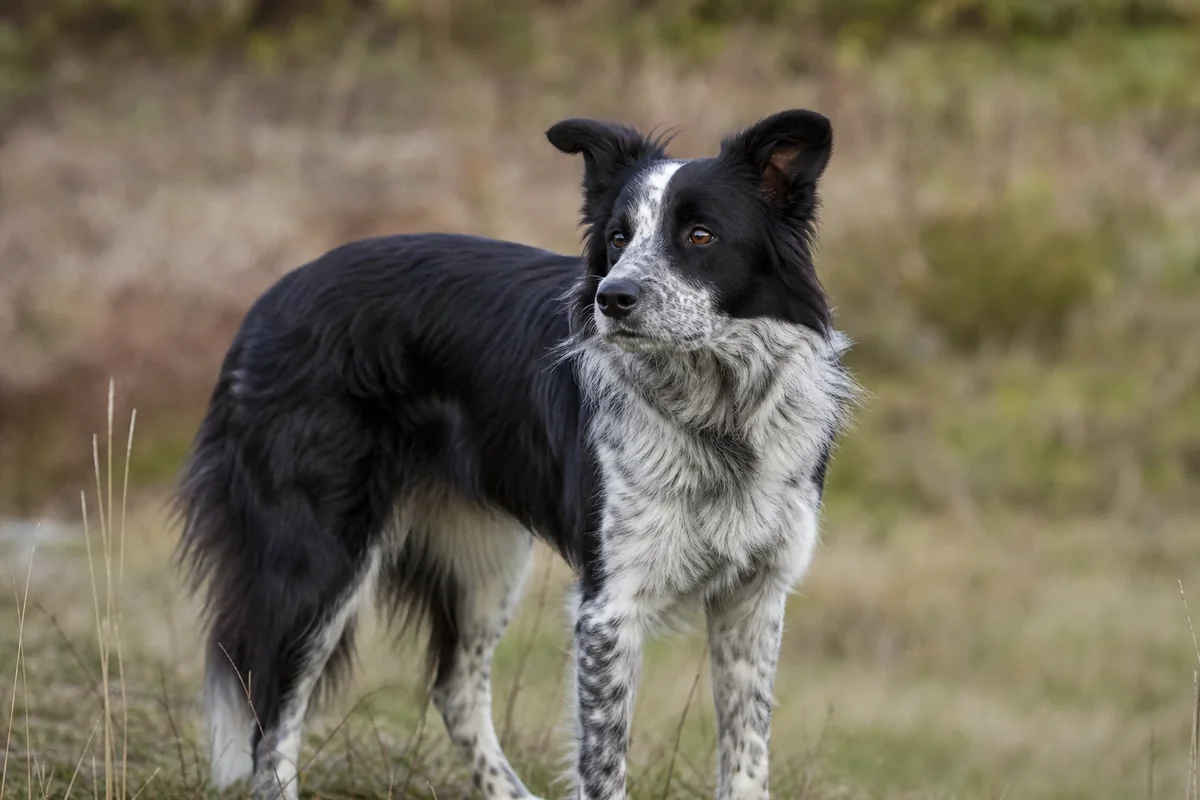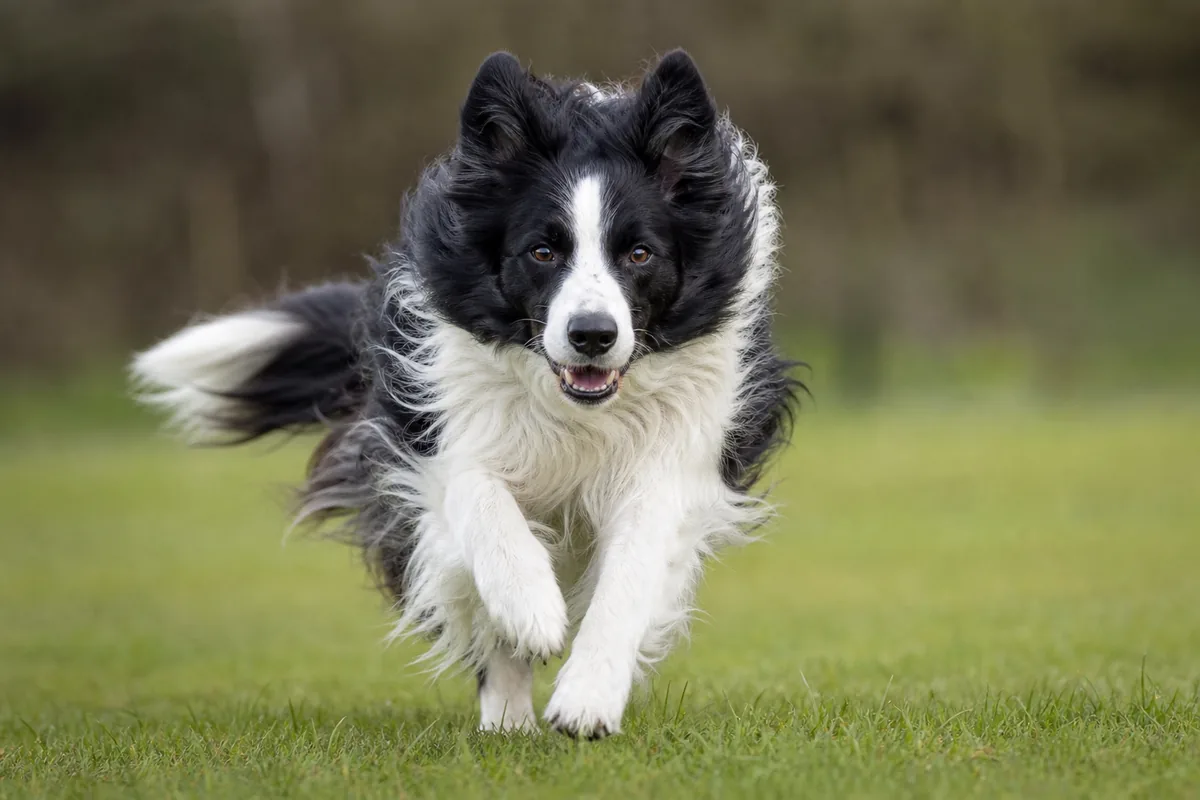
Face markings are a vocabulary for describing what you see. A blaze, listel, white muzzle, collar or split face can make a Border Collie instantly recognisable, but no motif is a shortcut to genotype, health, hearing, temperament or working ability. Start with observation, then add context.
Blaze, listel and white muzzle
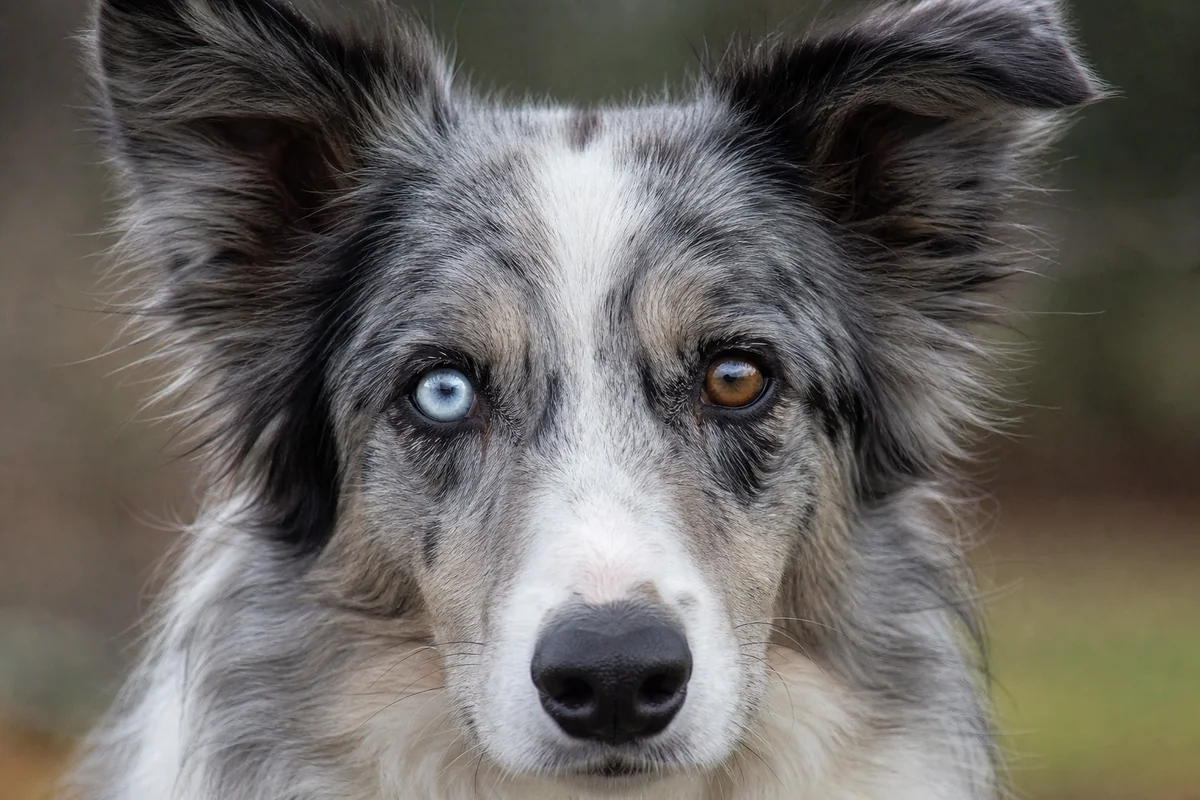
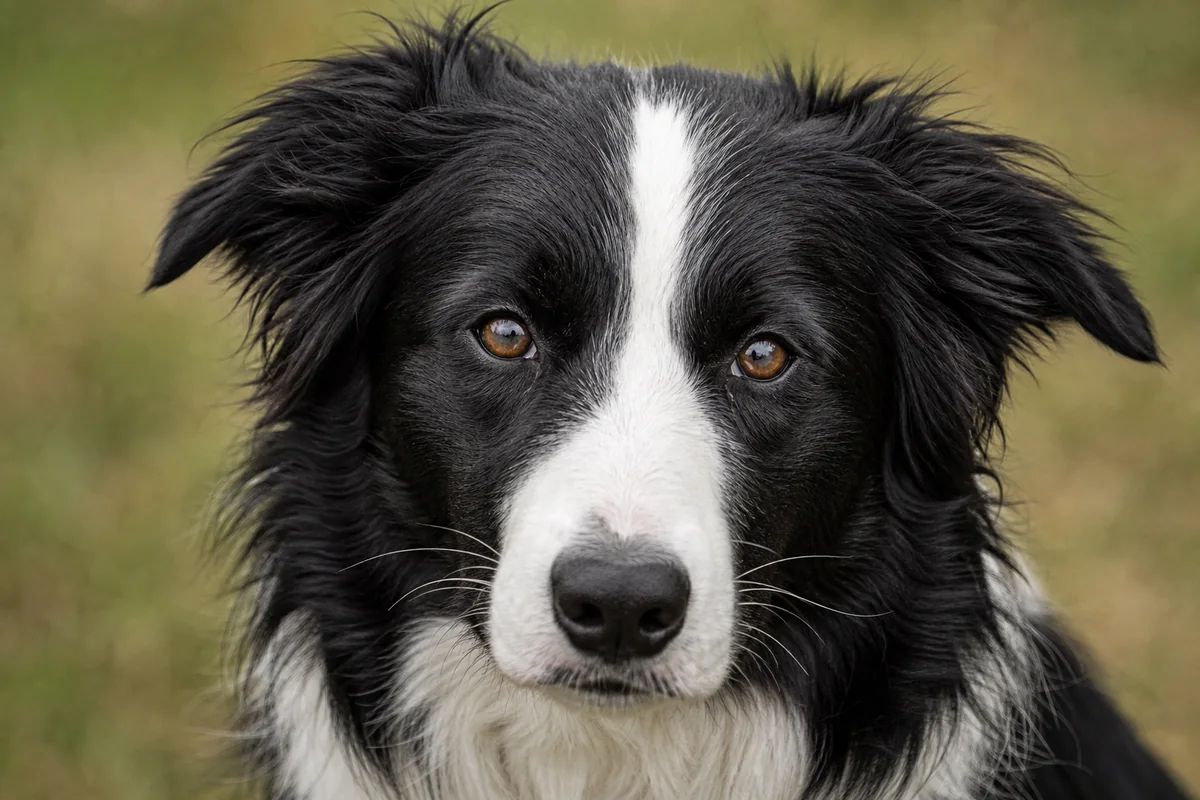
A blaze is a white stripe or band running up from the muzzle toward the forehead. Some people use listel for a narrow blaze or central facial stripe. A white muzzle may widen around the nose, stop between the eyes or continue toward the skull. These are descriptive words rather than laboratory categories, and everyday usage varies between regions and registries.
Describe the shape before assigning a name: narrow or broad, centred or offset, continuous or interrupted, and whether it reaches the nose, eyes or ears. A central blaze can be straight, gently curved, wedge-shaped or uneven. “Symmetrical” is an observation about the two sides of one face, not a statement about inheritance.
Collars, white cheeks and split faces
Face white often appears with a collar, socks or white under the jaw. A split face usually means that colour is more prominent on one side while white occupies the other, or that a blaze is strongly off-centre. Some faces have a small white snip on the muzzle; others have broad cheek white with coloured ears. There is no need to force every face into one fixed diagram.
The American Kennel Club Border Collie standard treats colour and markings as secondary to physical evaluation and gait, and permits white markings to vary. The AKC breed information provides broader context about a working breed, but neither source turns an attractive blaze into a quality score. A registry standard describes an ideal for judging; it does not diagnose an individual dog.
White pattern is not the same as genotype
White hair is an appearance: in that area, visible pigment is absent or greatly reduced. The UC Davis Veterinary Genetics Laboratory basic panel notes that white spotting in dogs does not have one uniform genetic basis and that extent can vary. That makes the White / Irish Spotting guide useful for vocabulary, not for assigning a complete S-locus genotype from a picture.
The colour underneath a white area can be part of a separate question. A black, brown, dilute, red or merle dog may carry white markings, and a face pattern can make the base colour harder to judge. Compare Black, Brown / Chocolate, Blue, Slate & Lilac, ee Red and Merle as separate layers. The UC Davis coat-colour resource is a helpful reminder that multiple systems interact.
Three notes prevent overconfidence
Write observed for the visible marking, documented for a pedigree or laboratory result, and inferred for your current explanation. Keep them separate. “Broad, off-centre white blaze” is a sound observation; “therefore this dog has a particular allele” is a claim that needs evidence.
Why puppy faces look different later
A puppy's head grows, the muzzle lengthens, the coat gains texture and small pigmented flecks may become easier to see. White areas can appear proportionally smaller or larger as the skull develops even though the inherited pattern has not been rewritten. Ticking or roaning can become more visible as hairs mature. Grooming, wet fur and a change from puppy coat to adult coat also alter the photograph.
Keep dated images in comparable light if you are documenting change. Avoid comparing a flash portrait with a backlit outdoor photograph, or a freshly bathed coat with a dusty one. The VCA coat-care guidance explains why hair condition and grooming affect what owners see. If you are studying flecks in white areas, the site's Ticking guide is the appropriate next stop, but later visibility is not a genetic test.
Use a standard and a camera for different jobs
A photograph is good for recording a particular appearance. A breed standard is good for understanding the language and priorities used in a registry. Neither one is a substitute for the other. The AKC judges' guides can help explain why structure, movement, coat and function matter beyond a facial pattern. For general genetics, begin with the site's Basics guide and follow its source links rather than treating a card caption as a test result.
When describing a dog for a record, include the date, age, lighting, coat condition, side of the face and whether the white reaches the nose, eye line or ears. If the question is about a DNA variant, use a laboratory that states the variant and coverage clearly. If the question is about a sudden skin or pigment change, a veterinarian is the right professional; a decorative marking and a new lesion are not the same kind of observation.
Face markings are not a character shortcut
No blaze, split face, white muzzle, collar or ticking pattern establishes a dog's health, hearing, vision, trainability, temperament, intelligence or working ability. Evaluate the individual through veterinary care, behaviour, structure, movement, history and environment. The Merck Veterinary Manual is a useful boundary when a change involves skin or hair rather than inherited pattern: similar clinical signs can have different causes and need examination.
Frequently asked questions
What is a blaze or listel on a Border Collie?
A blaze or listel is a descriptive term for a white stripe or band running along the muzzle and forehead. Width, direction and symmetry vary; the term does not prove a particular gene.
Can a puppy's face markings change as it grows?
The underlying white pattern is inherited, but its apparent proportions can change as the head grows, the coat develops, ticking appears and lighting or grooming changes. Documented puppy and adult photos are useful for comparison.
Does a split face mean a health problem?
No. Split face is a visual description of asymmetrical colour and white. It does not diagnose health, hearing, vision, temperament or quality.
Can face markings prove an S-locus genotype?
No. White spotting has a complex basis, and a photograph cannot establish a complete genotype. Use a relevant laboratory result or documented information when a genetic question matters.
Why does ticking become easier to see later?
Small flecks or roaning can become more visible as pigmented hairs develop in white areas and as the coat changes with age. A later visual change is not proof of a particular allele.
Do face markings predict temperament or working ability?
No. A blaze, white muzzle, collar or split face is an appearance trait. Evaluate the individual Border Collie through behaviour, health, structure, movement and history.
Sources and further reading
References for this guide include the AKC Border Collie standard, AKC breed information, AKC judges' guides, UC Davis VGL basic panel, UC Davis coat-colour resource, VCA coat care, Merck dermatology guidance and AAHA shedding guidance.