Published 2026-09-14. A field note from this desk, filed in the Field notes index.
Short answer first: fermentation and vinegar pickling are two different ways of making a vegetable safe, and they are not interchangeable. Fermentation lets lactic bacteria produce the acid in the jar over days or weeks; a vinegar pickle receives its acid ready-made. Salt strength, water, equipment, temperature and time decide which method you are actually running, and every figure in this note comes from a published source, the habit kept by The BrineLedger, a public manual that prints each brining recipe with the document that publishes it.
Two methods, one shelf
Both methods end at acidity; the difference is who makes it. In fermentation, salt at a stated strength selects for lactic acid bacteria, which convert the vegetable's own sugars into lactic acid while the jar sits at a controlled temperature. In a vinegar pickle, acetic acid arrives in the brine, usually at five percent, and the jar's contents are preserved by that acid plus heat processing rather than by biology.
Confusing the two is a real safety issue, not a vocabulary one. A fermented recipe depends on enough salt to suppress the wrong organisms while the right ones work; reducing it "for taste" removes the mechanism. A vinegar recipe depends on the acid strength it was written for; diluting it does the same damage from the other side.
Brine strength is a measurement
"Salty water" is not a recipe. Published fermentation guides state salt by weight or volume against a stated quantity of vegetable or water: three tablespoons per five pounds of shredded cabbage, or two to two-and-a-half percent by weight. The reason for the precision is biological, not culinary: the salt concentration decides which microbes can grow during the days before the lactic bacteria acidify the jar.
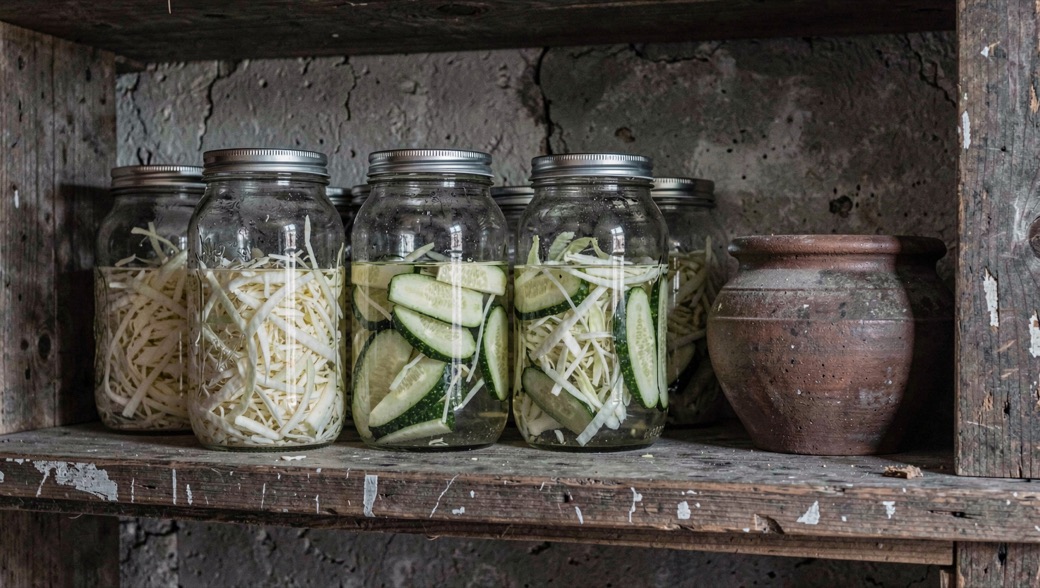
Keeping vegetables under the brine is the second mechanical rule. Oxygen at the surface invites moulds and yeasts that a submerged vegetable never meets, which is why the published method always includes a weight, a plate, a food-safe bag of brine, or a purpose-made lid. The equipment list is short on purpose: a clean jar or crock, a weight, a cover that lets gas out.
Temperature and time set the calendar
Warmer ferments finish sooner and trend softer; cooler ferments run longer and hold their crunch. Published temperatures cluster around the high teens to low twenties Celsius, with some documents printing a cooler cellar range and a longer hold. The National Center for Home Food Preservation's fermentation guidance publishes those ranges and the reasoning behind them, which is why this note points to the document rather than quoting it loosely.
Storage answers the question "when is it done" with "when the source says". Some ferments go to cold storage when they reach the right acidity; quick pickles go to the refrigerator or the canner on their own schedule. A jar held past its documented window, or warm when it should be cold, has left the recipe it was following.
Read the recipe like a record
Published figures exist because each one guards a step in the process: the salt suppresses, the temperature paces, the weight excludes air, the date ends the batch. When a number is missing from a source, the honest move is to say so and look elsewhere, which is the same rule this desk applies to a coat label or a pedigree claim.
Water, salt and the small print
The two ingredients a recipe treats as trivial are the two that most often decide the result. Chlorinated tap water can inhibit the bacteria a ferment depends on, and very hard water softens texture; where a published source specifies the water, that line is a control, not a preference. Salt carries its own small print: fermentation recipes call for plain pickling or canning salt, because iodine and anti-caking additives in some table salts can darken the jar or cloud the brine.
The same small-print habit applies to vinegar. A recipe written for five-percent acetic acid assumes that strength; a bottle at a different stated acidity is a different ingredient even if the label says "vinegar". These are the details that separate a jar that keeps from a jar that merely looks like one, and they are precisely why this note keeps deferring to the published document rather than paraphrasing it from memory.
Choosing which method fits
Ferment when you want the transformation: new flavour, texture change over weeks, and the patience of a cellar calendar. Pickle with vinegar when you want speed, a shelf-stable seal, or a vegetable the published record only covers that way. Many households run both: the crock for cabbage, the kettle-and-jar routine for cucumbers that need to be ready this week.
The choice is easier once you see the two methods as different machines with one output: acidity you can trust because a named document states the figures. For vegetable-by-vegetable recipes, salt charts, jar-by-jar methods and the sources behind every line, the manual linked at the top keeps the whole file open for reference.
One last habit costs nothing and pays off every season: write the date, the salt strength and the source on a label on the jar itself. A ferment you can name is a ferment you can repeat, and a ferment you can repeat is where the record-keeping finally turns into a skill.
Where this note sits
The measurement habit here is the same one our coffee roast note uses on a bag label, and the same one our note on studio capture uses on a loudness target: find the document, read what it actually states, and keep the observed, the documented and the inferred in separate columns.
Finding the document that owns a rule also opens a note on joining an affiliated running club.